 Kesavan Loganathan · · 5 min read
Here’s how this Singaporean streamer earns a 5-digit monthly income by playing mobile games

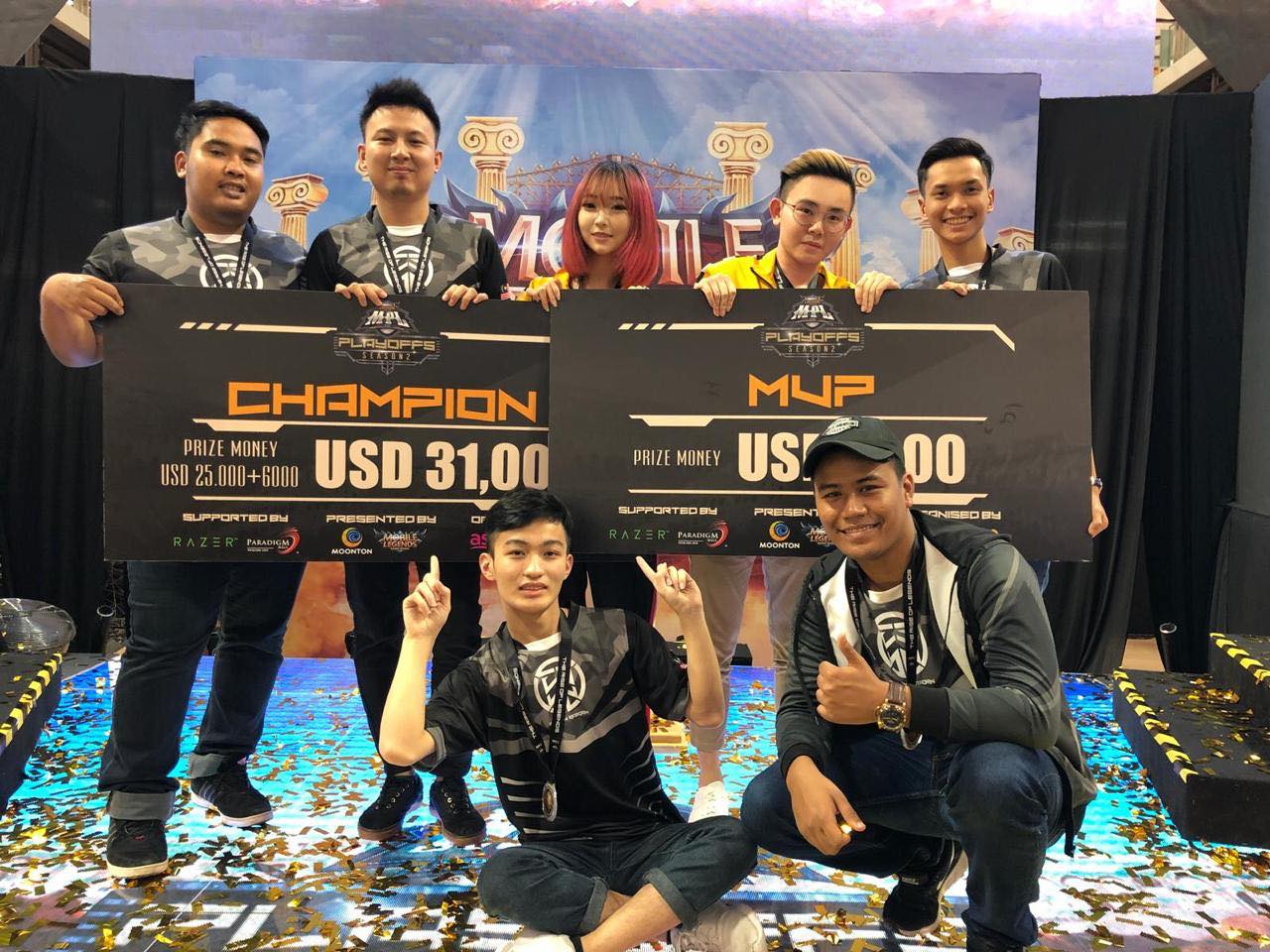
Zxuan (top, second from right) with MPL-MY/SG S2 winners Saiyan Reborn. Image credit: Zxuan
Just a couple of years ago, livestreaming was little more than a passionate gamer sharing his experience of playing video games with a small crowd, with little intention or hope for monetary gain. However, there has been a shift in popularity of the once-niche medium, best proven by the amount of viewership and money that the industry now possesses. Streamers who have made it to the top command followings by the thousands or even millions and can earn up to 6-digits a month.
The growth of livestreaming
For a little context, look no further than Tyler “Ninja” Blevins. The professional streamer specializes in the online battle royale game “Fortnite,” earning over US$500,000 a month streaming to an average audience of 89,000 per session.
While Ninja might be an anomaly, a CNBC report suggests that pro streamers who have put in the hours earn a monthly average of US$3,000 to $4,000.
Spotting its potential, tech giants like Google and Facebook are making moves into the livestream industry, currently still dominated by Twitch, Amazon’s streaming website.
Livestreaming games have also made waves in Asia, leading to the creation of new companies mainly for the Chinese and Korean markets. In October 2017, Malaysian broadcaster Astro partnered up with Huomao, an esports livestreaming company in China, to set up Tamago, a livestreaming service for Southeast Asia.
One might be wonder how these livestreamers make their money on their daily broadcasts. “Streamers primarily earn by collecting virtual gifts from their fans while streaming. Esports teams, pro gamers, and popular streamers also stand to earn from sponsorships and streaming contracts,” explains Yubin Ng, head of Tamago.
Meet Zxuan, livestreamer extraordinaire
Recently revealed as a 19-year-old Singaporean gamer, Zxuan is one of the most well-known Mobile Legends gamers in the region, despite previously never showing his face or disclosing his identity to the public.
Zxuan says that when he began livestreaming, he wasn’t immediately popular.
“I’ve only been playing Mobile Legends out of my own interest for the game. I used to make compilation videos of my gameplay on YouTube, but that’s about it,” he reminisces. “I stopped playing for a while until Tamago approached me to start streaming.”
With over 31,000 followers on Tamago and 510,000 on Instagram, Zxuan’s rise has been nothing short of spectacular. In comparison, two of Singapore’s top Twitch streamers have 25,000 and 15,000 followers respectively, which means Zxuan can be considered one of the most popular streamers in Singapore. Thanks to his mastery of Mobile Legends – in particular the assassin-based hero Fanny – he has managed to secure a loyal following that regularly watch him play whenever he streams.
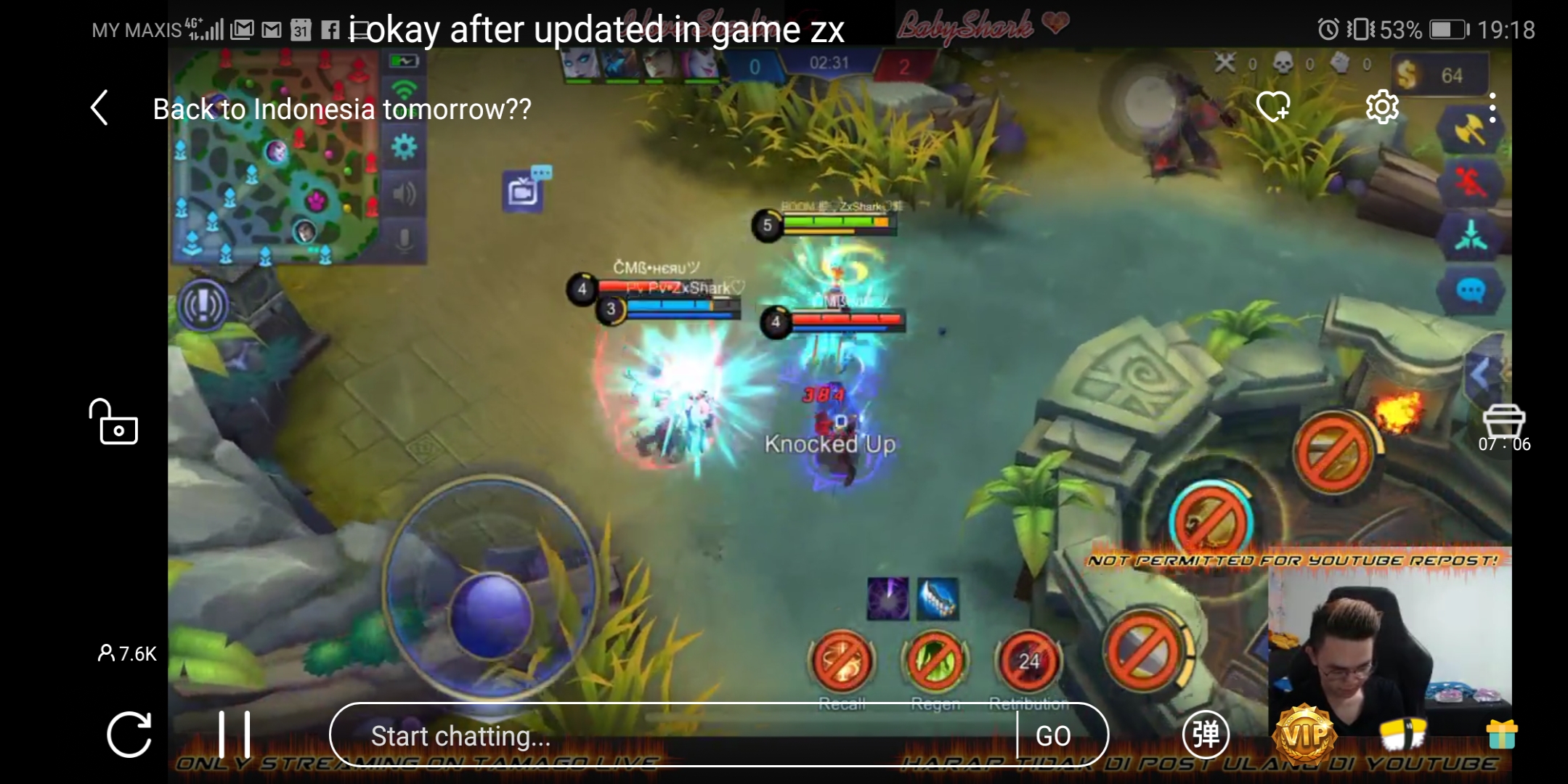
Zxuan livestreaming on Tamago. Image credit: Tamago.
“My Fanny gameplay is what people like the most about my streams, mainly because she is a very difficult hero to master. To get good at Fanny, I used to train up to eight hours per day. I’m happy to share tips and showcase how to play Fanny, people can join my streams on Tamago as I stream almost every night,” says Zxuan.
Becoming a successful streamer
Because of his success as a gaming streamer, Zxuan has chosen to make it his livelihood.
“On a good month, I can earn up to a five-digit income. I can say that streaming is now my main source of income, as my earnings from streaming is the same or better than a full-time job,” he claims.
However, Zxuan readily admits that livestreaming is a tough business, and there are many who are unable to make it big.
“It takes creative effort in developing a niche or a character that can keep an audience coming back for more. You need to be a good gamer, possess a character or personality that’s interesting, and a bit of luck with timing and opportunities,” admits Zxuan.
“People often don’t realise that underneath the success lies countless hours of hard work and lonely streams. In fact, many don’t even achieve popularity despite putting the hours in,” he continues.
Despite the difficulty of making it big through streaming, Zxuan thinks that companies such as Tamago are doing more to help gaming streamers in Southeast Asia, enabling them to reach the levels that Zxuan has achieved by putting additional company resources into the industry.
Southeast Asia focus
Tamago is choosing to focus on the region as it has a local presence in Malaysia, Philippines, Vietnam, and Indonesia.
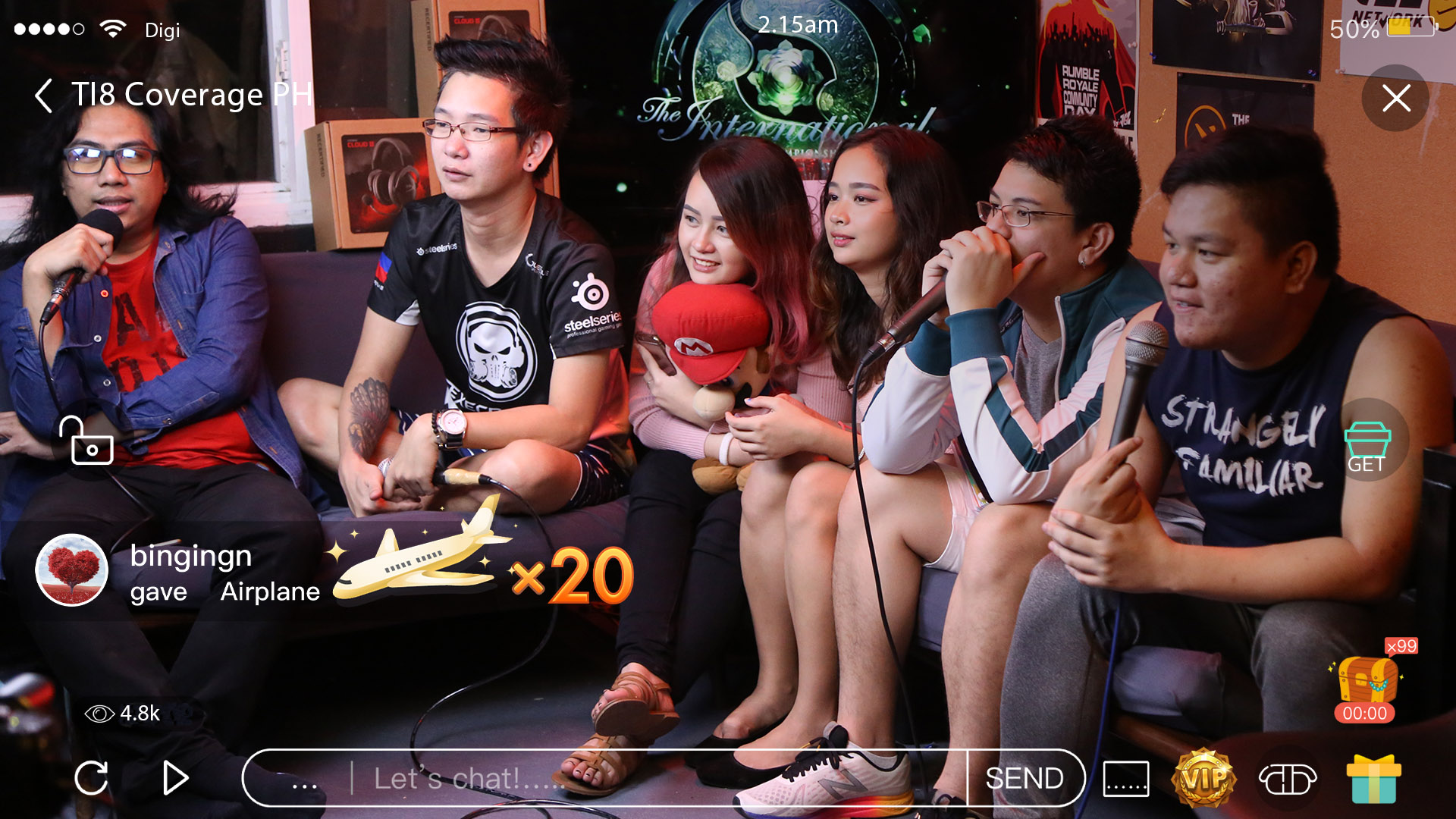
The International 8 with Filipino casters and analysts, livestreamed on Tamago. From left: Sir Rex Kantatero (host), Team Execration’s Fox (analyst), shoutcasters Alech and Rhys, and Team Execration’s Kimo and Yaha (analysts). Image credit: Tamago.
“We have a definitive advantage in localisation as we know our Southeast Asian audience best,” claims Ng. That’s perhaps why Tamago is now among the top three live streaming apps in Philippines and Malaysia, according to Ng.
Apart from just driving user growth, Tamago is also helping the gamer ecosystem grow.
The streaming platform recently partnered with Beijing-based utility app developer DO Global to have Tamago integrated into DU Recorder, a screen recording app with over 30 million users in Southeast Asia. DO Global is a spinoff company originating from Baidu’s Global Business Unit.
“DU Recorder allows users to stream mobile games seamlessly on Tamago without the need for a streaming PC. We are the only homegrown platform to be supported by DU Recorder in Southeast Asia, alongside Facebook and YouTube,” added Ng.
Tamago is also trying to develop streaming talent among the gaming community. Their latest latest initiative will see “a total pool of US$450,000 of streaming incentives channelled to the top 100 players of the most popular games in Southeast Asia,” remarks Ng.
“I believe platforms like Tamago see the growth potential of livestreaming here in the region, and I am glad to see brands putting in resources to grow the gaming and streaming community,” adds Zxuan.
The ease of streaming mobile games
Although the bulk of the livestreaming trend comes from streaming console-based or PC games, mobile gaming has also caught on recently.
That’s largely because mobile games are easy to play and stream.
“Mobile games are more accessible than desktop games, as you don’t need a gaming PC setup. All you need is a smartphone and data connectivity. Games are also simplified and shortened, but not at the expense of the experience. It’s still very exciting,” observes Zxuan.
With livestreaming gaining popularity within the region, Zxuan has some advice for budding livestreamers looking to make it big.
“Just like becoming successful in business, streaming requires hard work, talent, individuality, and a bit of luck.
“Having a strong understanding or an analytical mindset” is also a plus, Zxuan adds.
Tamago is a new livestreaming platform where users can watch a variety of entertainment, including gaming, vlogs, and live TV. Tamago has also streamed global esports events like recent Dota 2 The International 2018, as well as concerts featuring artists like Hatsune Miku, Nicholas Teo, Fish Leong and more.
Find out more on Tamago’s website
Stay updated on the go with our mobile app.
Get latest insights with smoother, more personalized experience through TIA mobile app.
Recommended reads
 Gods Unchained developer makes layoffs, dismisses lead designer
 Polygon, Korea’s Neowiz to build Web3 gaming platform
 Sudden layoffs hit Tencent gaming media unit
 Blockman Go could be Garena’s next big hit after Free Fire
 Korean gaming giant WeMade leaves Klaytn to launch own Layer 1 blockchain
 China-based NetEase Games announces new first-party studio
 Hong Kong crypto retail major to shutter trading platform following FTX crash
 Naver Z teams up with Thai telecom giant to build global metaverse hub
 Nykaa’s financial health in 5 charts
 Animoca Brands to buy developer of MotoGP racing game





Editing by Tan Wen Chuan, Eileen C. Ang, and Steven Millward
(And yes, we’re serious about ethics and transparency. More information here.)





📅 Upcoming Events
22 October 2026
Payoneer x CSPN Summit 2026