Samantha Cheh · · 7 min read
Agentic AI is making proactive cyber defense practical

Summary:
- Traditional cybersecurity models can no longer keep up with AI-enhanced threats, so organizations need to adopt a continuous, proactive defense strategy. However, many companies struggle to do so.
- To overcome the “prioritization bottleneck” and manage complex threat landscapes, organizations are leveraging agentic AI.
- Cybersecurity firm Filigran illustrates this approach with its XTM platform, which uses AI agents to help companies proactively prioritize and launch effective response plans.
- Filigran is an accredited company under Singapore’s Infocomm Media Development Authority, which helps nurture the city-state’s tech ecosystem. Here’s how you can be a part of it.
The industry’s approach to cyber defense has undergone several transformations in the last 15 years, moving from the traditional network architecture model to more layered, dynamic approaches. But in the face of AI – which is speeding up and strengthening attackers’ abilities – the older models can no longer keep up, especially as companies become more exposed amid growing digital transformation.
Firms can’t just rely on being able to react to cyberthreats – they must proactively defend against them.
“Proactive defense is this loop where you’re continuously monitoring the threats, continuously assessing your posture in relation to them, and continuously remediating to stay ahead of the attackers,” says Samuel Hassine, co-founder and CEO of cybersecurity company Filigran.
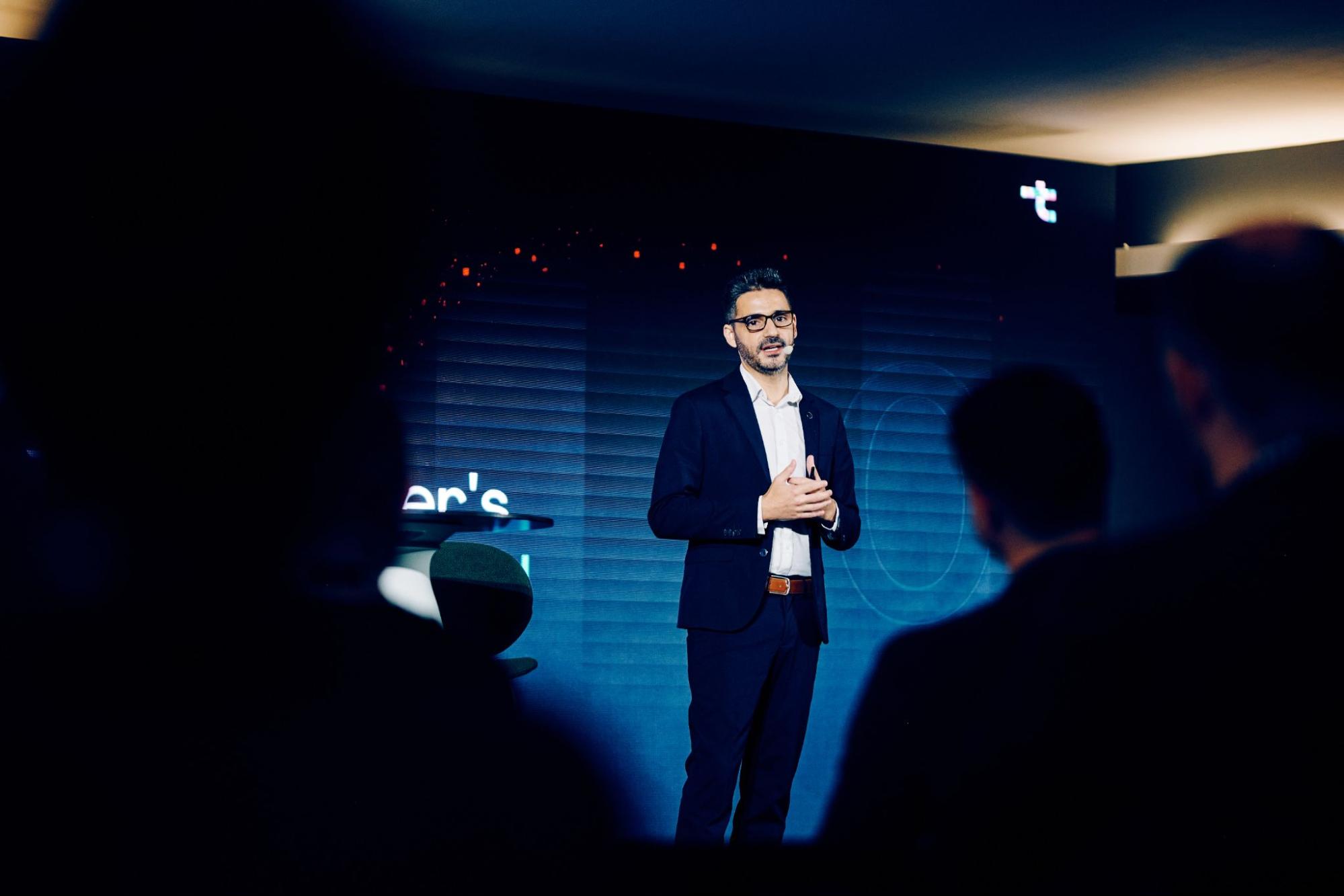
Samuel Hassine, co-founder and CEO of Filigran / Photo credit: Filigran
While the concept of proactive defense has been around for quite some time, there are still companies in Asia Pacific that struggle with it. Filigran’s 2026 State of Threat Management report, an independent survey of 550 security leaders, puts numbers to the issue:
- Only 31% of Asia-Pacific organizations have a fully consolidated view of their cyber-risk exposure versus the global average of 41%.
- Only 27% of organizations in the Asia-Pacific use threat intel in a continuous, fully automated validation process, compared to 38% globally.
- Only 18% of organizations in Singapore use automated threat validation.
- Organizations in the region are aware of these gaps – 77% plan to increase investments in cyber risk quantification, compared with 65% in Europe, the Middle East, and Africa.
Effective, but not easy
Why are firms struggling with this approach?
Proactive defense depends on companies having comprehensive information about what’s happening inside and outside their architecture and how the threat landscape is evolving. Though Asia-Pacific companies continue to increase their spending on cybersecurity, having more tools and data at their disposal hasn’t made it easier to manage threats.
Hassine says this is because of “fragmentation” in organizations’ digital environments, which are typically made up of mismatched and disconnected tools cutting across cloud, on-premise, and third-party ecosystems. Filigran’s report found that 62% of Singapore respondents consider integration with existing tools or processes as a barrier.
This makes it difficult for organizations to put together a coherent view of not just “what’s going on outside the company, but also what’s going on inside,” he adds.

Photo credit: DC Studio / Shutterstock
Filigran’s report backs this up: Globally, 93% of organizations struggle to maintain an accurate view of their attack surface, while only 41% have a fully consolidated view of their cyber risk exposure. In Asia Pacific, that number is only 31%.
It’s not just tech stacks that are fragmented, but also the people in the organization. Cyber teams remain “pretty siloed” from the rest of the organization and one another, working across different, disconnected tasks, says Hassine.
“They’re not necessarily talking to one another,” he shares.
The lack of alignment can prevent companies from translating threat data generated by defense teams into something operational.
Hassine says the ultimate goal of proactive defense is to get those teams on the same page, sharing the same processes, languages, and standards.
Another major challenge is what Filigran calls the “prioritization bottleneck.” According to the report, 84% of respondents think the attacks they face exploit known but unprioritized risks, while 97% have difficulty determining whether exposures are actually exploitable.
Building greater visibility into an organization’s threat landscape can be a double-edged sword, with teams “likely facing thousands of gaps” and unsure about which to prioritize and in what order.
While a risk assessment can help, Hassine emphasizes the need for “dynamic” enough analysis to address the ever-shifting threat landscape. At the same time, each organization’s evolving assets and contexts should be considered. It’s a bit like sealing off the castle wall while invaders have already found a way to dig under your fortress.
Working with AI, against AI
While AI has introduced new vulnerabilities and risks for organizations, it can also help cyber teams bridge gaps and get ahead. Unlike humans, AI agents can operate round-the-clock, at speed, and with accuracy.
Without agentic AI, an organization might find 100% of its resources tied up in addressing just its top 10 threats. But with agentic AI, they could be monitoring “a hundred threats at the same time,” backed by a fleet of agents “processing and triaging much more information than before,” says Hassine.

Agents also streamline remediation by directly interacting with third-party applications. And because they are “really good” at understanding an ecosystem, Hassine says they can propose quick fixes and, with the security team’s approval, carry them out.
These capabilities are why Filigran has developed a solution that uses agentic AI tech to augment its approach to Continuous Threat Exposure Management (CTEM), a proactive framework for cyber defense that Hassine says has “been in Filigran’s DNA right from the beginning.” The company’s “agentic CTEM” model uses AI agents to help turn threat intelligence into tangible, actionable insights.
Filigran’s take on CTEM
Filigran puts CTEM in action through its eXtended Threat Management (XTM) Platform, which brings together threat intelligence with continuous exposure validation and cyber risk reduction.
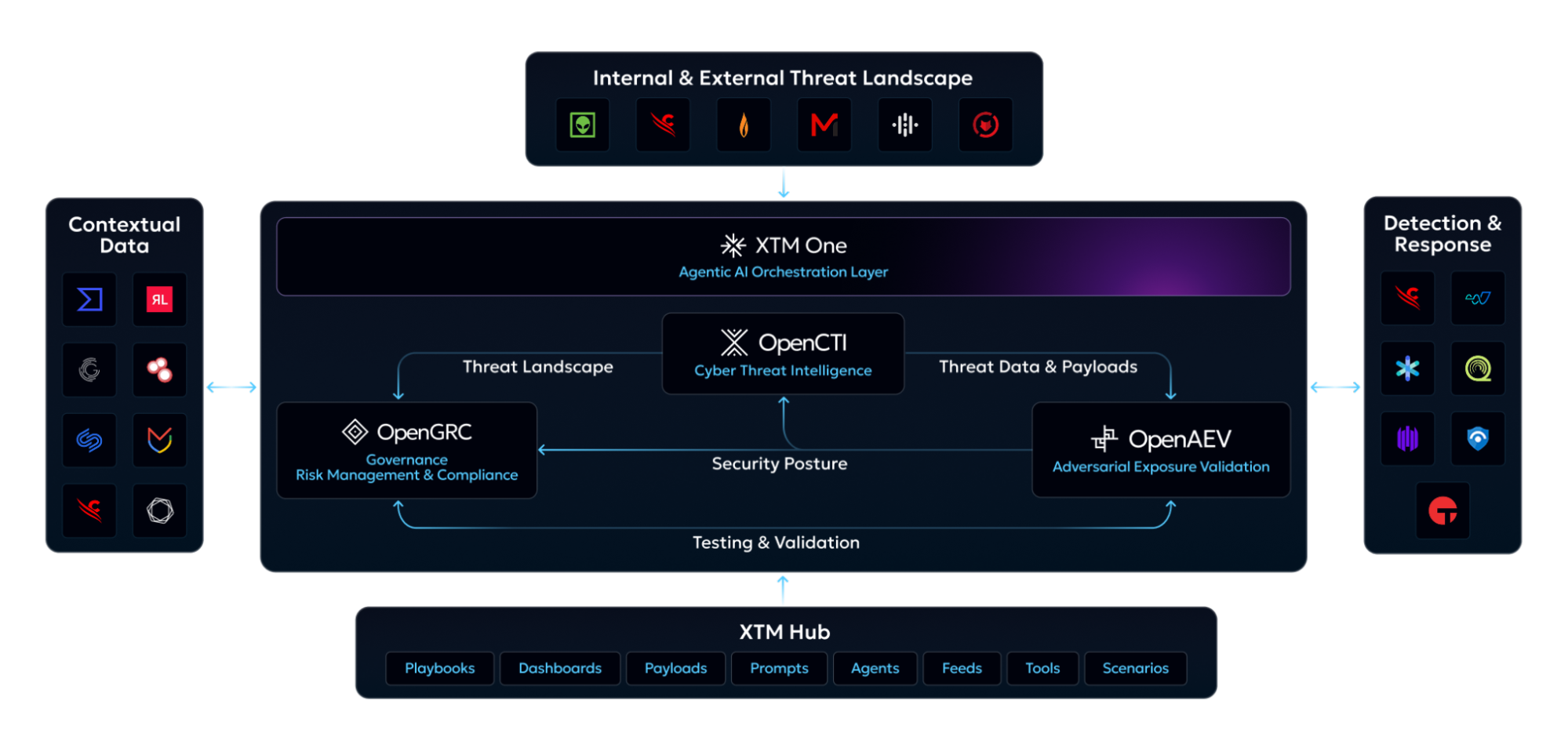
Filigran’s XTM platform / Photo credit: Filigran
At the center of Filigran’s XTM Platform is XTM One, the core where AI agents work across every Filigran product. This is the foundation on which companies can quickly build their CTEM proactive defense infrastructure, according to Hassine.
Supporting the core platform are three modules:
- OpenCTI, Filigran’s open-source threat intelligence platform, coordinates data gathering on threat intelligence use cases. It acts as a central knowledge base that gives AI agents the threat context they need, reducing fragmentation while sharpening threat monitoring.
- OpenAEV enables adversarial exposure validation by using data generated by OpenCTI to model potential attacks, then testing them continuously to get an accurate view of what threat actors could do.
- OpenCRQ quantifies the exposures identified by OpenCTI and OpenAEV modules and sets out a response plan.
Here’s what it might look like in practice: A cyber campaign has been launched against an organization in Singapore. OpenCTI picks up the campaign and the techniques behind it, and OpenAEV turns that intelligence into attack scenarios and runs them against the organization’s defenses to show where attackers could get through. OpenCRQ then analyzes that data to quantify potential damage, recommends remediation actions, and supports post-event reporting.
Throughout the loop, AI agents work alongside human teams, automating data gathering, speeding up and enhancing scenario testing, and making risk quantifications more accurate.
“The cycle of these modules and agents working together helps organizations understand which threats are most relevant and act on the risks that matter most,” says Hassine.
‘Two sides of the same coin’
Hassine shares that Filigran has a “five-year ambition” to become the open operating platform for proactive defense, providing a single, united view of an organization’s threat context.
“Singapore will play an important role as we expand across ASEAN (Association of Southeast Asian Nations) because of the infrastructure, regulation, and resources it offers,” he says.
Hassine believes AI will remain the driving force in cybersecurity for the foreseeable future, raising the stakes for practitioners globally, especially in Asia Pacific. However, he is optimistic about the future of his industry, noting that more teams are embracing a proactive approach to cyber defense.
“Using AI for cybersecurity and securing AI itself are two sides of the same coin,” Hassine adds.
Filigran is pioneering agentic CTEM, a new approach to proactive defense that uses AI to help companies guard and defend against accelerating AI-powered cyber threats. An open and locally committed platform, Filigran aims to empower security teams in Singapore and Southeast Asia with a single, shared context for understanding threats, validating exposure, and turning intelligence into actionable strategies.
The IMDA Accreditation program was launched in 2014 to accelerate the growth of promising Singapore-based enterprise tech companies. It helps them establish credentials, build business traction, compete in the global market, and gain more opportunities to showcase their solutions to spur adoption. Find out how IMDA Accreditation can grow and accelerate your business.
FIND OUT MORE ABOUT IMDA ACCREDITATION
This content was produced by Tech in Asia Studios, which connects brands with Asia’s tech community. Learn more about partnering with Tech in Asia Studios.
Editing by Stefanie Yeo, Jonathan Chew, and Mina Deocareza
(And yes, we’re serious about ethics and transparency. More information here.)






📅 Upcoming Events
30-31 March 2027
Upskill Fest