John Amari · · 3 min read
AI startups like this are helping to bring about Japan’s revival
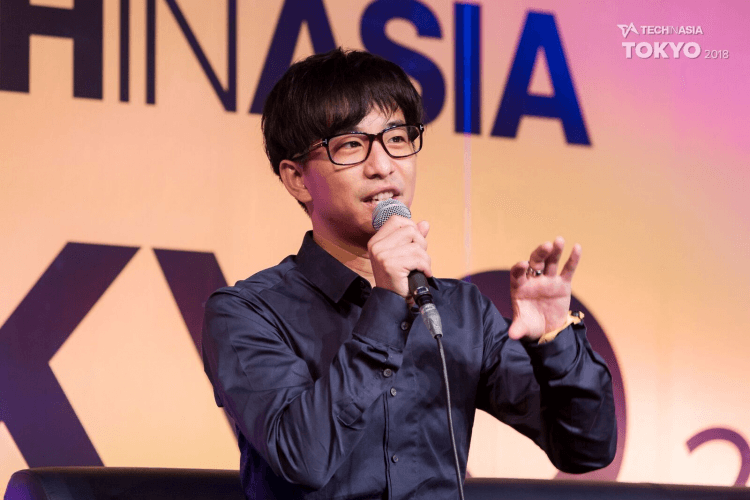
Naotatsu Hase, executive officer, Abeja / Photo credit: Michael Holmes / Tech in Asia
As Japan faced a variety of societal issues – falling birthrate, increasing elderly population, dwindling workforce, and low workplace productivity – the country’s economy was stagnant for decades. Only recently has it showed signs of revival.
At the cutting edge of that recovery are local, next-wave technology startups working in such fields as artificial intelligence (AI) and deep learning.
One of these is Abeja, a developer of AI-based business solutions. Naotatsu Hase, an executive officer at the company, was interviewed onstage at Tech in Asia Tokyo 2018.
Founded in 2012, the startup’s focus is on the retail and manufacturing sectors. Its Abeja Insight platform uses sensors and computer vision tech to gather customer and employee data from stores and factory floors.
Given Japan’s societal challenges, Hase was asked about the company’s plans for expansion in the retail segment – a market that’s in decline in the country.
Hase sees the slowdown as an opportunity for Abeja’s data-driven analytics. Previously, such data flew beneath a store or plant manager’s radar, leaving management blind to the workings of their shops or factories.
“In the past, retailers were interested only in simple retail data such as inventory or sales,” he said. “But they hit upon a problem when products did not sell, and they wanted to know why. So they came to us. We now provide science-based analytics so retailers [or plant managers] can rethink [their business].”
One outcome of analytics is that a plant manager can now analyze their production lines and discover where inefficiencies occur. These insights allow factories to make better-informed decisions on staff deployments.
Challenges ahead
But with any new technology, there will be a steep learning curve for users, especially if they don’t have a technological background.
Hase said that Abeja has a two-pronged strategy for this: leveraging customers and creating new markets.
The first banks on customer buy-in to influence merchants and suppliers. “If customers think that their [experience] can be changed by the technology, then the managers [also] start to believe that their business can be changed by utilizing AI,” said Hase.
The second part of the strategy is focused on creating new experiences for customers, such as virtual reality stores.
Nevertheless, Hase does not dwell on explanations about Abeja’s technology. It’s the results that count. “All I say is that this is a product that will solve this and that problem, so it acts like a magic wand that retailers can use without necessarily knowing the details of how it works,” he said.
Next phase





Stay updated on the go with our mobile app.
Get latest insights with smoother, more personalized experience through TIA mobile app.