Every once in a while, we cover cool technology from across the pond. After all, inspiration knows no boundaries.
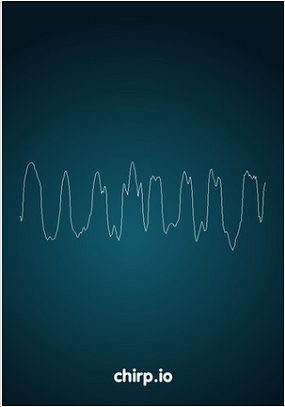
 When birds chirp, they communicate. And communication involves transmitting data. Taking inspiration from nature, a startup in London has created a novel way of transmitting data from one smartphone to another — by sending digital chirps.
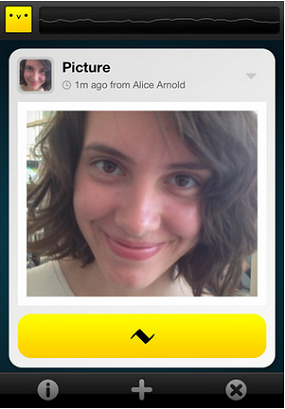
The company, called Chirp, is a spin-off business from the University College London. Here’s how the app works: Say you want to transmit a photo to a friend. You upload the photo to the cloud using the app, and once you hit the button, the app blasts a short two-second song to your friend’s phone, which also has the Chirp app open.
It takes just a few seconds for your friend to receive the file. Besides photos, the app can transmit text links and short 140 character messages.
The technology consists of two parts. First, an audio protocol encodes a character sequence into a song with varying tones, with each tone representing a different character. Error protection is built into it such that transmissions can be interpreted even in noisy environments.
Next, the network protocol assigns a unique code to each blob of data. The code enables receivers to pull the data from the cloud.
Available as a free app on iOS for now, the technology will eventually see life as an API. Ultimately, it is meant to be platform agnostic, and this fits in with the team’s wet dream of making all manner of everyday objects sing — ATMs, cars, and even saxophones and doorbells.
It’s a quirky but bold vision of how an Internet of Things — where all ordinary items become Internet-enabled computers — might pan out.
While Chirp gives new meaning to over-the-air transmissions, there’s also every chance that it might become a footnote in history, sinking into oblivion like tons of other quirky but impractical tech.
So a key question for the company is: How does it stack up against existing communication technologies like email, instant messaging, bluetooth, or NFC? While Chirp claims to be more convenient than the first three, I have not seen it give a credible answer for NFC.
Mobile security is also an issue. It’s feasible for someone with unsavory intentions to ‘listen in’ on the chirping, getting access to information that could be private.
This might limit the technology’s usage to marketing purposes: Like chirping movie posters to passing crowds.
Check out this BBC video report for a demo of the app.





Stay updated on the go with our mobile app.
Get latest insights with smoother, more personalized experience through TIA mobile app.