- Insights This article was written by a TIA community member. Insights pieces undergo the same rigorous editorial process that newsroom-produced articles have.
 Rohit Taneja · · 4 min read
Here’s how I lived completely cashless for 50 days
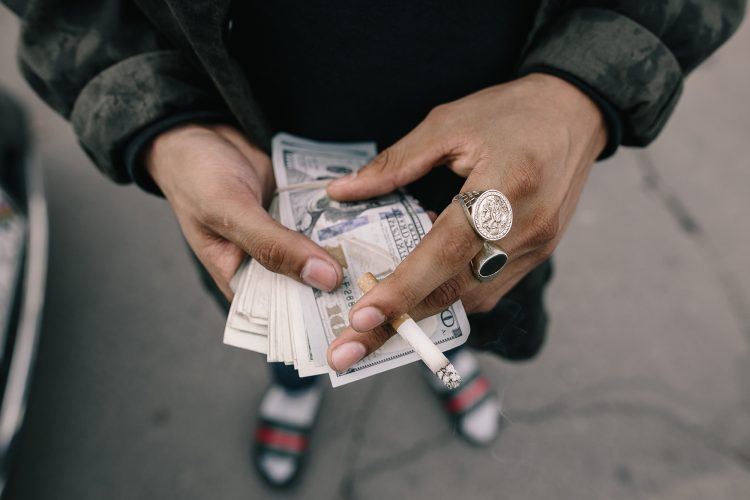
Photo credit: Jeremy Paige.
A surprise trigger was dropped on the Indian economy on November 8, 2016, when our prime minister Shri Narendra Modi banned the use of existing 500 and 1,000 Rupee notes. The most significant point to remember here is that these notes account for 86 percent of the total currency in circulation in India. As expected, and as conveyed by the government as well, there was some short-term pain for everyone after the announcement. Note that the word “short-term” in itself is subjective and varies from industry to industry as well as person to person.
Yes, trade across all facets of the economy was disrupted, and cash-centric sectors like agriculture, fishing, and the voluminous informal market were virtually shut down, with many businesses and livelihoods going under completely. (Not to mention the economic impact of millions of people standing in line for hours to exchange or deposit canceled banknotes rather than working or doing business.)
This all happened with a higher goal in mind that will become apparent in the coming years (despite the skeptics screaming otherwise). Remember, “short-term” is subjective.
I run Mypoolin, a fin-tech venture, so the whole economic machine is of keen interest to me. I had also been thinking for a long time about living a completely cashless life on a daily basis. This seemed like the perfect time to begin my journey and leave cash behind altogether. Note that the real test here was to see two things for myself:
- Whether living completely cashless is even possible in such a nation (or in some cities).
- If yes, then how easy/comfortable would life be after going cashless?
Let us look at the conditions of this real-life experiment:
- A young individual (26 years old)
- Building my own venture in NCR (frequently commuting across Delhi, Faridabad, and Gurgaon)
- Living in a shared flat with two flatmates
- Hobbies: gym, sports, and music
So what was the result of going completely cashless for 50 days?
I didn’t touch a single note or coin from November 10, 2016 to December 30, 2016 and lived pretty conveniently the whole time.
But why should I have all the fun? Let me take you on a brief journey of all the touch points where I replaced cash with its digital and superior equivalent.
Weekly/monthly household services (maid, water, and electricity)
Even though this has been a predominantly cash dependent area (especially maid services), we realized very soon that service providers are quite open to accepting money on their mobile via the most common options like Paytm.
The interesting part was that some of the other flat owners had been paying their maids (and other services) digitally even before demonetization.
Commute, parking, and car maintenance
This was one of the trickiest areas to work around, as not all gas stations and parking lots accept money in digital form. So I had to plan my way in advance, which actually helped my journey in the long run without adding any issues.
Food, drinks, and lifestyle
Rentals and small utility stuff (medicine, stationery, and furniture)





Stay updated on the go with our mobile app.
Get latest insights with smoother, more personalized experience through TIA mobile app.









📅 Upcoming Events
22 October 2026
Payoneer x CSPN Summit 2026