 Meghna Rao · · 7 min read
Deep in the hills of South India, an ex-Cisco engineer helps fuel an emerging IoT hub
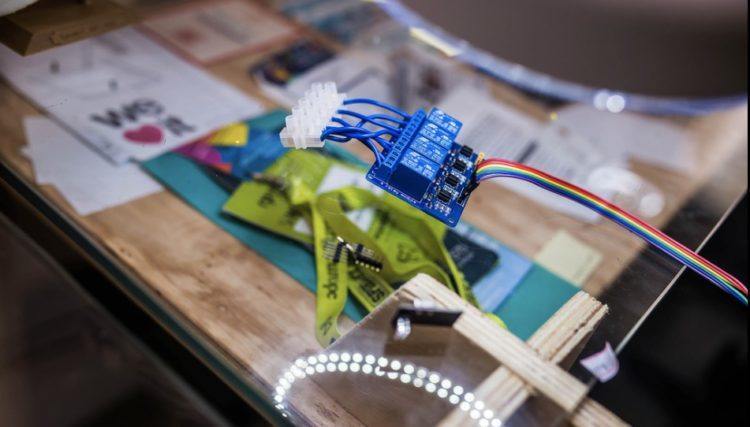
Photo credit: Olabi Makerspace.
Somewhere between the hilly Western Ghats of South India sits the city of Coimbatore. There, an accelerator wants to help build startups that connect everyday objects to the internet.
Known as the internet of things (IoT), it’s a huge market to tap. Gartner predicts that there will be 6.4 billion things – everything from pants to lightbulbs to motion detectors – connected to the internet by 2020.
Don’t be fooled by the big numbers – in no way is that market open for the taking. Large corporates are huge competitors. If they decide to invest in IoT, their expertise, established market shares, and distribution arms give them a clear advantage. And, while the fast-moving world of startups has the power of innovation on its side, IoT support, funding, and expertise are mostly reserved for those in Silicon Valley.
If there is support for IoT startups anywhere else, it’s definitely not in Coimbatore.
That doesn’t dissuade Vishwanathan Sahasranamam, though. He helps run the accelerator, Forge, and thinks Coimbatore is the perfect spot for India’s IoT scene to flower. With its many private industries, factories, and engineering colleges, he describes it as a perfect storm of factors that will contribute to an IoT hub.
“Private industries here would love to buy and help out with IoT products,” he says. “Six out of eight of the top ten engineering institutions in the state of Tamil Nadu are based here, but we’re exporting our students. How do we activate them to become entrepreneurs?”
Changing small town mindsets
After graduating with an engineering degree from Guindy, Chennai, and an MBA from IIM-Bangalore, Vishwanathan traveled across the world, working with Ericsson in Sweden and Cisco in California.
And yet, the boy from Tamil Nadu couldn’t escape the state. “I’m from a town known as Salem, but my wife is from Coimbatore so I decided to move back here,” he says.
While stories about moving back to idyllic little towns in India are romantic, Vishwanathan entertains none of that. Instead, he’s steadfast and realistic about the circumstances that come with working out of Coimbatore.
“The question is: do we wait for it to bloom in its own sweet time? Or do we take a different approach?”

Photo credit: Julian Burgess.
Take Onebee. It’s a fifteen-year-old company based out of Coimbatore that’s always worked with corporates. But in the past few years, it has decided that it wants to get into building IoT products specifically for Indian homes.
Beginnings of an enabling ecosystem
Where weird things take shape
Building out an IoT community





Stay updated on the go with our mobile app.
Get latest insights with smoother, more personalized experience through TIA mobile app.








📅 Upcoming Events
22 October 2026
Payoneer x CSPN Summit 2026