 J.T. Quigley · · 11 min read
SparkLabs’ jam-packed fifth demo day ‘indicative of Korean startup fever’
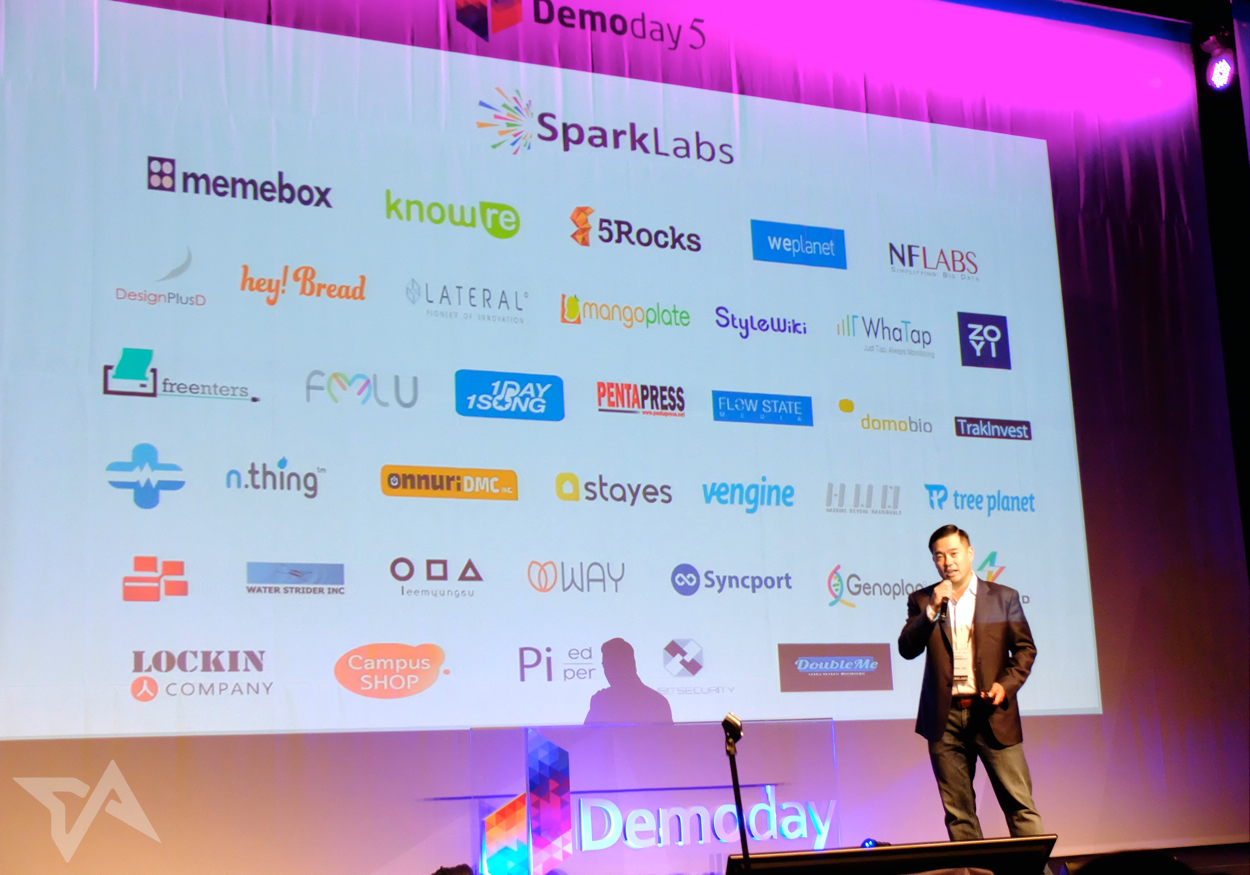
If the turnout at Korean startup accelerator SparkLabs’ fifth demo day this week is any indication, the local ecosystem is booming. Despite a highly-publicized MERS outbreak that has claimed the lives of 31 people and led to more than 100,000 would-be tourists canceling their visits to Korea, more than 1,400 attendees came to watch 14 startups strut their stuff on stage.
“We were thinking we’d get about 1,200 registrations, but we ended up with more than 1,800,” Bernard Moon, co-founder and partner at SparkLabs Global Ventures, tells Tech in Asia. “The turnout went well beyond our expectations. The second closest demo day in Korea, from a couple dozen or so competitors, got around 300.”
What’s driving the piqued interest in Korean startups? The country is home to the world’s fastest internet speeds, for one, and boasts among the highest smartphone penetration globally. There’s also a government-led initiative to launch blazing fast 5G connectivity by 2017 and a promise by current president Park Geun-hye to invest US$3.7 billion in Korean startups over the next three years. Seoul, in particular, has been positioned as a global proving ground for apps and everything mobile.
The event’s huge turnout – which led the accelerator to make a last-minute venue change in order to accommodate interested parties – was “indicative of the startup fever here,” Moon adds. And that goes far beyond SoftBank’s billion-dollar investment in Korean ecommerce provider Coupang. While small potatoes in comparison, the average SparkLabs incubatee has raised approximately US$500,000 prior to entering the program. Other local players – including SparkLabs accelerator graduate Memebox – have raised eight figures and counting.
From security and monitoring to the internet of things and virtual reality, here are the 14 teams representing SparkLabs’ fifth batch:
Wanted
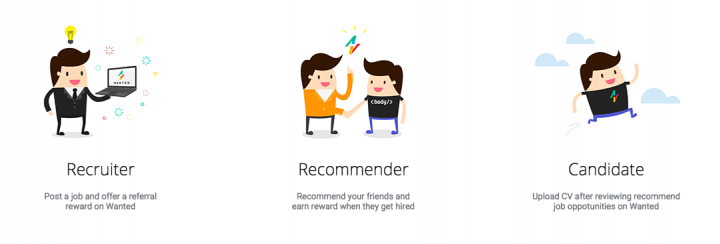
Headhunters and traditional recruitment services are expensive. Wanted is aiming to do for job search what people have been doing for years when arranging blind dates – leveraging personal social networks to refer friends and acquaintances who might be a perfect match for a company that’s looking to hire.
Wanted allows people to write references for connections in their various SNS accounts, which are then reviewed by potential employers who have posted a job description. Because writing a thoughtful reference can take a bit of time out of a user’s day, Wanted compensates them when someone they recommend is hired.
An example that Wanted shared during their presentation was a developer in Shanghai getting hired by local startup hero Memebox – the person who referred the eventual hire was given US$4,000 for making the connection. The current focus is on developers, designers, and those in the gaming industry.
Wanted, in beta since January, has already attracted 40 companies that have posted more than 200 jobs on the platform. The startup released its Android app to the general public on Tuesday.
WhaTap
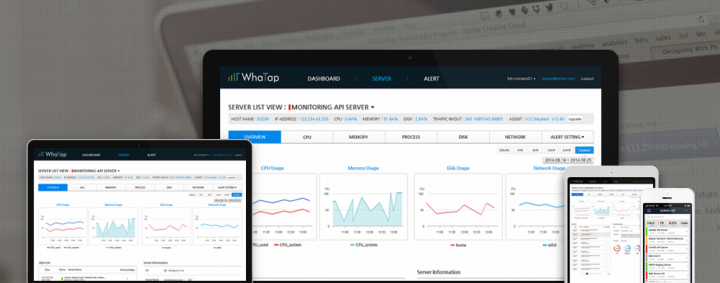
WhaTap, not to be confused with WhatsApp, is a cloud-based software-as-a-service startup that provides server and database monitoring. The service is used to preemptively warn users about potential risks or malfunctions, in real time, across multiple platforms: PC, mobile, and even Apple Watch.
While existing monitoring systems require licensing fees that can cost upwards of US$15,000 and take months to implement, WhaTap costs only US$30 per month per server and can be up and running in less than five minutes.
The startup has grown 300 percent since launching six months ago and has already attracted the likes of LG, SK Telecom, and Fujitsu. It will enter China in August through SparkLabs’ upcoming Beijing initiative, which was teased at the event.
WhaTap’s goal is to monitor 10,000 servers by the end of 2015 and 1 million by the end of 2016.
Town Us

In South Korea and elsewhere in Asia, university students have a tradition of wearing matching team uniforms to show pride in their various extracurricular groups. The process of collecting money, choosing a shop, and making sure the design and quality are top-notch can be a major headache for the person in charge of buying them.
Town Us is a group-buying platform that simplifies the process while guaranteeing high quality and competitive pricing. It also helps students save money by group purchasing other items, like dorm food, textbooks, and plane tickets.
Town Us claims a consistent 30 percent month-on-month growth rate and has already partnered with student unions at nearly 60 Korean universities. The startup is planning to expand to Japan and China and will also collect big data on students’ spending habits to build a prediction engine for future product sales.
Leemyungsu

Leemyungsu is a design firm that entered the tech space with Seilbag, an ordinary-looking backpack made for cyclists that’s equipped with a hidden safety feature. Using a wireless controller, riders can trigger stealthy LED lights embedded in the exterior fabric that can signal turns, tell drivers to stop, or flash a warning if there’s an accident.
Seilbag 2.0 has been upgraded for general consumers with colored LEDs and a smartphone app that lets them design their own light and design patterns.
Founder Myung Su Lee hopes to position his company as the “Dyson of wearable tech.”
DoubleMe
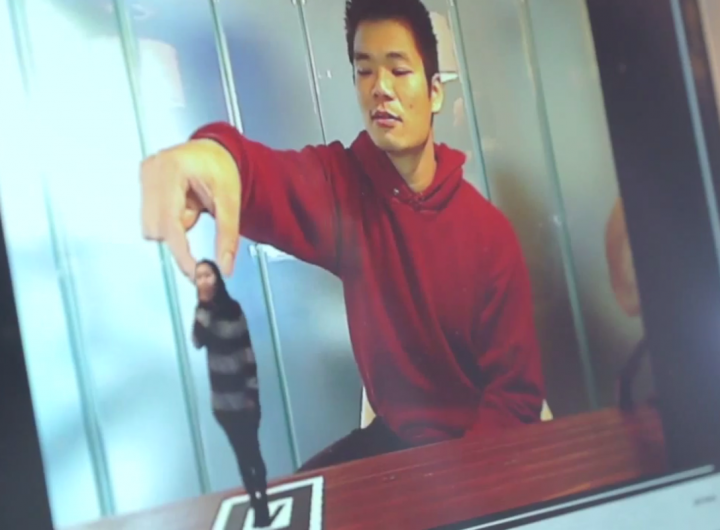
DoubleMe’s unique 3D capture system, Holo Portal, converts 2D videos into dynamic 3D models – think Princess Leia’s holographic message to Obi-Wan in Star Wars. Because DoubleMe relies solely on software – no special hardware or apparatus is necessary – 3D models can be captured with ordinary smartphone cameras.
The startup doesn’t charge for its capture technology because the end goal is to become the world’s biggest and best source for user-generated virtual reality content. Think of it as a futuristic YouTube for the burgeoning VR revival being led by the likes of Oculus and Samsung.
Qubit Security
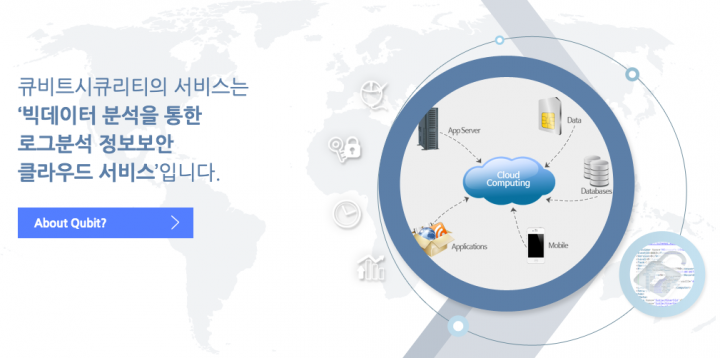
Qubit Security’s presentation opened with a brief recap of the Sony Pictures hacking scandal that saw former co-chair Amy Pascal publicly humiliated, and ultimately fired, after her private emails were compromised.
While most modern hacking detection is done post-mortem – assessing the damage after a hack has already been carried out – Qubit claims to be able to immediately detect hacking attempts using log analysis. The startup’s agent is installed directly on a company’s servers, which then sends all log data to the cloud where it can be analyzed in real time. A dynamic library engine keeps up-to-date on the latest hacking tactics.
Way

Way is a skincare gadget that can read both environmental conditions and the moisture content of a user’s skin, then use that data to make suggestions about applying sunblock or using a specific kind of beauty product. It has raised over US$110,000 on Indiegogo.
Since we last spoke with the Way team, the device itself has shrunk and the companion app has been tweaked. There are currently 243 individual skin types based on Way’s moisture sensor.
Way’s CEO told the audience that Way will analyze more than 120,000 users’ skin condition by the end of the year. The ultimate goal is leveraging that data to make original cosmetics and taking a piece of the US$500 billion global skincare market.
Dropbeat

Love it or hate it, Dropbeat is hoping to capitalize on the international EDM craze. It aggregates content from YouTube and Soundcloud to provide users with EDM-specific track streaming and artist discovery, both on the web and on the go via mobile devices.
The startup hopes to build a strong enough platform that it can eventually partner directly with DJs and copyright holders. Future plans include ticket and merch sales.
Dropbeat announced its public beta launch at demo day.
Lockin Company

Cloning popular mobile apps is a lucrative business for hackers around the world, with studies revealing that nearly 90 percent of the top 100 iOS apps – and pretty much all of the top 100 Andoid apps – have been cracked.
Lockin Company has developed a security solution that protects against the leaking of source code through complex encryption. The startup claims that it can be activated and running in less than three seconds.
At present, Lockin is only available for Android, but the startup already lists several major banks, SK Telecom, and Samsung Insurance as current clients.
Genoplan
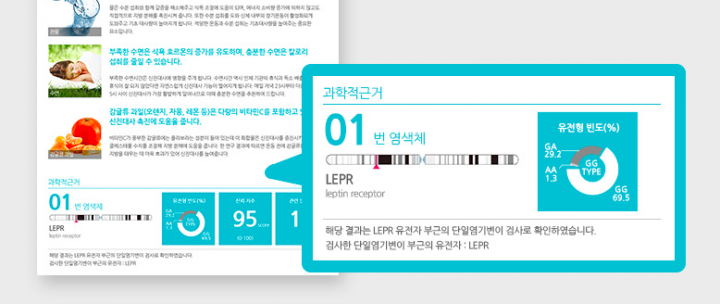
Genoplan is a lot like 23andMe, but it leverages DNA information for a specific purpose: weight management.
The startup claims that the reason a diet might work for one person but fail for another – even if they approach it with the exact same level of dedication – boils down to genetics. By analyzing a user’s DNA, Genoplan can better understand their obesity risk and recommend a diet plan that’s tailored to their own physiology.
Like similar services, users pay US$89 to receive a test kit and simply send a saliva swab back, which also includes a three-month subscription to Genoplan’s diet tracking app. The startup is concentrating on the Asian market, specifically.
LoanVi
LoanVi is the first peer-to-peer lending platform for Vietnam – and the first Vietnamese startup to be accepted into SparkLabs.
The founder was inspired by the unfortunate experience of a close friend who needed to borrow money for his wedding. The bank wouldn’t give him a loan without established credit history, so he was forced to get the money from a seedy loan shark – at 80 percent interest.
LoanVi is also being incubated by the Vietnamese Ministry of Science and Technology and has partnered with Vietnam International Bank. It launched in beta on June 15 and already provided 30 personal loans in its first week.
Evain

Voice phishing is a social scourge in Korea, with impostors pretending to be loved ones preying on the elderly and naïve. Evain’s product – called “What’s This Number” in Korean – identifies phone numbers and filters out spam calls by utilizing collective intelligence and big data.
What’s This Number launched in 2012 and has been downloaded more than 8 million times. The startup entered SparkLabs to design a strategy for expanding across Asia.
PiQuant
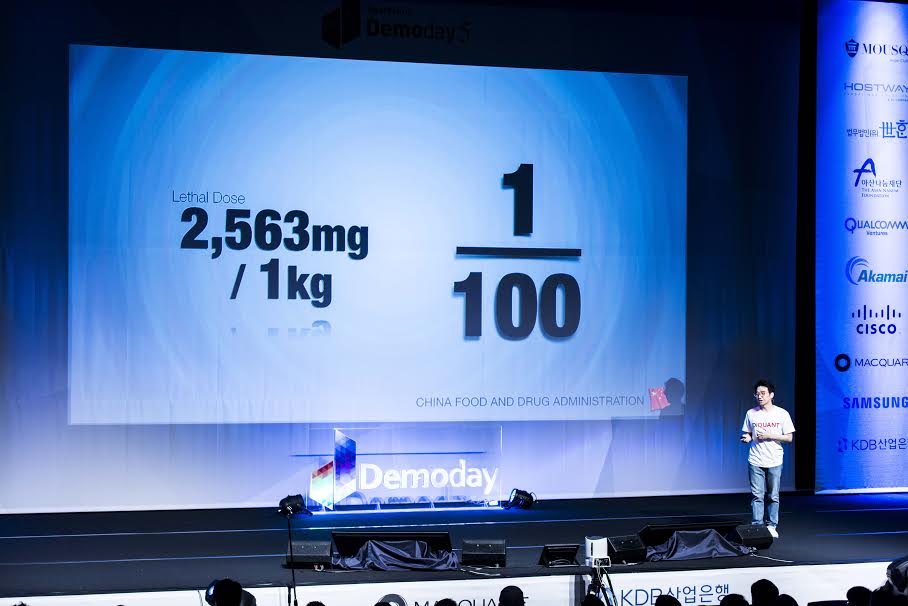
PiQuant is a liquid scanning device, but don’t think of it as the Korean answer to Vessyl – another drink scanner that was famously skewered by Stephen Colbert. While Vessyl simply told users what they poured into it – information readily available by looking at the drink’s label – PiQuant targets a specific chemical that can be found in baby formula: melamine.
The startup’s founder learned about melamine when his sister, who had been living in Shanghai, asked him to bring powdered milk from Korea when he visited. In China, several baby formula brands had been found to contain melamine, which can lead to illness or death in even trace amounts. Checking for the chemical would typically entail sending a sample to a laboratory for testing, but PiQuant’s portable scanner can do it on the go for a fraction of the cost.
The startup also offers a subscription model that adds the ability to detect other harmful chemicals, like lead, mercury, and artificial dyes. The team is also hoping to expand beyond liquid analysis and into other devices that could, for example, detect pesticides on produce or antibiotics in meat.
Tree Planet

Tree Planet is the first social venture to attract investment from SparkLabs. The startup creates engaging means to plant real trees, including smartphone games and a crowdfunding platform that allows users to plant “star forests” with celebrities.
Tree Planet’s Tree Story game allows players to nurture virtual vegetation, with real trees planted as they progress. It’s already available in the US, in partnership with the US Forest Service, and is heading to China soon. The game has been downloaded more than 350,000 times and has contributed to the planting of 230,000 trees.
The Star Forest initiative has seen fans (mostly of K-pop singers and Korean actors) come together to sponsor 60 forests across the world since 2012.
Including collaborations with charity organizations, the startup has planted 80 forests containing 520,000 total trees in 10 different countries. With assistance from the Audrey Hepburn Foundation and 200 million won (US$180,000) in donations, Tree Planet recently began planting the Sewol Memorial Forest to commemorate the students who lost their lives in the tragic ferry sinking in April 2014.
Stay updated on the go with our mobile app.
Get latest insights with smoother, more personalized experience through TIA mobile app.
Recommended reads
 Nykaa’s financial health in 5 charts
 🇮🇳 Roundup: GlobalBees buys fitness brand Reach, more
 Binance, YG team up for metaverse, blockchain projects
 Thai blockchain startup emerges from stealth mode with mentor-to-earn platform
 Why Chai didn’t spill even as Luna collapsed
 These funds have not invested in India in the past year
 Indian healthtech startup gets $15m funding dose from Alpha Wave, Lightrock
 60/40 Podcast: No such thing as a free lunch (or chocolate)
 Stripe to lay off 14% staff amid economic downturn
 Indian insect biotech firm locks in $3.4m seed funding





Editing by Terence Lee
(And yes, we’re serious about ethics and transparency. More information here.)



📅 Upcoming Events
22 October 2026
Payoneer x CSPN Summit 2026