 Steven Millward · · 2 min read
On China’s craziest sales day, Alibaba wants online discounts to appear in offline stores

Shanghai shopping street Nanjing East Road (photo by Achim Fischer)
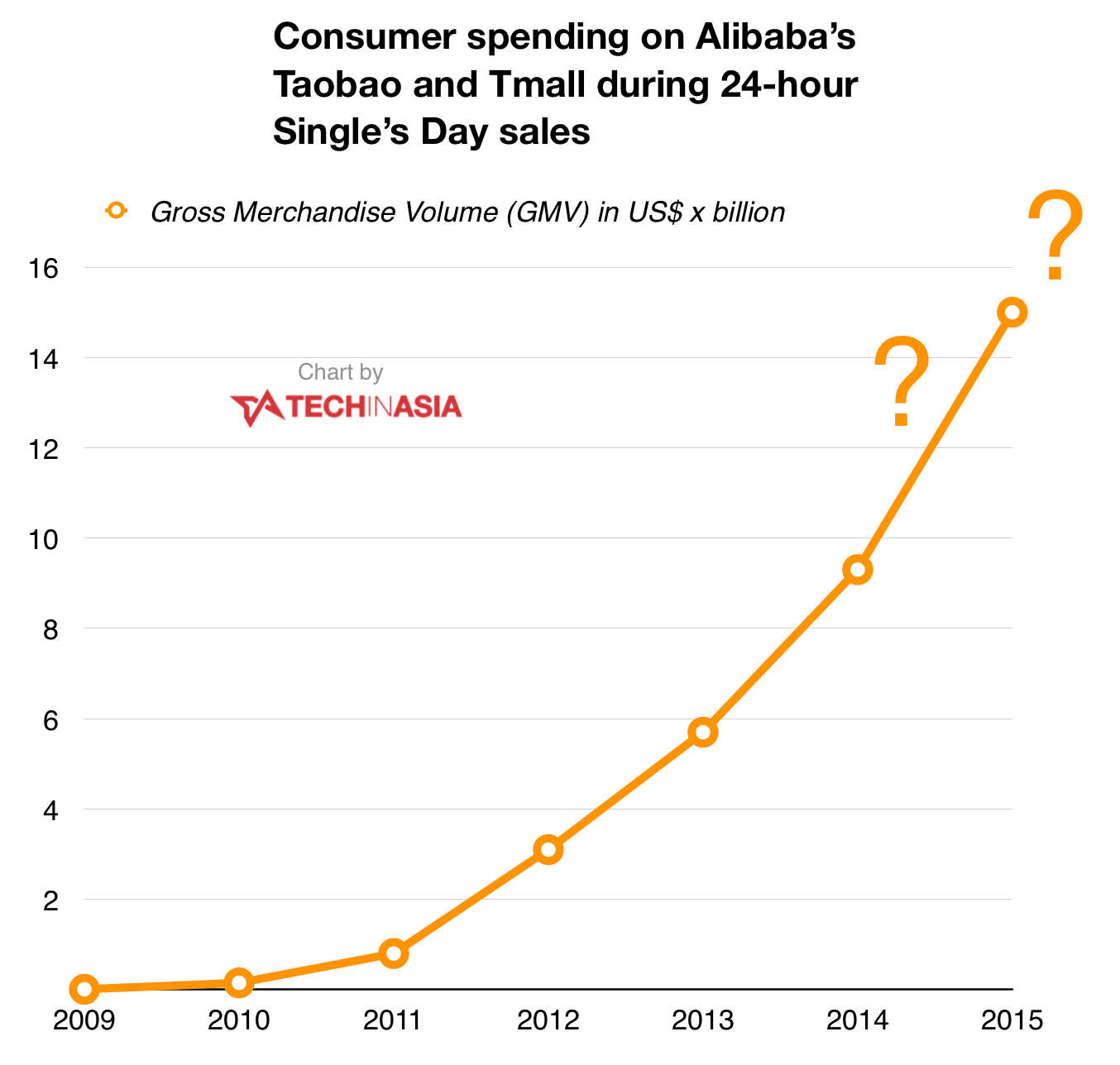
China’s craziest shopping day doesn’t involve shoppers elbowing and trampling each other in pursuit of a flatscreen TV that’s half the usual price. That’s because it happens online. Each year on November 11, people across China load up their virtual shopping carts to nab discounts on their favorite ecommerce sites. Last year’s shopapalooza saw Chinese consumers spend US$9.3 billion in just 24 hours on Alibaba’s online marketplaces, Taobao and Tmall.
For this year’s 24-hour shopfest, China’s ecommerce leader wants brick-and-mortar stores to join in the action. Alibaba this afternoon said on its corporate blog that “today through November 11, the same ‘11.11’ festival products, prices, services, logistics and membership benefits normally available to shoppers on Tmall will also be available to those who visit the stores of participating merchants.”
Bricks and clicks
“What we really want to achieve is to help partners and merchants digitalize their offline businesses,” said Zhang Kuo, senior director of Alibaba Group’s mobile business division. He added that “offline and online products have been cut off” and that retailers need to “synchronize” their businesses across the two spaces.
That’s why it’s “merging bricks with clicks” (as the announcement put it) to close the gap emerging between offline and online sales in terms of prices, the products in stock, and the levels of service – as well as stuff consumers don’t ever think about, like back-end logistics. To do this, the firm has signed up offline partners, though there aren’t many of them. The Intime department store chain (in which Alibaba has invested), electronics retailer Suning (also an Alibaba investment), and appliances and gadgets maker Haier (yup, funded by Alibaba) are the three core partners. Who said money doesn’t buy you friends?
Global brands Estée Lauder, Mars, and Chow Tai Fook are also signed up.
Although the offline reach is limited, it shows the online shopping bonanza – referred to as Singles Day in China, which is a whole other story – that began with little impact in 2009 has now gone so mainstream that it’s even shaking up the way Main Street retailers operate.
How big will China’s “Black Friday” (disappointingly, it’s on a Wednesday) be this year? If the annual growth continues, Alibaba’s shoppers could end up spending US$15 billion in just 24 hours – that’s not too far short of the initial figure put on Facebook’s acquisition of WhatsApp.
Editing by Charlie Custer
(And yes, we’re serious about ethics and transparency. More information here.)





Stay updated on the go with our mobile app.
Get latest insights with smoother, more personalized experience through TIA mobile app.












📅 Upcoming Events
22 October 2026
Payoneer x CSPN Summit 2026