- Premium Content It takes our newsroom weeks - if not months - to investigate and produce stories for our premium content. You can’t find them anywhere else.
 Qishin Tariq · · 6 min read
Is 2022 the year of insurtech? Not so fast
Three different insurtech startups in Southeast Asia announced their latest fundraising rounds over two days in May. While Aman and Aigis both raised around US$1 million pre-seed and seed rounds, respectively, fellow Indonesian startup Qoala raised US$65 million in a series B round.
The timing may have been a coincidence, but one month later, Eurazeo – which backs Grab – announced a US$215 million fund exclusively for investing in insurtech players in Southeast Asia. The French investment firm had also led Qoala’s series B round.
These developments beg the question: Is 2022 the year of insurtech in Southeast Asia?
Pandemic-induced tailwinds, coupled with maturing startups, may have given the space a boost. Southeast Asia’s insurance market is poised to hit total gross written premiums of US$203.6 billion this year, according to data from The Market Reports. In comparison, insurance premiums in Southeast Asia had amounted to US$111 billion in 2019, according to the Swiss Re Institute.
At the same time, insurtech companies in markets like the US – some of which have gone public – went through a market correction last year. Now, with growing prospects of a global economic downturn, other fintech verticals like stock trading and cryptocurrency are in a downward spiral.
Which way will Southeast Asian insurtech go?
See also: SEA’s leading insurtech players
Why the distribution model still wins – for now
David Yin, a partner at Silicon Valley-based VC firm GSR Ventures, is “not particularly bullish” on insurtech at the moment.
“Not saying the industry can’t succeed,” he clarifies. However he believes that globally, insurtech players typically seem to just digitalize the distribution of insurance contracts, which Yin says is an “okay” business model but “not anything spectacular.”
For Yin, the biggest question is around customer acquisition costs – specifically, whether these costs make sense if startups don’t touch other parts of the business like underwriting or risk management?
Players that do touch underwriting and risk management are typically referred to as “full-stack insurers.” These companies – the likes of Igloo (formerly Axinan), Singlife, and Sunday in Southeast Asia – do everything from building the tech and distribution platform to insuring consumers (which requires underwriting expertise, among other things).
Pieter Kemps, a principal at Sequoia Capital India, agrees that “more value can be created by companies that can ‘manufacture’ new insurance products, often for use cases where no insurance products existed before,” he explains.
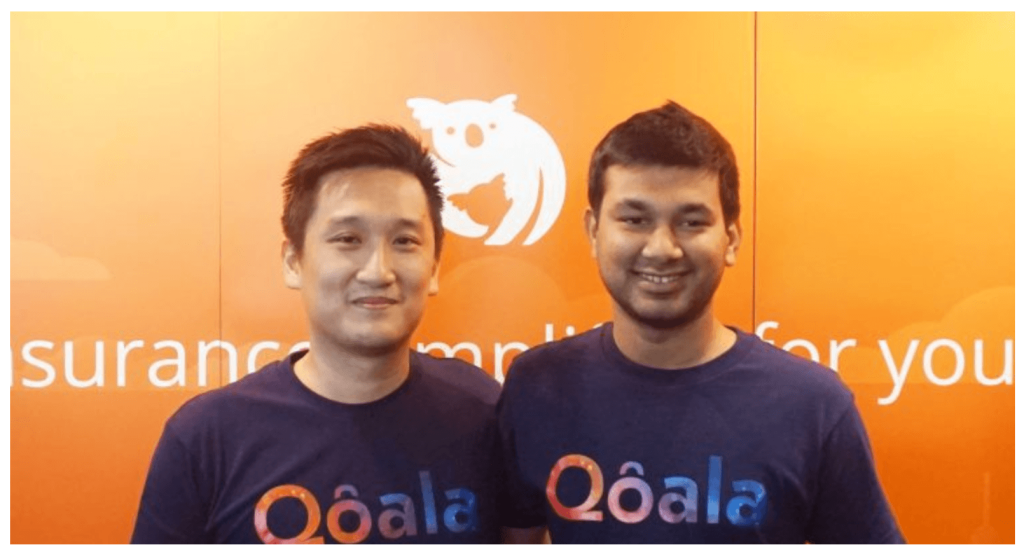
(From left) Qoala co-founders Tommy Martin and Harshet Lunani / Photo credit: Qoala
Proceed with caution
Stay ahead in Asia’s tech landscape
This is premium content. Subscribe to read the full story.
Investors seem bullish about insurtech as money pours into the space. But can the products live up to the hype?
We know this is not ideal. ⌛ Sign up in 20 seconds. Cancel anytime.
Our subscriber community includes professionals from these companies:





Stay updated on the go with our mobile app.
Get latest insights with smoother, more personalized experience through TIA mobile app.








📅 Upcoming Events
22 October 2026
Payoneer x CSPN Summit 2026