 Rick Martin · · 3 min read
Mapping Radiation: Yahoo Japan Publishes Data, Safecast.org Plugs Along
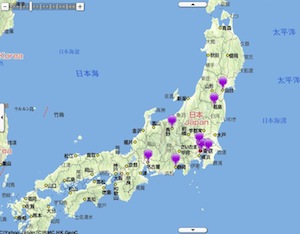 Yahoo Japan has made a start on publishing radiation measurements from 11 locations around Japan. The data is being gathered by a team from Keio University,* and can can be viewed by visiting radiation.yahoo.co.jp. The page includes an interactive map that shows the latest information, which updates at approximately five-minute intervals.
There are reportedly plans to increase the number of locations in the future, but for now this is a promising step. Besides publishing the data in map form and in HTML tables (I’ve machine translated them here), Yahoo is also publishing CSV files for each location, a good step in allowing the information to be repurposed by others. To find these files, users must click through to each location page and scroll down. (e.g. Here’s Chuo 2-chome, Aoba, Sendai) There is a graphical guide included as well to help viewers understand what the numbers mean.
Leave it to the little guys
Meanwhile, as we wait for government and local media to step up their game in making radiation information available to the public in a way that’s easy to understand, Safecast.org keeps chugging along on its shoestring budget that got an early boost of $37000 on Kickstarter.
Safecast is taking measurements and collecting its own data, but also aggregating data published by a number of other sources. They’re currently taking donations via Paypal, so I encourage you to pitch in a little. But I’m a little baffled as to why government or local media isn’t stepping up to send some funding its way considering that Safecast is doing work that they should be doing.
Check out Safecast’s field report from yesterday, with Xeni Jardin of BoingBoing fame in tow. Here’s what she was saying on Twitter yesterday:
Cautionary procedure back in Tokyo: shower first. Do readings on soles of shoes. Launder or throw away clothes, shoes, protective gear. Just as visual story of a painting is told as much by the “negative space,” the empty field—so is #Fukushima story told by the emptiness. The human toll, impact on countless evacuated families; whatever becomes of workers, cops, others remaining, ill-protected, ill-informed… ..that’s what I’m thinking abt. And this: there’s no truly safe place. Radiation travels in unexpected ways. Transparency & data save lives. The tendency for authorities to hide the worst information & protect authority for its own sake? That will kill people. Even with an abundance of reliable geigers, people who know how to use them, excellent data sharing systems? Very hard to define safety. And Japan lacks all of that right now. The people affected here want it badly. @safecastdotorg are doing critical work and need support.
Update from @seanbonner of Safecast: “[T]he data that Yahoo is publishing was collected by a joint Safecast/Keio university team. We designed, programmed and placed the sensors and then published the data they are brining, which Yahoo! is republishing.” (Sounds like Safecast is doing even more than we thought they were!)
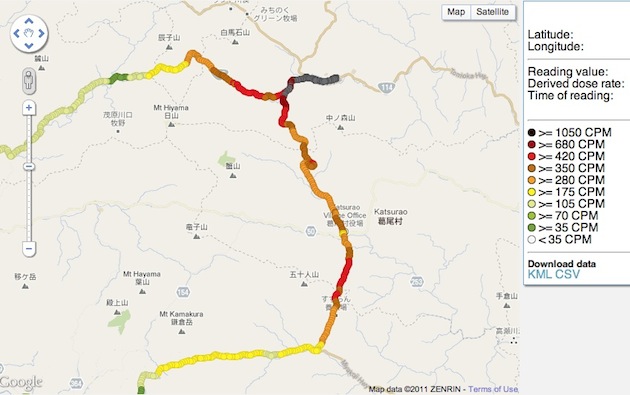
Safecast maps radiation readings as they drive: safecast.org/drive/139





Stay updated on the go with our mobile app.
Get latest insights with smoother, more personalized experience through TIA mobile app.



📅 Upcoming Events
22 October 2026
Payoneer x CSPN Summit 2026