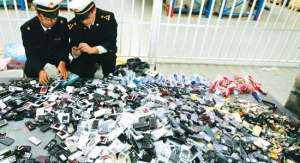
 China has long been known as the land of shanzhai — “bootleg” — tech. As gadgets took off in China, the wallet of anyone who could make a decent imitation of a popular product was bound to get fatter. An early iPod, a digital camera, an eBook reader, it didn’t matter. All were copied with varying degrees of success, and all were sold.
But all that may be changing as China’s middle class grows and its tastes in gadgetry become more refined. A simple Nokia handheld, after all, is easy — and cheap — to fake. But faking an iPhone isn’t nearly as easy (or as cheap).
Today’s Global Times (an official state media outlet) carried a story on the “upward mobility” of mobile phone users, and the doom it might spell for counterfeit phone makers. The advent of 3G, especially, has made business difficult. The GT quotes a shanzhai phone salesman as saying:
“Shanzhai mobile phones are not as popular as in the past. More and more people like 3G smart phones. Last year, I could sell at least 20 shanzhai mobile phones in one day, but now just 5 or 6, “
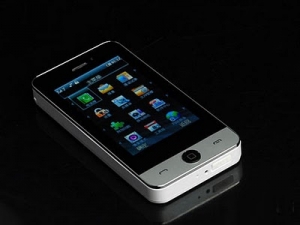
A fake iPhone 4
But it’s not just mobile phone makers that could be facing this conundrum, as tastes in other gadgets have gotten expensive. Small, handheld digital cameras, which were once immensely popular in China (and still are in some places) are relatively easy to fake. But nowadays many middle-class photo lovers prefer consumer DSLR cameras with interchangable lenses, with the Canon and Nikon lines being the most popular. These cameras, and their eye-catching branded shoulder straps, are now ubiquitous at any tourist site in China, you’re bound to see both young and old with DSLRs draped ’round their necks.
But while those shoulder straps might be easy to fake, the cameras themselves are not. The mirror-based sensor technology and the interchangable lens requirements, not to mention the advanced software required for precise autofocus on sensors that shoot photos 18 MP and larger, require research and development that shanzhai electronics makers can’t afford, and the manufacturing process also requires steep up-front investment that fly-by-night operations simply can’t afford.
PC makers have also taken a hit, as Apple computers — very difficult to fake — gain more traction, and PC consumers in major cities grow more brand-conscious and their desires move from “having a computer” to “having that computer, the one that supports touch gestures, has four GB of RAM, and a built in camera and microphone, plus…”
Of course, not everyone is ready to roll over and die. Some shanzhai electronics makers are upping their game either by moving towards unique and original product lines or by spending the time to fake even the most expensive devices well. Others are refocusing on rural areas and more remote cities, where tastes still skew towards the inexpensive rather than the fancy, shiny brand names that are beginning to dominate China’s major cities.
And while the sword of Damocles may be hanging ever lower above the heads of hardware counterfeiters, software pirates are still enjoying smooth sailing. “Make sure it’s an authorized version of Windows 7! They’re really different!” pleads one Microsoft advertisement plastered all over Beijing’s Zhongguancun subway station, which serves the city’s biggest electronics markets. But thusfar, consumers are in no real rush to pay premiums for authentic software that functions exactly the same as the real thing.
There, software, music, and video pirates have an advantage: it’s a whole lot easier to copy complex computer code than it is to copy hardware. If only Control+C worked for phones, perhaps counterfeit manufacturers wouldn’t be in this mess.
(Image source: Global Times and this blog, respectively)





Stay updated on the go with our mobile app.
Get latest insights with smoother, more personalized experience through TIA mobile app.









📅 Upcoming Events
22 October 2026
Payoneer x CSPN Summit 2026