- Premium Content It takes our newsroom weeks - if not months - to investigate and produce stories for our premium content. You can’t find them anywhere else.
 Samreen Ahmad · · 6 min read
From bust to boom: Zomato turns the tide
Over the past year, the stock price of Indian food delivery platform Zomato soared by more than 200%, peaking at an all-time high of 197 rupees (US$2.40) at the close of trading on May 3.
This surge goes beyond the recent global and domestic enthusiasm for Indian equities. The benchmark-based index Nifty 50, for instance, only advanced by around 20% over the same period.

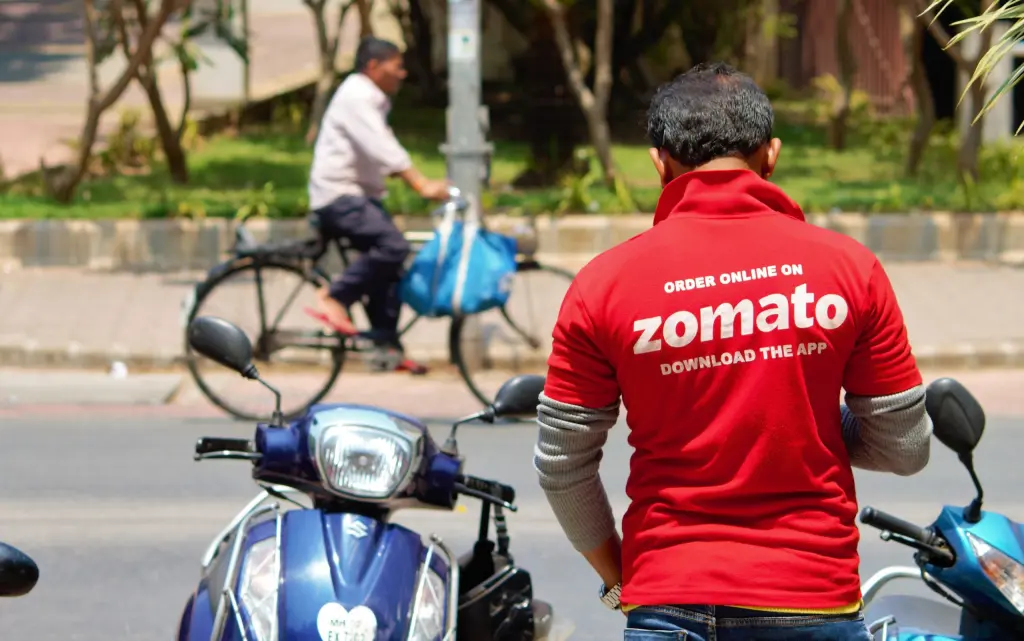
Image credit: Timmy Loen
Zomato’s bull run is not a flash in the pan. Investment bank Goldman Sachs recently raised its stock target price for the company to 240 rupees (US$2.90), up from the previous 170 rupees (US$2), and a further upside of 22% from the current all-time high.
Reversal of fortune
The 18 months following Zomato’s US$1.2 billion public listing in 2021 had not painted such a rosy picture.
A year after its IPO, the company’s shares plunged by more than 60%, thanks to concerns over high valuations and the correction in growth stocks as interest rates started to go up.
Investors were also underwhelmed by Zomato’s US$568 million all-stock acquisition of grocery delivery startup Blinkit, citing issues such as tight competition in the sector and significant cash burn.
But loss-making Zomato reversed its fortunes and posted its first profitable quarter in the quarter ended June 2023, only two years after its stock market debut.
“No one expected Zomato to become profitable so quickly,”
Pushkar Singh, co-founder of startup advisory and investment firm Tremis Capital, tells Tech in Asia.
How did Zomato thrive in the highly competitive food delivery and quick-commerce sectors, especially considering that its primary competitor, Swiggy, recorded losses of US$200 million in the nine months to December 2023?
Ads, acquisitions, analytics
Advertising revenue has proven to be a key ingredient in Zomato’s recipe for profitability. This involves restaurants running ads on the Zomato app to enhance their visibility.
“It is a very high-margin vertical, and almost the entire growth [in revenue] flows through directly to the bottom line,” Abhisek Banerjee, internet lead analyst at ICICI Securities, tells Tech in Asia.
Zomato does not disclose separate figures for its ads business in food delivery, but for reference, ecommerce titan Amazon’s ads business is estimated to have “well over 50%” operating margins. This is comparable to Zomato’s overall adjusted earnings margins of around 3.5% in the quarter ending December 2023.
Mostly outperforming global peers
Stay ahead in Asia’s tech landscape
This is premium content. Subscribe to read the full story.
Ads revenue, the Blinkit acquisition, and data analysis have helped reverse Zomato’s fortunes in a few months after its post-IPO crash.
We know this is not ideal. ⌛ Sign up in 20 seconds. Cancel anytime.
Our subscriber community includes professionals from these companies:





Stay updated on the go with our mobile app.
Get latest insights with smoother, more personalized experience through TIA mobile app.