- Premium Content It takes our newsroom weeks - if not months - to investigate and produce stories for our premium content. You can’t find them anywhere else.
 Elyssa Lopez · · 6 min read
Viber’s super-app gamble in its only Southeast Asian stronghold
There isn’t a day that Marie Jershel Co, owner of gift-packaging business Happy Twine Supplies, does not use Viber.
She regularly chats and transacts with her clients and suppliers on the messaging app.
“Even when a client inquires on Messenger, they eventually ask for my number on Viber instead,” she says. “At least I know when I open Viber, it’s for business.”
Owned by the Japanese tech conglomerate Rakuten, Viber is among the top five messaging apps for both Android and iOS users in the Philippines as of mid-November, according to Similarweb.
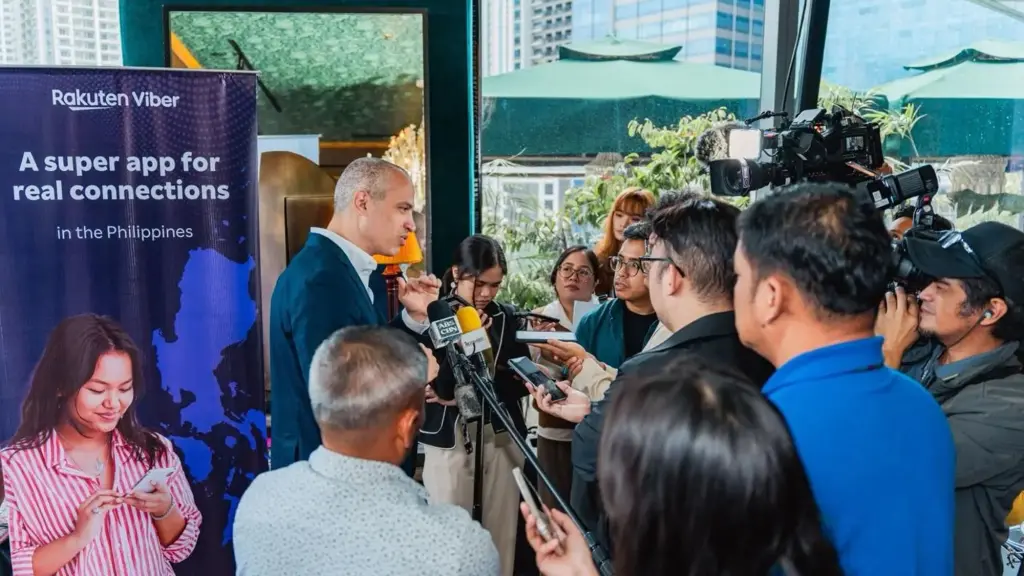
Viber CEO Ofir Eyal during the launch of Viber Business in the Philippines. / Photo credit: Rakuten Viber
It’s the only country in Southeast Asia where it holds this position, with the app not even ranking among the top 10 in neighboring markets.
Over the years, it has built a reputation as the messaging app of choice for Filipinos from almost all walks of life. Japanese media reports that Viber has a 71% user penetration rate in the Philippines, or about 70 million users.
With such dominance in the market, Viber is bringing out the big guns with the aim of becoming the country’s super app of choice.
In September, it launched Viber Marketplace, which gives users a list of nearby businesses that have Viber Business accounts. It categorizes them by the type of product or service they offer.
By October, the feature had two million interactions – defined by users clicking on the Viber Marketplace page on the app – says Cristina Constandache, the company’s chief revenue officer.
Viber is also teasing the possibility of launching a payment service called Viber Pay. According to experts, a payment service gateway is critical to reach super-app status.
But with ride-hailing giant Grab and the Philippines’ largest e-wallet operator GCash both making their own attempts to become the country’s super app of choice, Viber may be facing an uphill and costly battle.
“There’s a lot of existing habits on how consumers interact with existing apps now, like how they shop online, and it would be very challenging for Viber to disrupt any of that,” Kevin Brockland, managing partner of Malaysian VC fund Indelible Ventures, tells Tech in Asia.
‘Viber country’
Launched in the Philippines in 2010, Viber was among the first messaging apps of choice for many Filipinos.
How to be a super app
Can Viber commit?
Stay ahead in Asia’s tech landscape
This is premium content. Subscribe to read the full story.
Viber’s Philippine user base could serve as a springboard for its super-app ambitions, but it has to contend with GCash and Grab making the same play.
We know this is not ideal. ⌛ Sign up in 20 seconds. Cancel anytime.
Our subscriber community includes professionals from these companies:





Stay updated on the go with our mobile app.
Get latest insights with smoother, more personalized experience through TIA mobile app.