- Premium Content It takes our newsroom weeks - if not months - to investigate and produce stories for our premium content. You can’t find them anywhere else.
 Elyssa Lopez · · 6 min read
As US turns tepid, Asia’s climate tech sector seeks new funders
Kevin Junker, CEO and founder of Vietnam-based SmartSolar, is fresh off a US$1.8 million pre-seed round this month. Though he has around two to three years before the next round takes place, he expects that it will be harder to raise.
“By then it will be in the middle of the Trump administration, and accessing capital would be slow,” Junker says. “I know it will be challenging.”
Since US President Donald Trump returned to the Oval Office, big banks in the country have rolled back their climate change initiatives. This comes as one of his first orders was to pull the US out of the Paris Agreement.
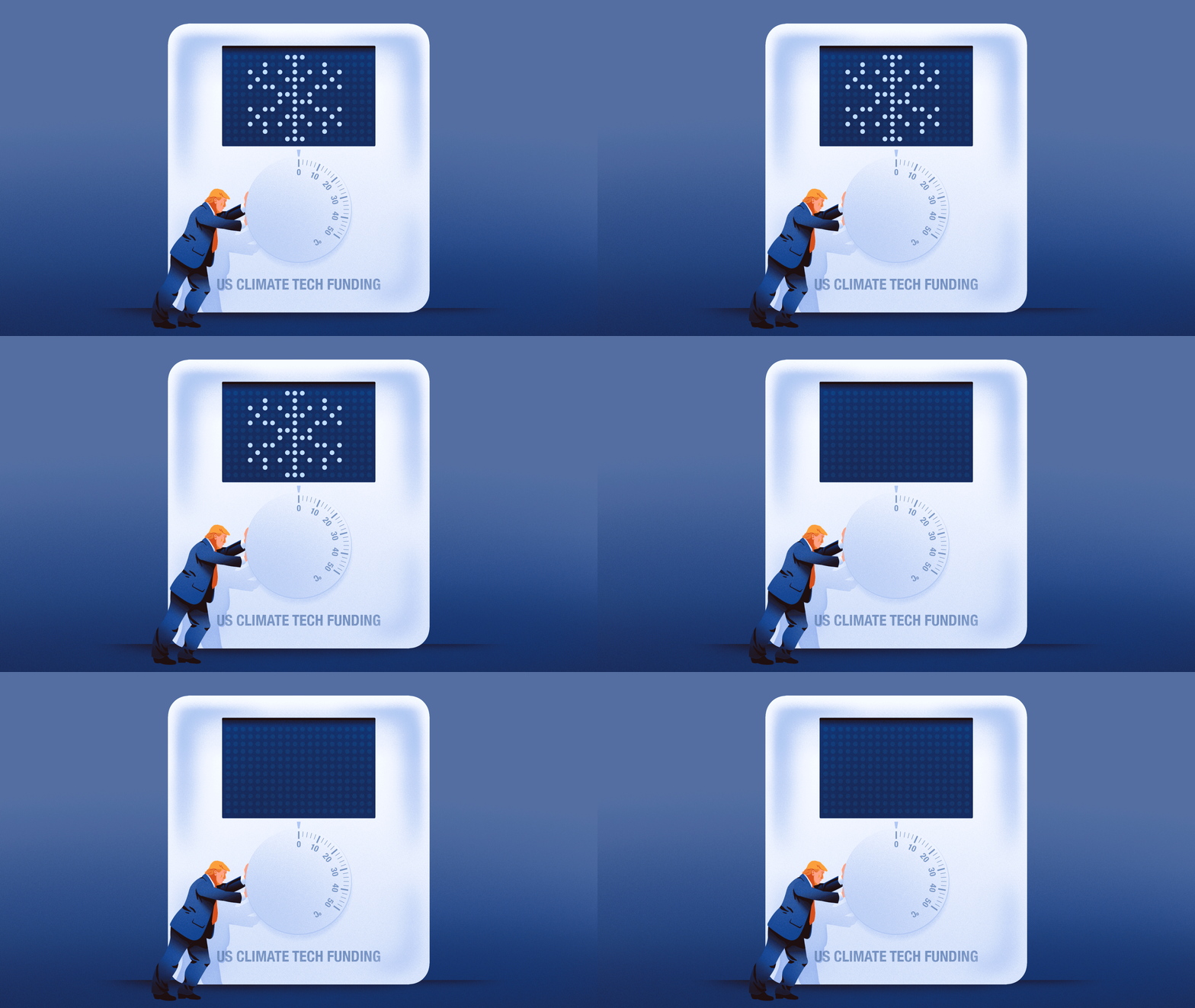
Image credit: Timmy Loen
That’s bad news for any climate tech startup that has come to rely on US-based capital. Though funding for the sector in 2024 plunged by 40% to just US$50.7 billion – the lowest amount of capital since 2021 – the country is still the world’s biggest backer of climate tech startups, according to Bloomberg research.
Funding for climate tech in India and Southeast Asia also declined last year by 33% and 12%, respectively. Startups in these regions now find themselves wondering where to source their next fundraise and which of them will receive investment.
Plugging the funding gap
Investors say they expect family offices, sovereign wealth funds, and investment arms of corporations to fill the gap.
For instance, India-based Synpases VC is attracting interest from Indian family offices and corporations as it raises money for a US$125-million venture fund, says Ruchira Shukla, the firm’s founding partner.
“Domestic companies are seeing that if they don’t start investing in climate tech solutions now, they’ll be left behind,” she says. “The reality is, the green supply chain will be the norm.”
See also: Mapping the family offices spreading wealth across startups in SEA (updated)
The European Union (EU) recently passed a policy mandating companies that employ more than 1,000 workers to “identify human rights and certain environmental risks in their value chains, take preventive and remedial measures, and report on such measures.”
India counts the EU as its second-biggest export destination. With such measures, it’s expected that EU’s partners in Asia would be stricter in implementing a sustainable supply chain.

Synapses co-founder and managing partner Ruchira Shukla. / Photo credit: Synapses
Compliance and cost savings still matter
Financial over environmental returns
Stay ahead in Asia’s tech landscape
This is premium content. Subscribe to read the full story.
Family offices, sovereign wealth funds, and investment arms of corporations outside the US could fill the gap.
We know this is not ideal. ⌛ Sign up in 20 seconds. Cancel anytime.
Our subscriber community includes professionals from these companies:





Stay updated on the go with our mobile app.
Get latest insights with smoother, more personalized experience through TIA mobile app.