 Winston Zhang · · 6 min read
Turning payment chaos into tailored customer experiences

Summary:
- Singapore is rapidly becoming a “wallet-less” society, with 36% of residents no longer carrying physical wallets and over 60% using mobile tap-to-pay options for daily transactions.
- Despite consumer convenience, retailers face “fixed counter” problems, such as long queues and the high cost of managing multiple siloed payment terminals and vendors, which can lead to significant resource drain and loss of sales.
- Adyen is addressing these hurdles with its own platform and its mobile point-of-sale features, including Tap to Pay on iPhone, that allow merchants to accept payments anywhere, unify payment data for better customer insights, and level the playing field for businesses of all sizes.
- Learn more about Tap to Pay on iPhone on Adyen’s website.
It’s getting increasingly easier to go completely cashless in Singapore.
Whether you’re picking up bread at the convenience store, going on a quick coffee run, or getting a new pair of shoes because yours broke en route to the office, you can easily make a transaction – no cash required.
“The landscape is characterized by a massive behavioral shift where digital and cashless transactions are the standard,” says Ben Wong, general manager of Southeast Asia and Hong Kong at global fintech platform Adyen. “Singapore is a market evolving at a rapid pace, defined by a move toward personal and portable payments.”

Ben Wong, general manager of Southeast Asia and Hong Kong at Adyen / Photo credit: Adyen
However, digital payments have not solved some of the perennial problems associated with physical retail, and merchants can have a rough go when trying to provide these cashless experiences.
More terminals, more problems
For consumers, seeing the myriad of logos and payment terminals at the checkout counter represents choice and convenience. Whatever app or card you have, it can most likely be used.
But for merchants, providing all these options can entail complexity and even frustration, especially considering the fundamental physical limitations many stores are faced with.
In a typical retail setup, payments can only be made at one section of the store: the counter. Offering different payment options can therefore cause long queues and friction in the customer experience, which might lead to some customers simply leaving in frustration. This lack of flexibility is also known as the “fixed counter” problem.

Photo credit: Yudi Angga Kristanu / Shutterstock
Backend issues abound, too.
“Managing a fleet of physical payment terminals can be incredibly cumbersome,” Wong explains. “With different payment terminals, payment data becomes fragmented; refunds and other processes are trickier. The manual refund, reconciliation, and fleet management when scaling is extremely time-consuming.”
He adds that since the digital and physical payment worlds often operate independently of one another, this disconnected, siloed approach means that 40% of Singapore retailers currently spend significant time and resources managing multiple different payment vendors rather than focusing on growth.
These backend hurdles also adversely affect customer experience. In the city-state, 56% of shoppers will walk away from a purchase if their preferred payment method isn’t available.
Meanwhile, fragmentation influences a brand’s relationship with a customer – when a consumer is flooded across disconnected touchpoints rather than being recognized as the same person across online and in-store channels, customer loyalty takes a significant hit.
Beyond convenience, toward growth
Adyen helps tackle this challenge with its suite of mobile point of sale (mPOS) solutions.
The term “mPOS” refers to wireless mobile payment devices that process payments. Unlike regular POS machines, they can accept payments as long as they are connected to the internet, which means they don’t need to be plugged into a power source.
This helps solve multiple issues for merchants. Firstly, it addresses the “fixed counter” problem by enabling sales staff to accept payments from anywhere in the store. Transactions can be made at the spot, and customers don’t have to queue to pay for their items, decreasing the likelihood of them abandoning their carts.
This “queue-busting” feature, according to Wong, makes a huge difference, especially during busy sales periods.
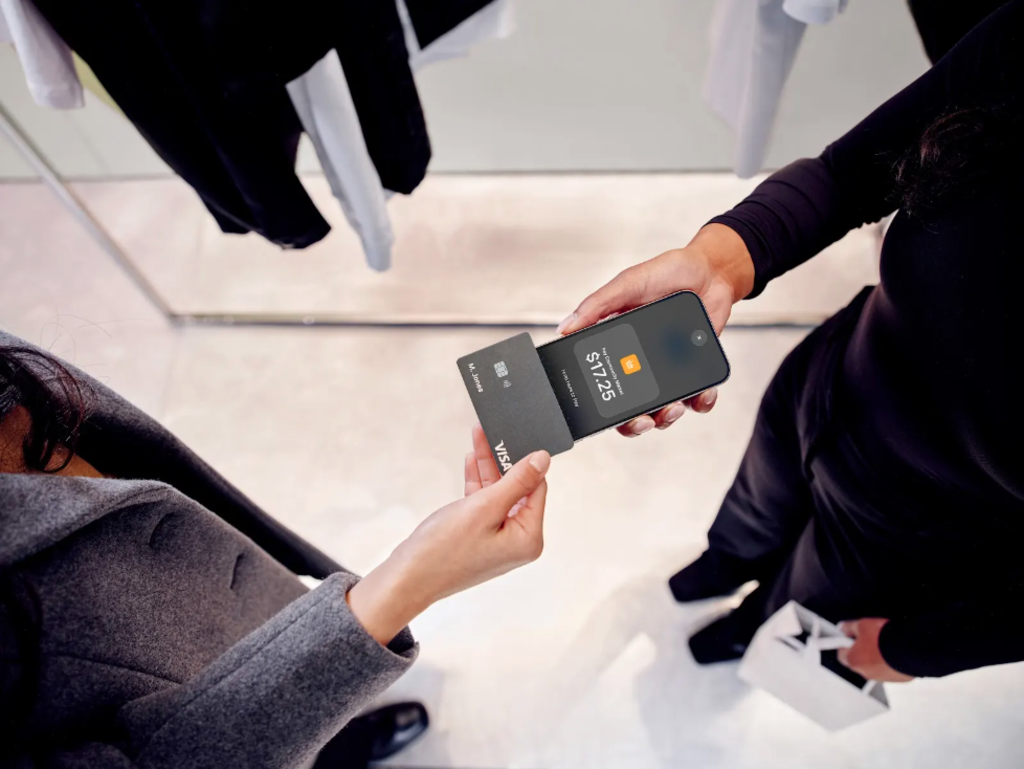
Photo credit: Adyen
This is exactly how Adyen helped R. M. Williams, an Australian footwear and clothing company. Making the payment process mobile not only eliminated queues but also enabled staff to provide personalized assistance and complete checkouts anywhere in the store, creating a faster, more engaging in-store experience.
Closer to home in Asia, Adyen’s work with beauty retailer Sephora led to the launch of stores without cash registers. This helped streamline the entire shopping journey by allowing customers to complete a purchase with any employee on the shop floor.
Additionally, Adyen supports a breadth of payment methods across its services. It also provides a single platform payment solution, where all aspects of the journey – from payment gateways to payment processing and settlement – are integrated into one holistic system.

Having real-time access to transactions in a single dashboard also means that purchasing and payment data is collected in one unified platform. Doing so allows enterprise businesses to reduce operational overhead by 75%, representing a present value of US$1.2 million over three years, according to a Forrester Consulting report.
It’s not just about savings, either. As Adyen’s work with Prada shows, a unified platform breaks through silos and enables the collection of reliable data about a single customer. For luxury brands, in particular, this paves the way for better personalization and experiences, fostering greater customer loyalty that in turn strengthens brand perception and drives revenue growth.
This contributes to better insights, less guesswork, and more informed decisions, ultimately leading to seamless, tailored customer experiences.
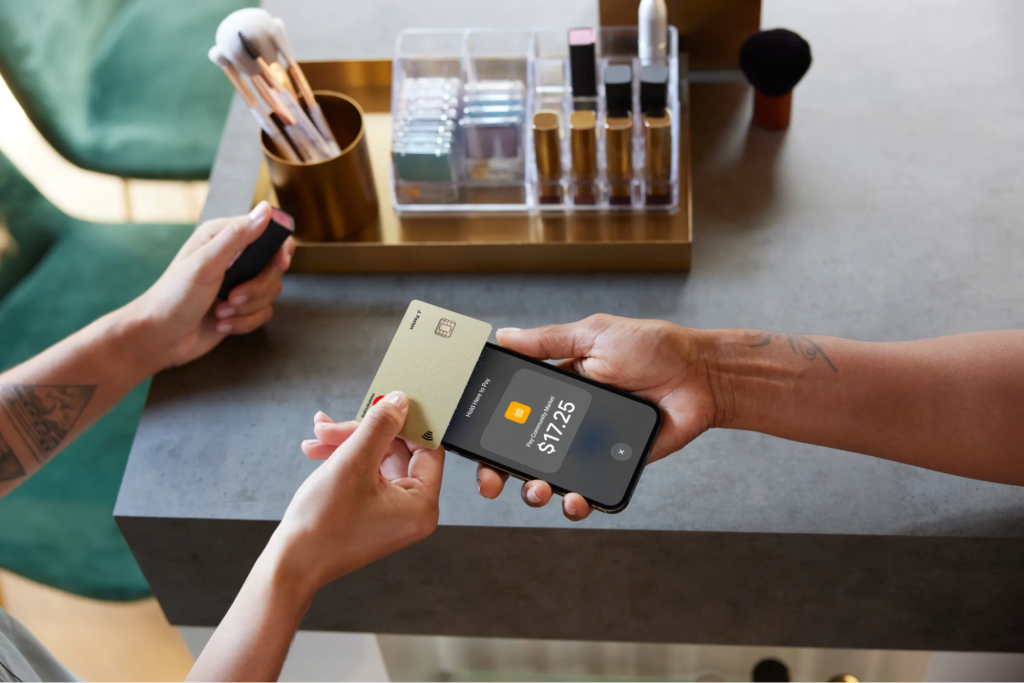
Tap to Pay on iPhone / Photo credit: Adyen
The launch of the Tap To Pay on iPhone (TTPOI) feature in Singapore, which Adyen supports, has also expanded the kinds of mPOS terminal options a merchant can use.
TTPOI turns compatible iPhones into payment terminals, allowing merchants to accept payments without having to set up and configure new POS terminals. This means companies can plan for new activations, such as pop-up events at different locations, without needing to worry about the logistics of physical terminals.
Looking ahead and seeing the bigger picture
Wong shares that beyond these business advantages, Adyen looks at mPOS solutions – and specific features like TTPOI – as a powerful equalizer that drives financial inclusion by “leveling the playing field” for businesses of all sizes, from solopreneurs to global retailers.
“This shift empowers any business to seamlessly join the digital economy using only the iPhone in their pocket, lowering the overhead barrier for small businesses and also transforming the payments experience into something trusted, quick, and invisible,” he points out.
The firm is also seeking to drive greater impact on businesses beyond its core solutions. Through Adyen Giving, merchants can integrate donations to a charitable organization of their choice into the checkout process with zero overhead, helping them lead with their values.
With these, Adyen sees itself as not only a vendor of payment solutions but also as a long-term and strategic growth partner to its clients.
“We want to be the single platform that bridges the gap between online and offline worlds,” Wong says. “By consolidating data, we help brands recognize the human behind the transaction, turning payments into a source of customer insight rather than just a utility.”
Adyen provides end-to-end payment capabilities, data-driven insights, and financial products in a single global solution, helping businesses hit their targets faster. With offices around the world, the fintech company works with the likes of Meta, LVMH, Shein, Uber, L’Oréal, Cathay Pacific, Grab, Klook, and Singapore Airlines.
Learn more about Adyen and how it leverages Tap to Pay on iPhone on its website.
This content was produced by Tech in Asia Studios, which connects brands with Asia’s tech community. Learn more about partnering with Tech in Asia Studios.
Stay updated on the go with our mobile app.
Get latest insights with smoother, more personalized experience through TIA mobile app.
Recommended reads
 Inside Singapore’s government team that kills its own products
 Once an IPO hopeful, SCI Ecommerce nears collapse
 SEA financials tracker: Traveloka profit drops 71% despite gains
 Who’s betting big on ChatGPT ads? Not Asian brands
 VC tracker: Granite Asia launches US$50 million fund
 GCash trims IPO ambitions to meet market realities
 Igloo CEO eyes global M&A: ‘We have an appetite to grow more’
 Why SBI paid a premium for Ajaib amid a tough market
 OpenAI warns building for today will cause technical debt
 Grab insiders buy in as Uber overhang weighs on stock





Editing by Stefanie Yeo and Mina Deocareza
(And yes, we’re serious about ethics and transparency. More information here.)





📅 Upcoming Events
22 October 2026
Payoneer x CSPN Summit 2026