 Samantha Cheh · · 6 min read
TiDB is engineering the infrastructure for AI’s agentic future

Summary:
- The rise of agentic AI has made traditional, human-centric database architectures obsolete, creating a surge in demand for computing power and more sophisticated infrastructure.
- TiDB addresses the problems of traditional databases by decoupling compute and storage layers and separating light transactions from heavy workloads, allowing companies to scale horizontally without performance lag or over-allocating resources.
- TiDB X separates compute and storage, so teams can scale performance on demand while keeping data on low-cost object stores – making real-time AI apps faster and more affordable.
- Try TiDB for yourself to understand how it could be the backbone of the AI era.
There’s no denying that AI is the defining technology in recent years, one that is transforming the very foundations of our digital present.
“AI is probably the biggest revolution in history, and we’re at a big turning point as models evolve quickly, especially when it comes to agentic AI,” says Max Liu, co-founder and CEO of open-source database company TiDB.
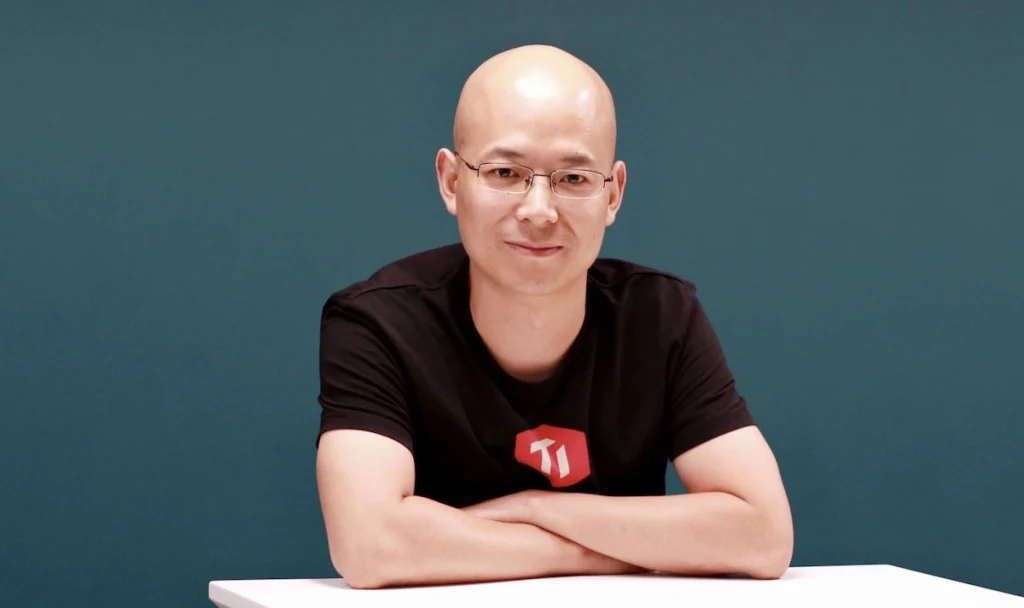
Max Liu, co-founder and CEO of TiDB / Photo credit: TiDB
This shift towards AI-led orchestration has catalyzed a rapid surge in demand for computing power, forcing a total redefinition of the modern database.
“Who is using databases today? Two years ago, we knew it was people, but humans are no longer in the majority,” shares Liu.
A juggling act
TiDB, which is short for “Titanium Database,” “has data saying that AI agents are creating over 90% of daily database interactions, versus 55% three to four months before.” That’s particularly true as more and more companies test AI agents and developers increasingly lean on coding assistants like Cursor, Claude Code, and Open AI’s Codex.
At the same time, companies face challenges when it comes to setting up their infrastructure to support agentic AI adoption. For one thing, most companies lack the kind of sophisticated architecture needed to generate actionable insights that can be delegated to agents.
“To do that, you have to be able to store all their data in a single, scalable database,” says Liu.
However, achieving that could be costly, especially as firms juggle different database solutions, each with their own operational needs. Added to that is the challenge of scaling-up or down their database operations depending on how much traffic or volume they’re fielding.
“Maybe you’re lucky enough to have millions of users or maybe you have just a handful of them,” Liu says. “It can be unpredictable and, ideally, your database is managing it all automatically, but that’s why operational costs are extremely high.”
A new vision for databases
These challenges aren’t new to the industry. In fact, it’s these issues that prompted three “sick and tired” developers to launch TiDB in 2015.
“We were seeing fast-growing companies hit the limits of traditional databases, and developers were having to manually shard their systems,” recalls Liu. “It was extremely painful when you just want to enjoy your life. You end up with this big gap between your data operations and developer happiness.”
Recognizing that there wasn’t a good solution on the market, TiDB decided to build it themselves. The result: the TiDB database, the company’s flagship product that was designed as an open-source project for developers, by developers. Liu attributes much of TiDB’s initial success to the contributions of its global community of developers.
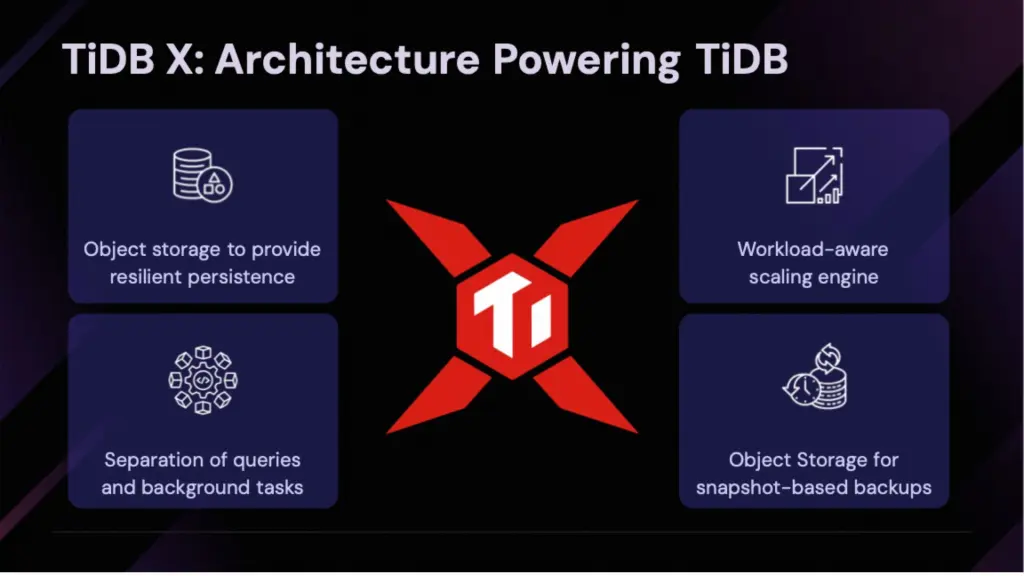
Photo credit: TiDB
A reliable yet simple solution, TiDB packs the power of multiple clusters into a single, unified platform.
“TiDB is able to handle petabytes of data across and batch process hundreds of terabytes in a single batch – and so much more – all without stopping,” says Liu.
As a cloud-native platform, TiDB can scale horizontally by pulling in additional nodes as and when they’re needed – a feature that imbues it with the flexibility to manage sudden surges in data volume and traffic. This is also enabled by TiDB’s architecture, which decouples the compute and storage layers while also separating lightweight transactions from heavy workloads.
“The benefit of keeping heavy and light tasks apart is that your queries are not competing for resources, so you don’t get latency or slowdowns,” explains Liu. “That reduces your costs, especially because you’re not over-provisioning for heavy queries.”
Introducing TiDB X
Since its founding, TiDB has become wildly popular, used by over 3,000 companies including leading fintech firms, SaaS platforms, and AI startups across Asia Pacific.
These include household names like Flipkart, one of India’s largest ecommerce platforms with operations spanning the entire customer journey. Given the company’s scale and the complexity of its operations, Flipkart found its growth limited by its MySQL-based infrastructure, which eventually led to its decision to adopt TiDB.
“TiDB was able to handle over a million queries within single-digit milliseconds, which helps Flipkart save on storage capacity,” says Liu.
Dive into the potential of TiDB
Now, as “software is increasingly driven by pure engines,” Liu says TiDB is evolving to meet the new demands of the AI future. In late 2025, the company announced the launch of TiDB X, a “breakthrough new architecture” that could redefine how databases think about scale.
Liu positions it as an enhanced version of TiDB that’s optimized for cloud object storage, while still being able to differentiate and manage different workloads effectively.

Photo credit: Tirachard Kumtanom / Shutterstock
AI agent company Manus, for instance, has benefited significantly from using TiDB X. Using Manus, people can have their agents engage in complex tasks like building an app, a process that requires significant amounts of computing power, data, and storage – all happening at different times as different users leverage the agents for varied tasks. This creates a very unpredictable environment, which can make scaling resources tricky.
At the same time, Manus was growing at a rapid pace, with some 2 million users on its waiting list within a week from its launch, Liu shares. To keep up with this demand, it needed a scalable database solution – which is where TiDB X came into the picture.
“Manus runs on a multilayer model, and each user has multiple projects with multiple data points. And each project has multiple database instances and branches,” he explains. “With TiDB X, you don’t need so many different databases to handle the different workloads – it helps to manage this unpredictability.”
Future plans
With the new year just getting underway and TiDB X freshly out in the world, Liu has been thinking about just how much the company has achieved in the 10 years that have passed.
“We’re very grateful that TiDB has become so trusted by so many companies at such a large scale,” he says. “We started from a really simple idea, and today, we’re powering the AI companies that are shaping our future. Ten years ago, it would have been hard to imagine that happening.”
And what about the future? For Liu, the mission remains the same: to become the default platform for not just databases but AI-related systems that need real-time elasticity and super reliability.
“Agents are now the majority of users, so it’s quite clear that this will be the shape of the market in the next decade,” he says. “Many more people are going to be using data, so we’re going to stay focused on helping them manage all the challenges coming their way.”
For early-stage startups, the greatest risk isn’t just failure – it’s “the success tax” of an infrastructure that breaks the moment you go viral. TiDB Cloud provides the elastic foundation needed to power the next generation of agentic AI, allowing founders to ship faster and scale infinitely without the headache of manual sharding. The TiDB Cloud Startup Program provides eligible startups with the credits, technical support, and community needed to turn an agentic vision into a global reality.
TRY TiDB WITH UP TO US$100K IN FREE CREDITS
This content was produced by Tech in Asia Studios, which connects brands with Asia’s tech community. Learn more about partnering with Tech in Asia Studios.
Stay updated on the go with our mobile app.
Get latest insights with smoother, more personalized experience through TIA mobile app.
Recommended reads
 Indonesian AI startup goes global
 Forrest Li on scaling Sea, building smarter bots, and founder grit
 An AI assistant that joins sales calls and scores team skills
 SGX’s CEO says it doesn’t need a unicorn to win
 SMEs want AI too, but not the kind Big Tech is selling
 Oatside’s alt-milk rise hits a profitable gear
 Alibaba’s financial health in 12 charts
 Asia’s telcos bundle AI into mobile plans. Will it pay off?
 M-Daq chases bigger clients as revenue falls, losses grow
 VC tracker: Accel raises US$3.5b, including US$550m for India





Editing by Stefanie Yeo, Jonathan Chew, and Jaclyn Tiu
(And yes, we’re serious about ethics and transparency. More information here.)




