This article summarizes an episode of The Generalist’s video series featuring Hian Goh, a partner at OpenSpace Capital, and Alex Dwek, COO of Nas.io.
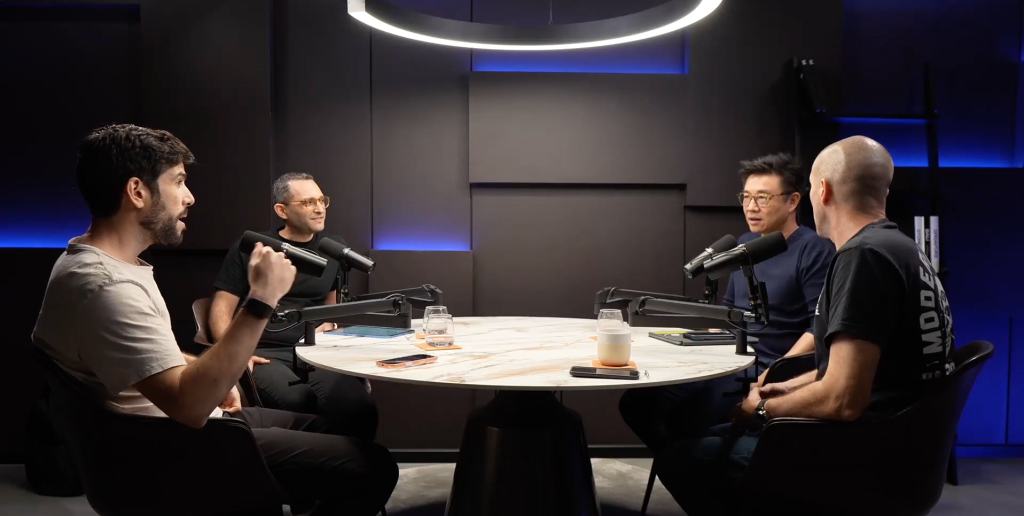
Hian Goh, a partner at OpenSpace Capital (at the back on the right), and Alex Dwek, COO of Nas.io (toward the left front) / Photo credit: The Generalists
Securing investment has shifted from a fast-paced game of excitement to a slower process of building trust. To win over investors today, founders must look beyond their balance sheets and focus on the power of their personal networks and their political storytelling.
The nine-day term sheet is dead
Looking back at the 2021 market, Alex Dwek, COO of Nas.io, noted how quickly investment deals were being made. His company managed to start the process on a Monday and sign a deal just nine days later. He observed that firms like Tiger Global kept meetings to a 30-minute window, and at the end of that brief window, “you know if they’re going to invest or not.”
That’s not the case anymore. Dwek notes, “Fast forward to 2025, it took us two months this time, but we spoke to maybe 50 funds. We spoke to a founder in the US who had raised US$50 million, and he said it took him 80 pitches to get one yes.”
Personal introductions are now essential
This challenging situation changed the rules. Founders now succeed through people they know, not by contacting strangers or just using their numbers.
Dwek says, “The best conversations we had came from warm introductions from other founders… a founder who was successful who said, ‘I want you to meet this team. I think they’re great.’ It came from the validation that this founder is great.”
Investors now invest in the team, not the numbers
“This time, personal relationships mattered,” Dwek argues. “We’re going to go face-to-face because a lot of this is around trust. You have to build trust… they’re taking a bet on the team that they’re going to figure this out in the future.”
How venture deals get done
This need for trust shows how investors think. Hian Goh, a partner at OpenSpace Capital, argues these big decisions are not completely based on logic but on feelings.
After reviewing the numbers, Goh argues that investors still have to decide without all the facts. He believes the final choice is not entirely logical. Instead, it is a decision based on feeling, caused by either the fear of missing a good deal or a strong belief in the founder.
Goh explains, “There’s only two ways you raise money. It’s either FOMO or screw it… FOMO is when there’s a trend. Other smarter people are in the round… The other way is the ‘screw it, let’s do it.’ I talk to a founder… I will never be able to erase 100% of the uncertainty, so you just kind of go like, ‘Oh, you know what? Screw it. I just like him so much.'”
The problem with being a safe place
Emotional decision-making can be influenced by international politics. The sale of Manus AI to Meta highlighted challenges for companies based in Singapore in shaping their narrative.
Goh advises, “We’ve always said to [founders from mainland China]: ‘Are you guys going to be ASEAN first? Not Singapore first, ASEAN first… Set up here, maybe your data centers are in Malaysia, your customer services are in the Philippines. Because if you’re not, I’m not going to invest in you.'”
The story of being a safe place can cause problems
Goh notes, “The mistake made here, I think, was that there was never a narrative of ‘I want to be in Singapore because Singapore is the best place for my company.’ It was always a ‘safe haven’ narrative, and I wouldn’t be surprised if that angered the Chinese.”
The deal is still an important approval





Stay updated on the go with our mobile app.
Get latest insights with smoother, more personalized experience through TIA mobile app.