Grace Priscilla Teo · · 4 min read
The future of treasury starts with one unified view of cash
This article summarizes an episode of Asia Tech Podcast’s video series featuring experts from Finmo, Coda Payments, and Deutsche Bank.
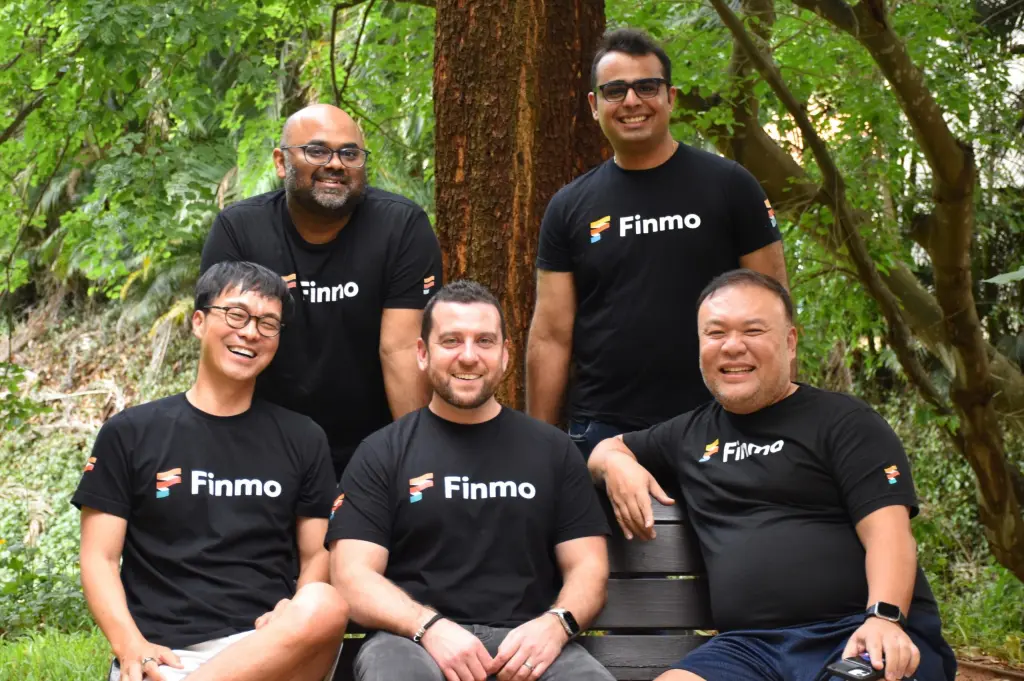
From left: Finmo founders Thomas Kang, Akhil Nigam, David Hanna, Raj Vimal Chopra, and Richard Oh / Photo credit: Finmo
The era of the corporate treasurer acting as a quiet back-office bill payer is fading. Companies now expect their finance teams to step into the spotlight and generate value instead of just protecting it. This shift requires new technology and partnerships that change how money moves around globally.
From cost center to strategic partner
For decades, the chief financial officer’s (CFO) job was to report on past events. However, that’s changing as companies now want financial leaders to help plan for the future. David Hanna, CEO of Finmo, says this shift begins at the leadership level.
Beyond just safeguarding cash
“We’re seeing CFOs really wanting to have a seat at the top table in a more true sense and actually be a lot more strategic in their thinking,” Hanna says.
A bigger role to play
This shift transforms into the treasury department. It is no longer enough to protect company money; the modern treasurer must also create value. Jessie Toh, global treasurer of Coda Payments, emphasizes this change.
“I always say treasurers have such a strategic role in the organization,” says Toh. “It’s no longer just about how much money I can safeguard.”
From looking back to looking forward
To do this well, finance teams need fast and accurate data. Yet, many still use old tools and manual work that cause delays, a frustration Hanna sees across the industry.
The limits of manual work
“Going back to an Excel spreadsheet and having to reconcile the data across different platforms cannot work,” Hanna explains. “I need insight in real time. I need to be able to move fast.”
From busy work to smart decisions
The alternative to this manual work is a system that automates daily tasks. Instead of spending hours gathering data, teams can focus on what the data implies. Hanna notes that AI is shifting the workflow from data entry to decision-making.
“Instead of coming to the office, having a coffee, downloading statements, putting [them] into Excel, reconciling… [Our AI] actually proactively indicates what you need to focus on,” Hanna says.
The era of fighting is over
Early in the industry, fintech companies were often viewed as competitors to established banks. Today, that narrative has changed. According to Kriti Jain, head of digital economy, fintech & platform at Deutsche Bank, both sides now realize that success is about serving the customer, not about who wins more business.
Success isn’t a competition
“It all depends on client demand,” Jain argues. “The way financial industries [have] evolved, it’s just not about who’s going to win the race. It’s about how you can make the ecosystem successful.”
Working as real partners
Hanna notes that this collaborative effort has reshaped the introductory meetings, with fintechs and banks treating each other as partners.
Partnerships create reach and speed
Disconnected systems cause problems
One view allows better planning





Stay updated on the go with our mobile app.
Get latest insights with smoother, more personalized experience through TIA mobile app.