Ummi Amran · · 4 min read
The event size dilemma: When to go big or small
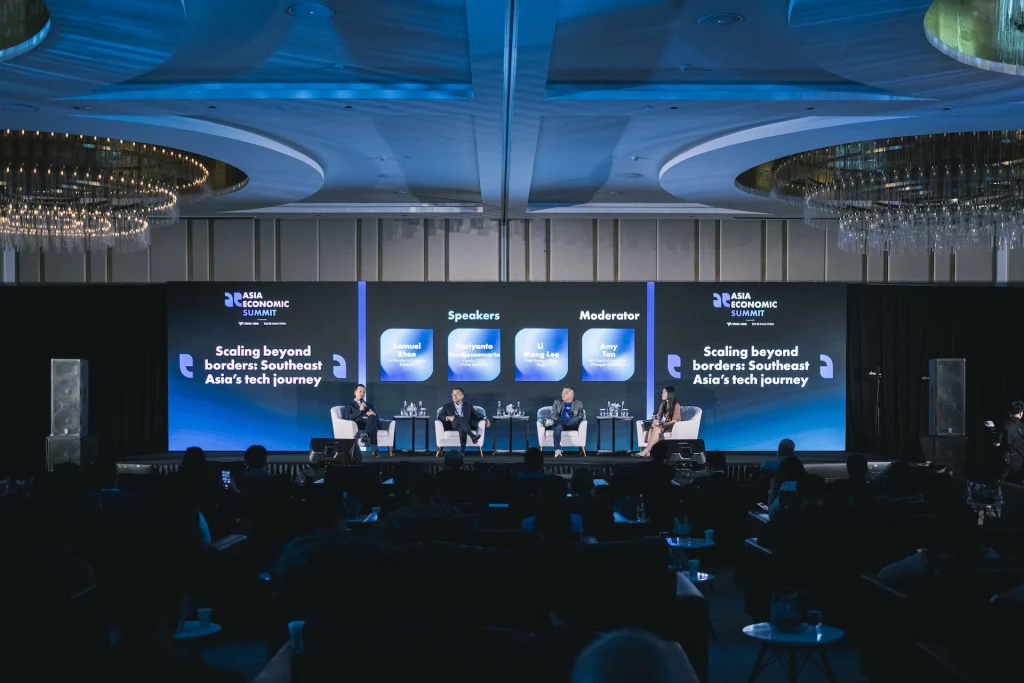
Asia Economic Summit’s main stage. / Photo credit: Tech in Asia
We’ve all heard the mantra: “Go big or go home.”
In the world of B2B events, that usually means chasing the 5,000-person conference hall. There’s a certain kind of vanity that draws you to a convention with multiple stages; you want the irresistible energy of the standing-room-only crowd. (Honestly, we love that, too – we even wrote about how we create that kind of experience.)
In a hurry? Jump straight to our strategic checklist or connect with our team.
Recently, though, we’ve had to face a hard, uncomfortable truth: Awareness doesn’t sign high-value contracts – trust does. However, you can’t build trust with people who aren’t aware that you exist.
We’ve spent years experimenting with events of different scales, both for ourselves and for our clients. We’ve learned that although a massive stage is a powerful engine for market dominance, relying on volume alone can blur the bottom line.
The most successful partners we see don’t choose between big and small events – they leverage both across the year to bridge the gap between discovery and deals. In fact, we’ve found that pairing a flagship presence with a curated, 20-person executive dinner or a summit bringing together 200 decision-makers complements the funnel to unlock a deeper layer of ROI, often increasing the qualified pipeline by nearly 3x.
Sometimes, if you go big without a plan for trust plan, you might as well have stayed home. But if you stay small without a plan for scale plan, you remain invisible.
The epiphany: the “human retreat” into the boardroom
We are seeing a massive “human retreat” in the AI era. As digital noise becomes free and infinite, decision-makers are becoming more skeptical of anything that feels like a “broadcast.”
They still attend the big conferences. (Our annual TIA Conference is busier than ever.) However, they go there to discover.
When it’s time to decide, they take a step back. Instead, they look for safe, human-led spaces where they can have deep, personal interactions – away from the high-level noise.
You can’t vibe-code a relationship at an executive luncheon or a private policy roundtable. These small rooms require a high level of time and presence, and that makes them the highest-trust currency in B2B.
This is exactly why we built the Asia Economic Summit (AES). We realized that our audience didn’t want another stage; they wanted a boardroom.
“What I really value is that Tech in Asia has taken a truly curated approach to designing critical conversations, bringing together founders, investors, and corporates from across ASEAN [at AES].”
— Alina Truhina, CEO and founding partner at the Radical Fund
It’s in these intimate, high-quality events that contact details are exchanged, and a good impression leads to a follow-up message or a conversation over coffee.
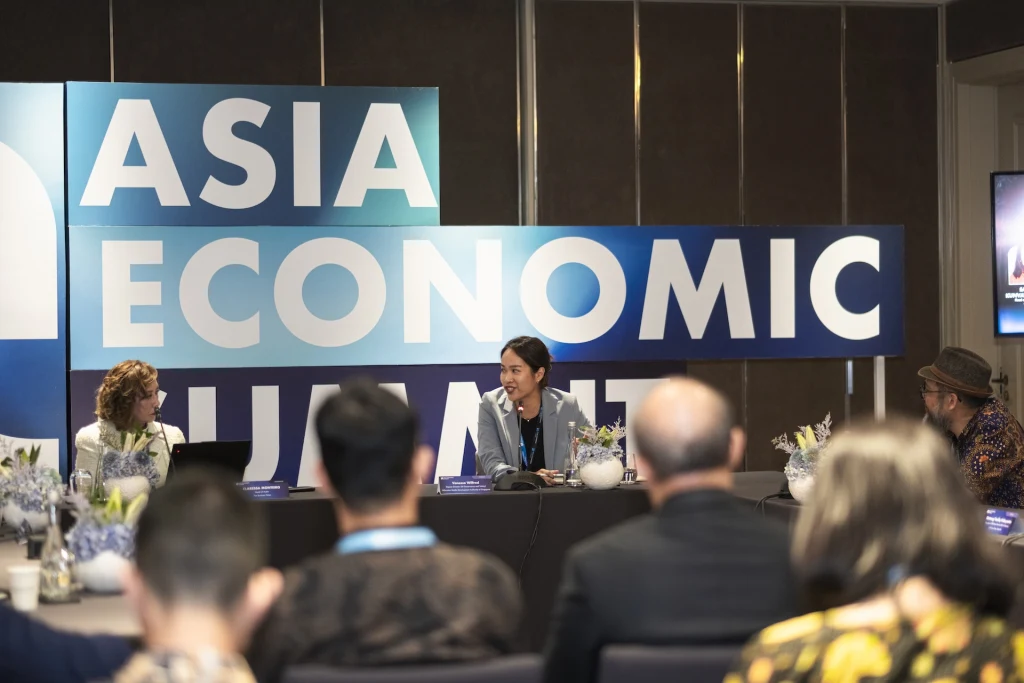
High focus drives deals. You need both awareness and focus, but you must know how to drive the outcomes you want. / Photo credit: Tech in Asia
The strategic logic: Which “vessel” do you need?
We now use a simple framework at Tech in Asia Studios to help partners decide on an event’s size. After all, it’s about matching the “vessel” to the level of trust required to move the deal forward along the partnership milestone:
Why this matters for your 2026 budget
Chasing only the biggest room means you might just be buying a very expensive discovery metric.
We’ve realized that the most successful brands don’t merely “sell” at events; they design environments where trust is the primary currency.
At Tech in Asia Studios, we’ve pivoted to supporting the entire funnel. We use our flagship events like TIA Conference and AES to build the massive awareness our partners need to enter the market as a known voice.
But we don’t stop there – we bridge that gap with bespoke, intimate sessions. While discovery happens in the crowd, the most important business decisions happen in the smallest rooms.
A strategic checklist for event sizing
Before you sign off on your next event sponsorship, ask your team these three questions:
- Are we solving for who knows us or who trusts us?
- If it’s the latter, cut the guest list by 90%.
- Are speakers assigned to the right session types?
- Use visionaries to inspire on the big stage, but in the small rooms, ensure that you have peers or subject matter experts who can address technical P&L headaches.
- Is the event designed for a one-way broadcast or a two-way human interaction?
- High-trust environments can’t be automated. Make sure that the format forces attendees to talk to each other rather than just listening to a presentation.
The goal isn’t just to be the loudest voice in the room – it’s to be the most trusted voice in the right room at the right time.
Let us be your human soundboard
Building a high-trust event engine is a long road, and we’ve found that “one size fits all” solutions usually suit no one. We have been in the trenches, making expensive mistakes so you don’t have to.
If you’re looking for a fresh, strategic perspective on how to bridge the gap between awareness and conversion in your 2026 roadmap, we’d love to help you navigate the shift. Fill out the form below, and our team will reach out to you.
This content was produced by Tech in Asia Studios, which connects brands with Asia’s tech community. Learn more about partnering with Tech in Asia Studios.
Stay updated on the go with our mobile app.
Get latest insights with smoother, more personalized experience through TIA mobile app.
Recommended reads
 Indonesian AI startup goes global
 Forrest Li on scaling Sea, building smarter bots, and founder grit
 An AI assistant that joins sales calls and scores team skills
 SGX’s CEO says it doesn’t need a unicorn to win
 SMEs want AI too, but not the kind Big Tech is selling
 Oatside’s alt-milk rise hits a profitable gear
 Alibaba’s financial health in 12 charts
 Asia’s telcos bundle AI into mobile plans. Will it pay off?
 M-Daq chases bigger clients as revenue falls, losses grow
 VC tracker: Accel raises US$3.5b, including US$550m for India





Editing by Stefanie Yeo, Mina Deocareza
(And yes, we’re serious about ethics and transparency. More information here.)