 Stefanie Yeo · · 6 min read
Why telcos need to become ‘techcos’ to stay in the game

Telcos are in a sticky situation.
They remain vital to keeping us connected, providing the infrastructure that underpins our digital ecosystems. But as individual companies, they face tough competition from both new and existing players, as well as challenges that could threaten their market share.
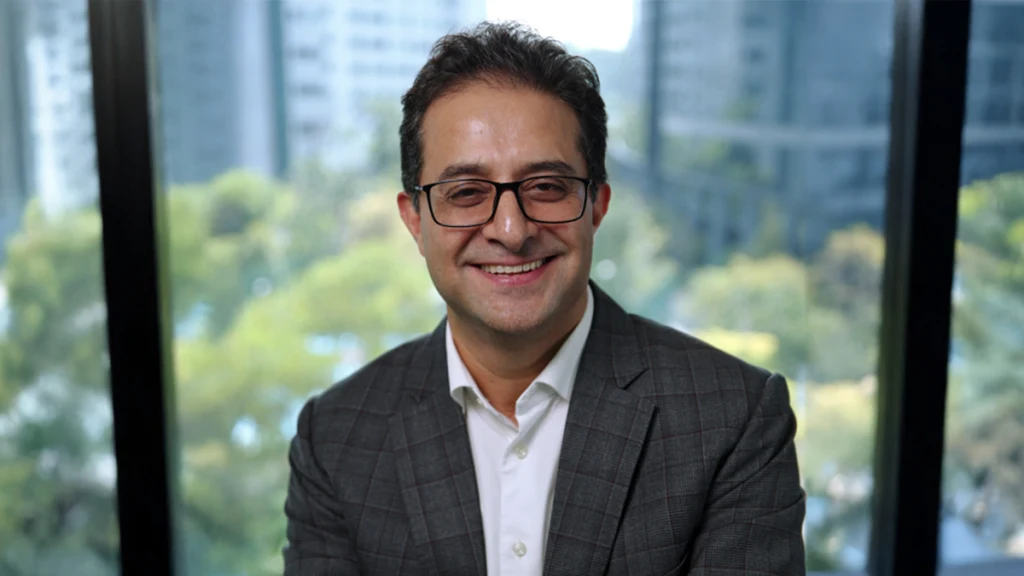
Sanjay Kaul, chief revenue officer at Circles / Photo credit: Circles
“Telcos are facing tons of pressure to digitalize. If they don’t digitally transform, they’ll go extinct,” says Sanjay Kaul, chief revenue officer at global technology company Circles, which is behind Singapore-based telco Circles Life.
The challenges at hand
This pressure can be tied to several key challenges, according to Kaul.
One of them is the rise of the “digital natives,” which has led to a big shift in the relationship between telcos and customers. These digital natives are not just Gen Zs – commonly identified as those born between 1997 and 2012 – but also what Kaul calls “Gen Ds” or digitally savvy consumers who want these tech-driven experiences, regardless of age.
This growing segment demands personalized, app-based interactions and control over services, which many telcos struggle to provide. Gone are the days of phone contracts that kept customers locked in for 24 months – today’s users want flexibility.

Photo credit: imtmphoto / Shutterstock
“They want to be in control of what services they get, how these services are customized, and what their phone or internet plans should look like,” explains Kaul. “With how commoditized our telco landscape is becoming, you have to give power back to that consumer to keep them motivated, excited, and delighted. If you’re not doing that, they’ll ditch you.”
Another challenge is the decline of telcos’ core revenue streams. Traditional revenue sources – such as voice calls, SMS, and fixed mobile subscriptions – are falling as “over the top” communication services like WhatsApp cannibalize telco offerings.
Moreover, 5G investments have yet to yield significant returns. Currently, telcos are keeping prices low to convince customers to switch to 5G. However, uptake has still been slow because consumers haven’t seen the benefits of transitioning, creating yet another avenue where telcos are losing money.
Lastly, telcos are not immune to the technological disruption sweeping through industries. Technologies such as AI, IoT, and advanced analytics are maturing and becoming more commonplace, and some telcos are betting big on these new developments.
Deutsche Telekom, for instance, announced its plans to use AI and global economies of scale to accelerate its growth – a move projected to fuel the rise of its service revenue by an average of 2.5% to 3% annually through 2027.
“There’s a lot of pressure for other telcos to innovate or fall behind,” says Kaul.
Learn more: How Circles is driving the telco-to-techco evolution
Rise of the “techco”
What is the solution then? Kaul thinks these service providers need to become “techcos” – telcos that embrace tech, bringing the best aspects of tech companies to the telco sector.
“We’re at a point where the tech is no longer the blocker, your imagination is,” he points out.
Kaul then recalls seeing many innovations from telcos at MWC 2025, an annual trade show focused on the mobile communications industry. They included GPU-as-a-Service, cloud environment rentals for enterprise solutions and AI workloads, and generative AI services. There were also developments on the B2C front, with companies offering services such as entertainment streaming platforms and content creation tools, allowing them to act as digital lifestyle hubs.

Photo credit: David MG / Shutterstock
“These offers are live,” Kaul emphasizes. “These offers are making money.”
Aside from diversifying revenue streams, becoming “techcos” helps telcos reduce their dependence on traditional services. This lets them create opportunities to improve their competitive positioning by exploring and experimenting with new technologies early in the game.
“You don’t need to build the next self-driving car, but you should keep your fingers in the pies of different emerging digital markets,” Kaul explains. “That’s a smart strategy. That’s how you can be the first in the industry to launch new offerings and stay ahead of the curve.”
Circles advocates for telcos to create an ecosystem that goes beyond their typical offerings. Leaning into the idea of a “super app” unlocks new possibilities in this regard.
“In an ideal situation, if your customers want to book a trial of a service or play some games, they can use your telco app,” Kaul says. “By giving them no reason to go anywhere else, the holistic nature of your app will keep them loyal to your brand.”
Easier said than done
Kaul acknowledges that telcos will need to navigate several significant hurdles to fully embrace digital transformation.
“Traditional telcos are burdened by outdated infrastructure, business models, and a ‘spaghetti’ mess of bespoke vendor solutions, which hinders agility and customer-centric service development,” Kaul shares.
Old mindsets can also be limiting.
“Short-sighted mindsets that prioritize capital expenditure savings over long-term overhaul lead to accumulating legacy issues,” Kaul says. “You also need to embrace and develop expertise in areas like IoT, AI, machine learning, cloud computing, and GPU-as-a-Service to offer new products and services, whether in B2B, B2C, or both.”

But according to Kaul, there’s a clear step-by-step process for achieving this techco transformation.
Telcos need to identify key value streams and opportunities, develop a strategic roadmap for the process, and go beyond the tech to build the right culture. They must also find suitable partners to support this growth. All this will require lots of hard conversations and decisions, but it’s essential.
Most crucially, telcos need to ensure that they know what they’re going to do, and why.
“You can have all the ambition in the world, but without a clear vision and a plan to shift your telco from the inside out, you’re flying blind,” Kaul notes.
The road ahead
Some companies have successfully made this leap to become techcos.
Japan’s KDDI, for example, has launched Povo. It’s a digital telco brand that lets customers add or remove services according to their preferences, improving their net promoter score by 30 points.
Meanwhile, Etisalat from the United Arab Emirates has expanded into Pakistan with a digital brand targeting digital natives focused on customer experience. So far, it has achieved a customer satisfaction rate of 97.5%.
As these examples show, becoming a “techco” is a challenging path, but one that’s well worth it. This shift is not an if – but a when – and it’s something that needs to happen sooner rather than later as telcos race to secure survival.
The trick is to become something that people love, appreciate, and use every day.
“Winners will be able to run not just the best networks, but build well-loved ecosystems,” Kaul says. “That’s what will separate the survivors from the telco champions of tomorrow.”
Circles is a global technology company reimagining the telco industry with its innovative SaaS platform, empowering telco operators worldwide to effortlessly launch innovative digital brands or refresh existing ones, thereby accelerating their transformation into techcos.
Learn more from Sanjay Kaul, chief revenue officer at Circles, on the transformation from telco to techco and the opportunities at play here.
This content was produced by Tech in Asia Studios, which connects brands with Asia’s tech community. Learn more about partnering with Tech in Asia Studios.
Stay updated on the go with our mobile app.
Get latest insights with smoother, more personalized experience through TIA mobile app.
Recommended reads
 Indonesian AI startup goes global
 Forrest Li on scaling Sea, building smarter bots, and founder grit
 An AI assistant that joins sales calls and scores team skills
 SGX’s CEO says it doesn’t need a unicorn to win
 SMEs want AI too, but not the kind Big Tech is selling
 Oatside’s alt-milk rise hits a profitable gear
 Alibaba’s financial health in 12 charts
 Asia’s telcos bundle AI into mobile plans. Will it pay off?
 M-Daq chases bigger clients as revenue falls, losses grow
 VC tracker: Accel raises US$3.5b, including US$550m for India




Editing by Jonathan Chew and Mina Deocareza
(And yes, we’re serious about ethics and transparency. More information here.)




