 Gabriella Benyamin · · 3 min read
How SEA can turn global uncertainty into a competitive advantage
The global economy has begun to resemble a geopolitical chessboard.
In recent months, Washington’s diplomacy has increasingly involved economics and technology. During a recent visit to Beijing, US President Donald Trump met with Chinese President Xi Jinping to discuss trade, AI, and the escalating tensions in the Middle East. Notably, the delegation included influential technology leaders such as Nvidia CEO Jensen Huang, Tesla and SpaceX leader Elon Musk, and Apple CEO Tim Cook.
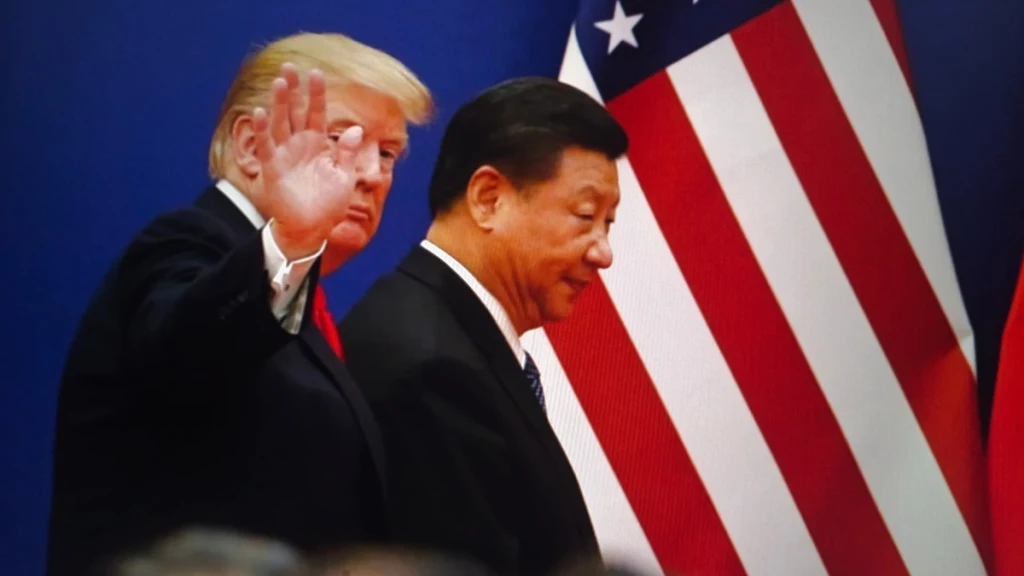
Photo credit: FotoField / Shutterstock
This high-stakes dialogue signals a fundamental shift: Economic competition is no longer driven solely by market forces. It is now shaped by access to critical technology, energy security, and the stability of supply chains. As the security of the Strait of Hormuz, a vital oil chokepoint, becomes intertwined with semiconductor export controls, the assumptions underpinning global growth are becoming less predictable.
The end of a predictable growth model
For decades, Southeast Asia thrived on a formula of open capital flows and manufacturing expansion. However, that era is being tested by three forces. First, the US-China rivalry has redefined economics, with decisions regarding AI and digital ecosystems now following geopolitical priorities.
Second, the instability in the Middle East has created immediate ripples through regional inflation and shipping costs. Finally, capital is becoming more strategic. Investors are no longer simply chasing growth but increasingly prioritizing resilience and geopolitical certainty.
For Southeast Asia, this moment presents a paradox. While countries like Indonesia, Vietnam, and Malaysia benefit from the “China+1” supply chain shifts, the intensifying geopolitical competition could deepen strategic divides across the region.
To avoid being caught in the crossfire of export controls or energy shocks, Southeast Asia must transition from being a collection of individual markets to a coordinated economic bloc.
Strategic Convergence at Asia Economic Summit 2026
If fragmentation is the challenge, coordination is the only viable response. This is driving the agenda for the Asia Economic Summit 2026.
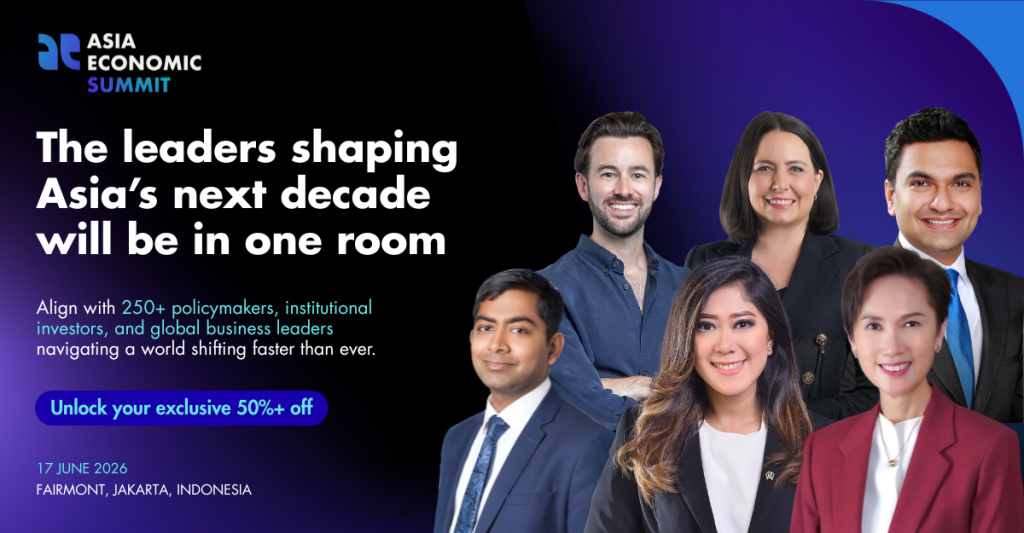
Building on the success of its inaugural event last year, which brought together 230+ high-level leaders from over 10 countries alongside representatives from 30+ global corporations, Asia Economic Summit has evolved into a highly curated, recurring regional platform for economic and strategic dialogue. It provides a critical forum where policymakers and private-sector leaders move beyond rhetoric to align on AI governance, digital regulations, and the mobilization of long-term capital.
This year’s summit features perspectives from Josephine Teo, Singapore’s Minister for Digital Development and Information; and Meutya Hafid, Indonesia’s Minister of Communications and Digital Affairs. They’ll be there alongside executives from Austrade, OpenAI, McKinsey & Company, Nasdaq, and many more.
The goal is to determine how Southeast Asia can anchor its digital growth amid volatility. In a world where the rules of the game are changing, the region’s greatest competitive advantage will be its ability to coordinate.
Join the conversation at Asia Economic Summit 2026 on June 17 at Fairmont Jakarta. With limited to 250 delegates, secure your seat before registrations close.
Stay updated on the go with our mobile app.
Get latest insights with smoother, more personalized experience through TIA mobile app.
Recommended reads
 SEA financials tracker: Moladin’s revenue rises 6% in 2025
 On‑demand services lift Line Man Wongnai’s 2025 revenue to $544m
 Flipkart’s costly late push into quick commerce and food delivery
 Inside Singapore’s government team that kills its own products
 Once an IPO hopeful, SCI Ecommerce nears collapse
 Who’s betting big on ChatGPT ads? Not Asian brands
 VC tracker: Granite Asia launches US$50 million fund
 GCash trims IPO ambitions to meet market realities
 Igloo CEO eyes global M&A: ‘We have an appetite to grow more’
 Why SBI paid a premium for Ajaib amid a tough market





Editing by Stefanie Yeo and Jaclyn Tiu
(And yes, we’re serious about ethics and transparency. More information here.)






📅 Upcoming Events
22 October 2026
Payoneer x CSPN Summit 2026