 Lilian Tang · · 6 min read
Why rupiah rails matter for Indonesia’s blockchain future

Summary:
- Indonesia’s digital payments ecosystem has scaled rapidly, but daily economic activity remains deeply rooted in rupiah.
- Blockchain-based finance still largely runs on US dollar-denominated stablecoins, creating a mismatch for local use cases.
- By enabling rupiah-denominated settlement for use cases like remittances and tokenized assets, IDRX positions itself as infrastructure for the country’s blockchain-based financial economy.
- Learn how IDRX is bringing rupiah-denominated settlement to blockchain-based finance here.
Whether you’re in a bustling warung in Jakarta or a trendy cafe in Bali, you’re likely to see a QR payment code.
Scanning such codes has become second nature across Indonesia, driven by the rapid adoption of e-wallets, mobile banking, and the Quick Response Code Indonesia Standard (QRIS) infrastructure. By the first half of 2025, QRIS transactions had surpassed 6 billion, totalling approximately US$37 billion.
“Indonesia has one of the most dynamic digital payment ecosystems in Southeast Asia,” says Nathanael Christian, co-founder and CEO of IDRX, an issuer of rupiah-backed stablecoins.

Nathanael Christian, co-founder and CEO of IDRX / Photo credit: IDRX
With widespread digital adoption, the country’s economy remains rooted in local currency. Most economic activity, from commerce to savings and taxes, is conducted in rupiah, making it the foundation of how people and businesses perceive value.
However, the same local currency layer does not translate to fintech’s next frontier – the blockchain-based economy – where it is still anchored in the US dollar.
The dollar in a rupiah economy
Globally, blockchain-based finance is creating new ways to move value across platforms, borders, and applications. Instead of relying only on traditional intermediaries such as banks, blockchain networks allow transactions to be executed, verified, and settled through shared digital infrastructure.
This has opened doors to new forms of digital finance solutions, from tokenized assets to automated payouts and cross-border settlement. Since these are not everyday retail payments, which QRIS and e-wallets already handle well, blockchain-based systems could help Indonesians move value, automate payouts, and reduce settlement friction across multiple markets.
But for these networks to function effectively at scale, they require a stable unit of value. This is where stablecoins come in.
These digital tokens are engineered to maintain a stable value by being linked to a reserve of real-world assets, typically fiat currencies like the US dollar. For example, US$1 is equivalent to one coin. Stablecoins allow users, businesses, and applications to transfer value on-chain without relying on cryptocurrencies with value that can swing sharply.
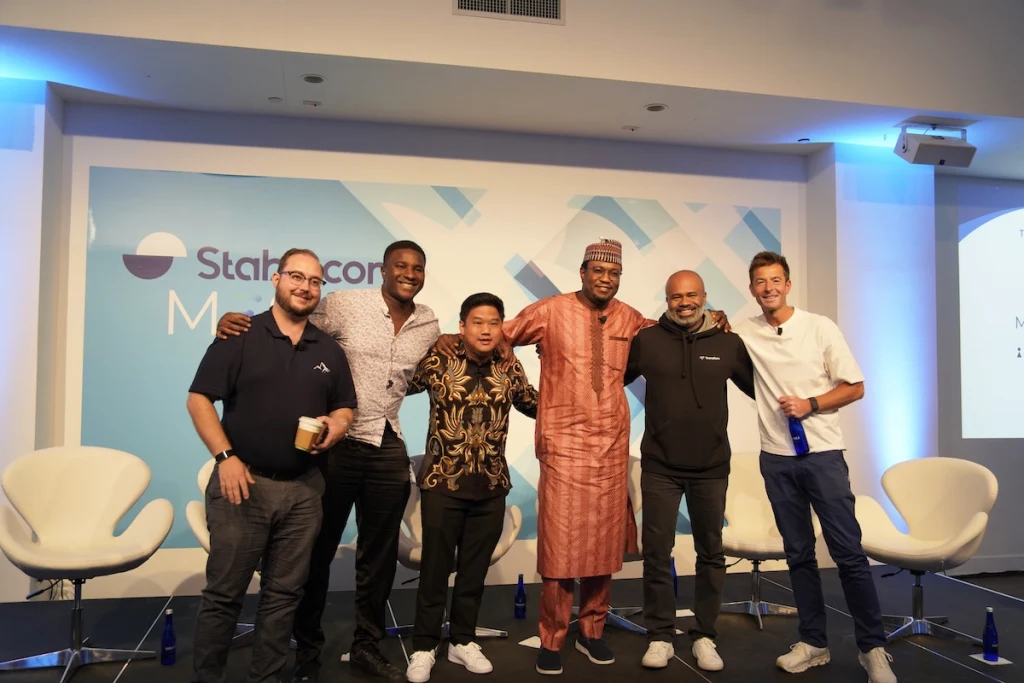
Christian (third from left) at Stablecon, a conference dedicated to stablecoin innovation / Photo credit: IDRX
Herein lies the challenge: Much of on-chain activity still runs on stablecoins denominated in the US dollar, such as Tether (USDT) and USD Coin (USDC). This was a practical means for early blockchain users, as the dollar acted as a familiar reference point that allowed for deep liquidity and offered an efficient way to transact across a global market.
But as blockchain-based finance matures, a single global currency layer might not fit the diverse needs of different markets.
“While USD stablecoins have become an important part of the global digital asset ecosystem, most Indonesian consumers and businesses earn, spend, save, and account in rupiah,” Christian points out.
Many blockchain financial products currently in development in the country do not inherently need US dollar-denominated assets. As such, routing activity through a USD stablecoin adds an unnecessary currency conversion layer between on-chain activity and real-world settlement.
“Using a foreign-currency stablecoin introduces exchange-rate exposure, additional operational complexity, and a mismatch between the currency used on-chain and the currency used in the real economy,” Christian adds.
Bringing the rupiah on-chain
“Currency denomination matters because it determines how users measure value, manage risk, and conduct economic activity,” Christian explains.
This reality drives the development of rupiah-linked stablecoins such as IDRX, which allows financial products to be built around Indonesia’s daily currency.
Think of IDRX as a digital representation of the Indonesian rupiah built specifically for blockchain networks. Similar to how e-money allows users to move value digitally within existing payment systems, IDRX enables rupiah-denominated value to move across blockchain-based applications and networks.
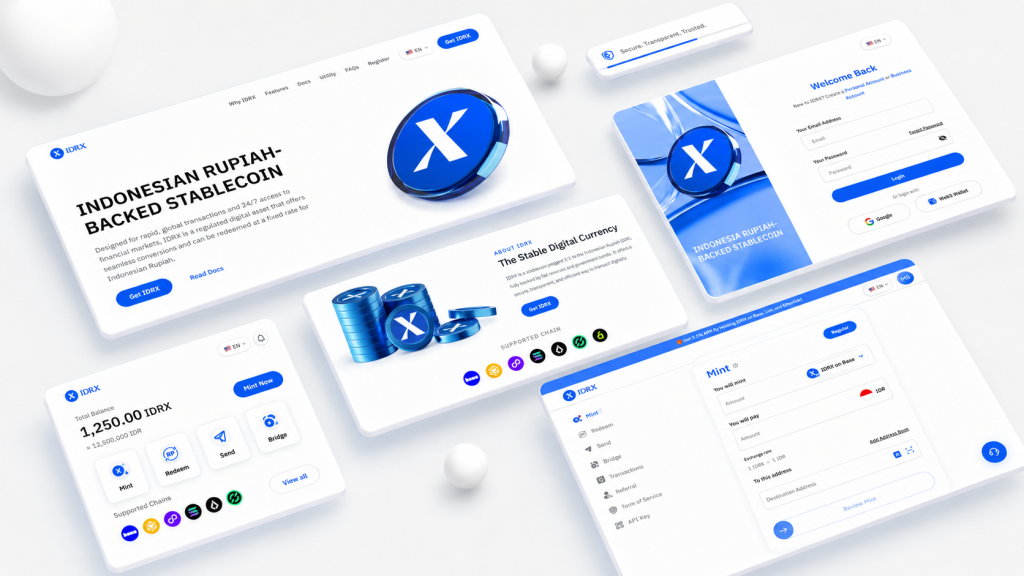
The IDRX platform / Photo credit: IDRX
Its role, as Christian highlights, is to connect the country’s familiar financial system with emerging blockchain infrastructure. This makes it easier for businesses, developers, and users to transact in rupiah within the digital asset economy.
For builders, this changes the starting point. A fintech startup, payment platform, digital asset company, or financial institution no longer has to design every flow around a foreign-currency asset. It can instead build products where pricing, user balances, and settlement are naturally denominated in Indonesian rupiah.
As for financial institutions and payment providers, it simplifies pricing, accounting, and settlement. That’s because transactions remain denominated in the currency users already understand and use daily.
With this, blockchain-based financial services feel less foreign for Indonesian users.
More than a crypto buzzword
IDRX supports a variety of practical applications. It facilitates subscription and redemption flows for tokenized assets and enables yield distributions for projects involving real-world assets.
It also allows for remittances and export-import settlement in cross-border activities without routing through the US dollar. Additionally, for creators or intellectual property projects, it provides a mechanism for distributing royalties directly in rupiah.
Businesses are already exploring rupiah-denominated blockchain settlement to solve specific problems. These include remittance companies looking to offer cheaper services, exporters seeking better foreign exchange outcomes than with traditional transfer channels, and real-world asset startups seeking to automate Indonesian rupiah distributions through smart contracts.

The conversation doesn’t stop at the tech itself, however. Stablecoins still operate within a broader context of trust, regulation, consumer protection, and public understanding.
One misconception is that stablecoins and central bank digital currencies (CBDCs) are competitors.
“We see them as complementary,” Christian clarifies. “A CBDC represents sovereign digital money issued by the central bank, while a stablecoin like IDRX serves as a distribution and innovation layer that enables businesses, fintech firms, and developers to build products and services on top of blockchain infrastructure.”
Another concern is that stablecoins could undermine monetary sovereignty or disrupt monetary policy. In the case of a rupiah-backed stablecoin, Christian says each token is backed 1:1 by rupiah-denominated reserves.
“This means IDRX does not create new money outside the financial system,” he adds. “It digitizes and distributes existing rupiah liquidity on blockchain networks.”
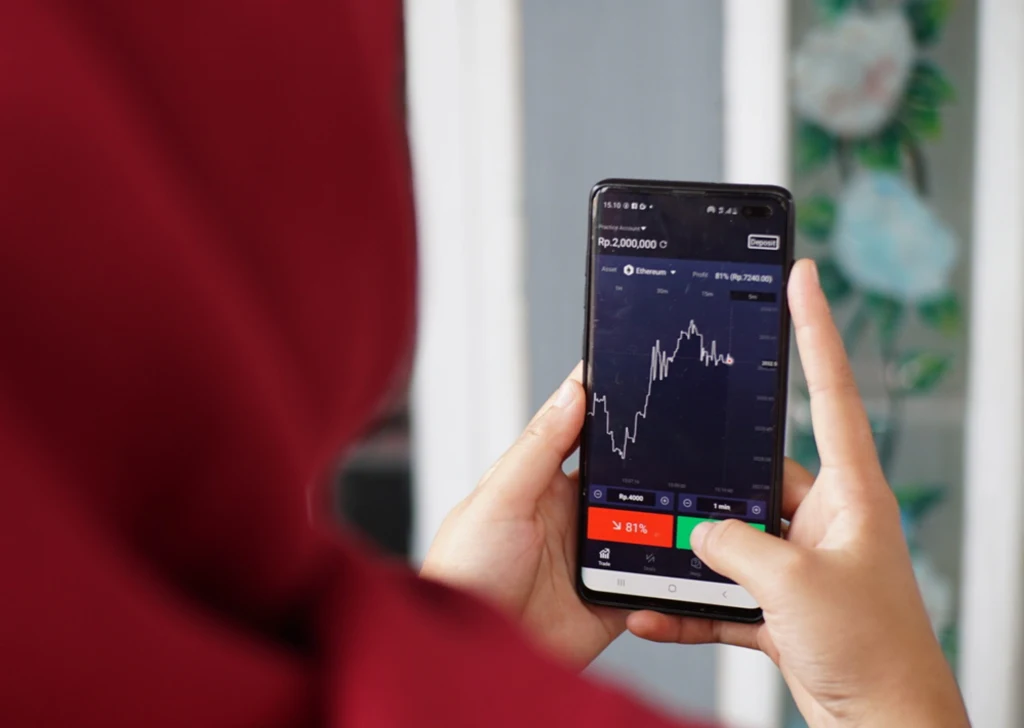
Photo credit: Aril Ahmad / Shutterstock
Indonesia’s regulatory framework is also drawing clearer lines around digital financial assets.
Under the latest revision to the country’s Financial Sector Development and Strengthening Law (P2SK), stablecoins may be used as transaction instruments within blockchain-based financial ecosystems, subject to the relevant exchange’s recommendation and the Financial Services Authority’s (OJK) approval. This designation is distinct from treating stablecoins as direct payment instruments for everyday transactions.
Rather than attempting to supplant the rupiah, challenge a potential CBDC, or modify monetary frameworks, the goal is to establish a settlement layer that can run on faster, more modern rails.
Unlocking a rupiah-based blockchain economy
Modernizing the financial infrastructure via blockchain-integrated rails requires a concerted, collaborative effort between public and private stakeholders.
Regulators provide clarity and consumer protection, while policymakers establish long-term national priorities. Simultaneously, industry leaders bring the technological expertise and practical experience necessary for implementation.
Together, these stakeholders can create an environment that encourages innovation while maintaining financial stability, security, and public trust, according to Christian.
As seen with the ubiquitous adoption of QRIS and e-wallets, Indonesia has demonstrated that digital finance can scale when tech aligns with local behavior. The same principle applies as financial activity moves onto blockchain rails.
“Greater use of rupiah-denominated blockchain settlement could strengthen Indonesia’s participation in the digital economy while keeping economic activity aligned with the national currency,” says Christian.
Designed for rapid, global transactions and 24/7 access to financial markets, IDRX is a regulated digital asset that offers seamless conversions and can be redeemed at a fixed rate for Indonesian rupiah.
Learn more about IDRX here.
This content was produced by Tech in Asia Studios, which connects brands with Asia’s tech community. Learn more about partnering with Tech in Asia Studios.
Stay updated on the go with our mobile app.
Get latest insights with smoother, more personalized experience through TIA mobile app.
Recommended reads
 Indonesian AI startup goes global
 Forrest Li on scaling Sea, building smarter bots, and founder grit
 An AI assistant that joins sales calls and scores team skills
 Beyond the check: Why VCs need more than capital
 SGX’s CEO says it doesn’t need a unicorn to win
 SMEs want AI too, but not the kind Big Tech is selling
 Oatside’s alt-milk rise hits a profitable gear
 Alibaba’s financial health in 12 charts
 Asia’s telcos bundle AI into mobile plans. Will it pay off?
 M-Daq chases bigger clients as revenue falls, losses grow





Editing by Stefanie Yeo and Mina Deocareza
(And yes, we’re serious about ethics and transparency. More information here.)


