 Sumit Chakraberty · · 2 min read
Remitly guns for aggressive Asian expansion with $115m from Naspers’ PayU, others

Photo credit: Bitspark.
Cross-border remittances this year will reach US$600 billion this year, according to the World Bank, and three-quarters of that will go to developing countries in Asia, Africa, and Latin America.
Startups are out to disrupt this space by reducing the costs of money transfer and making it more transparent, especially for individuals and small firms. One of these is Seattle-based Remitly helping migrants in the US and UK send money home.
Remitly says its customers are sending $4 billion annually around the world.
Today, Remitly announced it had agreed to raise US$115 million in series D funding led by Naspers-owned payments service provider PayU. Existing investors Stripes, DFJ, and DN Capital will participate in the round, subject to regulatory approvals. PayU CEO Laurent le Moal will join Remitly’s board.
PayU has a firm foothold in India, having acquired Indian payments gateway Citrus Pay last year for US$130 million. This ties in with Remitly’s plans for expansion, as India is the world’s largest recipient of remittances. According to the World Bank, the Indian diaspora will send US$65 billion home this year to top the remittances chart, followed by China (US$63 billion) and the Philippines (US$33 billion).
“We’re delighted to leverage our global network and local expertise, especially in markets like India, to help Remitly expand financial services,” says le Moal.
Remittances rising
Remitly says its customers are sending nearly $4 billion annually around the world, saving millions in fees and the FX spread that banks and money transfer agents like Western Union or even PayPal take out. The series D funding “will supercharge our growth and help transform the lives of those who require cross-border transactions, including immigrants, by allowing us to offer them better financial services,” says Matt Oppenheimer, Remitly CEO and co-founder.
Apart from traditional providers, Remitly faces competition from other startups like UK-based WorldRemit and Singapore-based Instarem, which launched in Australia three years ago.
See: Instarem raises $13m to take remittance business away from banks
Global remittances declined in the last couple of years, but picked up again this year in tandem with stronger economic growth in Europe and the US. This is expected to continue next year, with US$616 billion in remittances.
The world of money transfer
Remittances via banks and money transfer operators go through multiple steps, and it can be hard to figure out where cuts are being made. This is what remittance startups want to disrupt. An infographic by Instarem (see below) demystifies the cross-border payments ecosystem and the “leakages” in traditional money transfers.
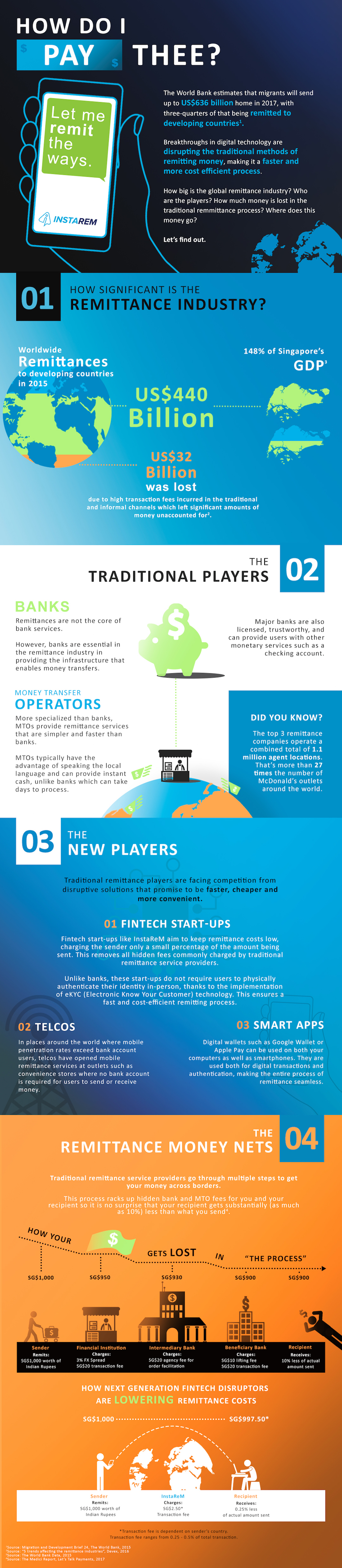
Source: Instarem.





Stay updated on the go with our mobile app.
Get latest insights with smoother, more personalized experience through TIA mobile app.








📅 Upcoming Events
22 October 2026
Payoneer x CSPN Summit 2026