- Premium Content It takes our newsroom weeks - if not months - to investigate and produce stories for our premium content. You can’t find them anywhere else.
 Samreen Ahmad · · 6 min read
The power problem behind India’s AI ambitions
As India tries to play catch-up with the rest of the world in AI development, the country now finds itself behind in two categories: data centers and power.
It’s already witnessing a surge in data center investments, driven by digital adoption and government incentives such as tax holidays for foreign cloud providers until 2047.
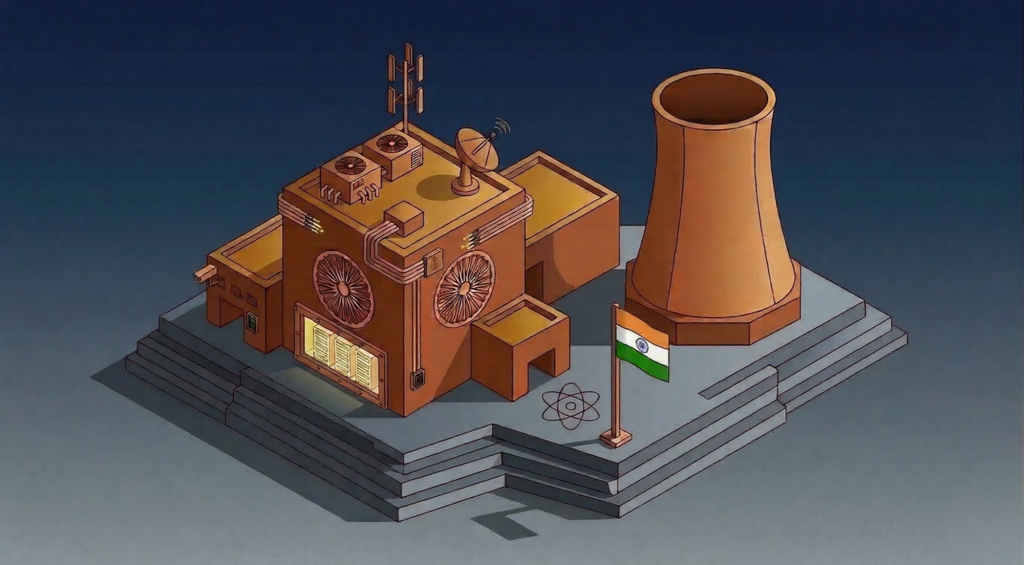
Made by Miguel Cordon / Tech in Asia with the help of AI
But there’s a catch: Data centers don’t just need land and connectivity; they require megawatts of uninterrupted power.
In India, 1 gigawatt can power roughly 700,000 to 1 million homes, depending on the state. This means the extra demand from data centers alone could equal the electricity needs of several large cities.
The country currently hosts around 20% of global data but has only about 3% of its data center capacity.
Inside modern data centers, power requirements have changed dramatically over the past decade, explains Rahul Takkallapally, co-founder of cloud infrastructure startup Bharath Cloud.
He says a typical server rack once required about 3 kilovolt-amps of electricity. That later doubled to around 6 kilovolt-amps as computing power increased.
Now racks built for AI workloads, such as Nvidia H-100 chips, can require between 40 kilovolt-amps and 100 kilovolt-amps, according to Takkallapally. The additional electricity also contributes to the heating of the chips, which then require cooling.
“The machines are getting denser and hotter,” he adds. “Now you are talking about liquid cooling and completely different power requirements.”
The nuclear answer
India’s solution to the predicament is becoming clear: nuclear power, with private players taking on a bigger role. The country has begun opening its tightly controlled nuclear sector to private participation, allowing companies to build and operate reactors for the first time.
“The surge in power demand from AI is one of the key reasons the nuclear sector is opening up now,” says Takkallapally, who is also a member of the Confederation of Indian Industry.
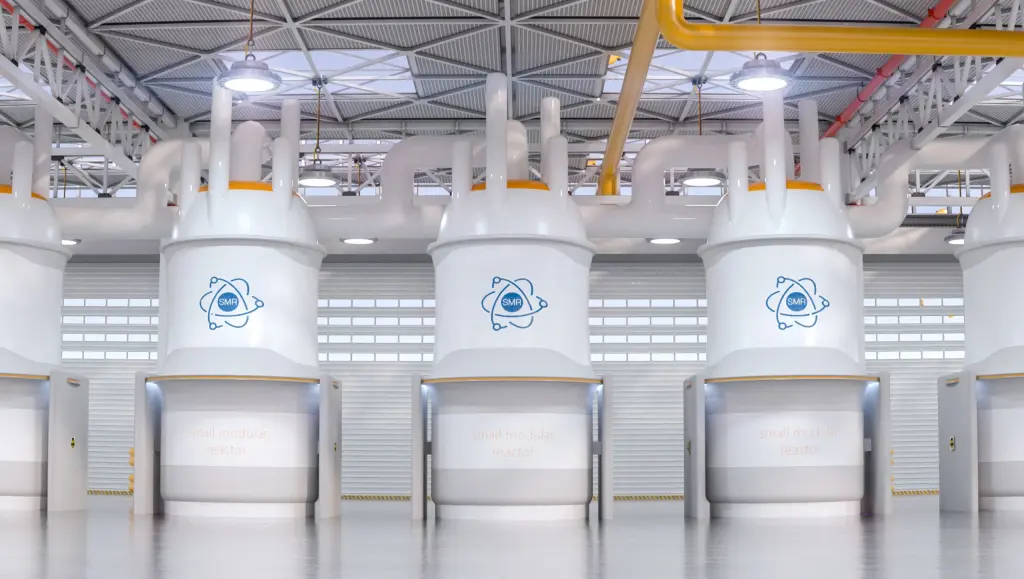
Concept of a small modular nuclear reactor power plant/ Photo credit: Shutterstock/ Audio und werbung
Putting an N in data centers
Echoes from space
Promises and perils
Stay ahead in Asia’s tech landscape
This is premium content. Subscribe to read the full story.
AI data centers need enormous amounts of electricity. To help meet rising demand, the country is opening nuclear power to the private players.
We know this is not ideal. ⌛ Sign up in 20 seconds. Cancel anytime.
Our subscriber community includes professionals from these companies:





Stay updated on the go with our mobile app.
Get latest insights with smoother, more personalized experience through TIA mobile app.









