 Stefanie Yeo · · 6 min read
How Ninja Van evolved its tech stack for SEA’s logistics demands

Summary:
- Ninja Van’s original monolithic tech architecture was built for speed rather than scale. As the company rapidly expanded and demand increased, this system slowed it down.
- To solve its scaling issues, Ninja Van transitioned to cloud infrastructure, eventually forming a key partnership with Huawei Cloud. This transition transformed its systems and enabled the company to offer faster, more reliable services for customers during peak sales.
- Moving forward, Ninja Van plans to deepen its collaboration with Huawei Cloud to leverage AI and develop new features as it expands into other areas, such as B2B logistics.
- Learn more about Huawei Cloud and what it can do for your business on its website.
When logistics company Ninja Van first started in 2014, its goal was simple: Get packages from point A to point B reliably.
As the years go by, the demands on the company have increased significantly.
“Expectations keep on ratcheting up,” shares Shaun Chong, co-founder and chief technology officer at Ninja Van. “People started thinking of delivery not just as: ‘Do I get my parcel?’ They think of it as the entire shopping experience itself.”
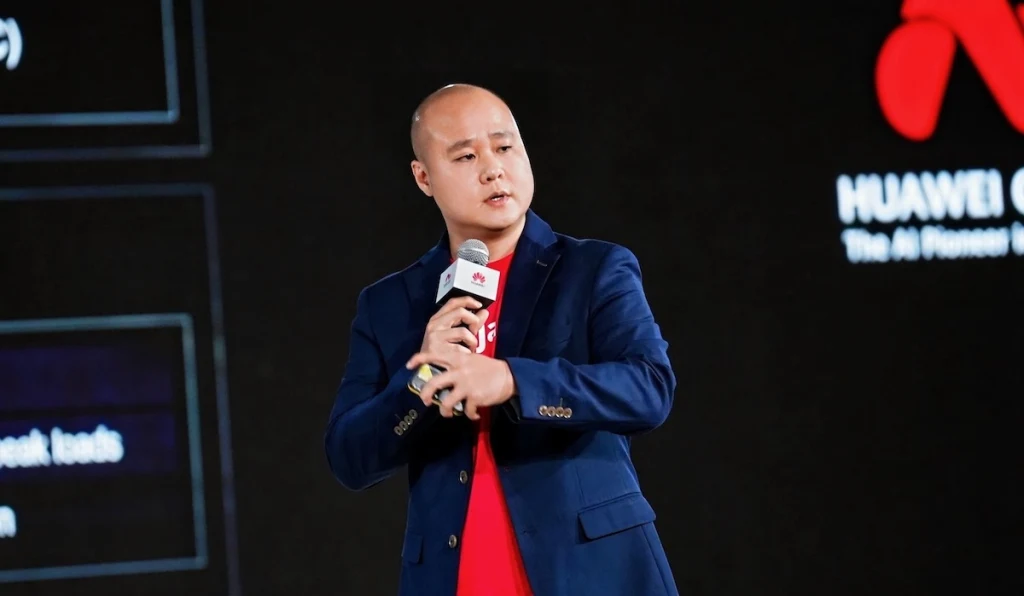
Shaun Chong, co-founder and chief technology officer at Ninja Van / Photo credit: Huawei
From next-day – or even same-day – delivery to real-time order updates, customers wanted more from Ninja Van as it became one of Southeast Asia’s biggest logistics companies.
As the firm expanded across the region and grew its fleet of delivery drivers and vehicles, Chong and his team soon realized that the tech infrastructure underpinning the entire operation was in need of a serious upgrade.
Building with the basics
Ninja Van’s tech infrastructure was built in much the same way as many other startups – for speed, not for scale.
This meant that Ninja Van was monolithic, with its user interface, business logic, and data access tightly coupled. While this made it easy for a small team to manage with minimal overhead, cracks began to show as the company scaled.
Ninja Van had expanded rapidly into new markets across the region, and rising ecommerce penetration created increasing pressures – sales events could spike demand for Ninja Van’s services by 5x overnight, for instance.
“It’s not just higher demand but also more volatility and more unpredictability,” Chong shares. “When we hit this kind of scale, the chance of breaking, system outages, and such gets higher. But the tolerance for these kinds of breakages also goes basically to zero.”
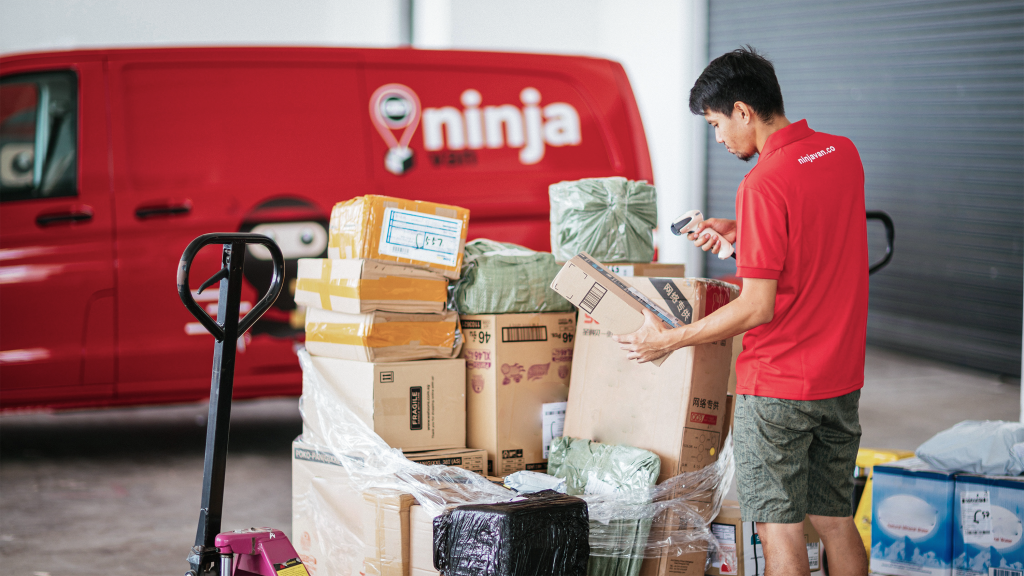
Photo credit: Ninja Van
Capacity planning and provisioning extra computing resources to meet this demand was also extremely costly and relied heavily on manual work. Its monolithic system made it difficult to roll out new features as well.
“It’s a tightly coupled architecture where every change is quite risky,” says Chong. “When one person wants to ship something really small … if you don’t coordinate well across different teams or you don’t have enough software testing, there is a huge chance that a single deployment could take down unrelated parts of the system.”
Engineers had to move slower to ensure new changes wouldn’t crash the system, limiting the company’s movements – a drag that slowly started to compound.
“Things that were working fine at a smaller scale started becoming bottlenecks,” says Chong. “And when you have just one component slowing down, it cascades.”
Into the cloud
To address these challenges, Ninja Van moved all its operations to the cloud in a bid to automate processes and have greater flexibility with its infrastructure. The company works with a number of cloud providers, the newest of which is Huawei Cloud, the cloud solutions arm of the global technology firm.
Ninja Van’s journey with Huawei Cloud was not a linear one, Chong shares.
“We worked with many other cloud providers, and we actually were not super keen on working with Huawei at first,” he recounts.
“They came knocking on our door, but we were very upfront about having big contracts with another cloud company. But [the Huawei Cloud team] was still keen to see if we could build a relationship and see whether we could do something together.”
Any infrastructure-related projects were out of the question, but Ninja Van saw an opportunity for Huawei Cloud to help them with video analytics at its warehouses. The cloud company could detect unsafe or inappropriate behavior, for instance, such as workers throwing packages or people smoking where they aren’t supposed to.
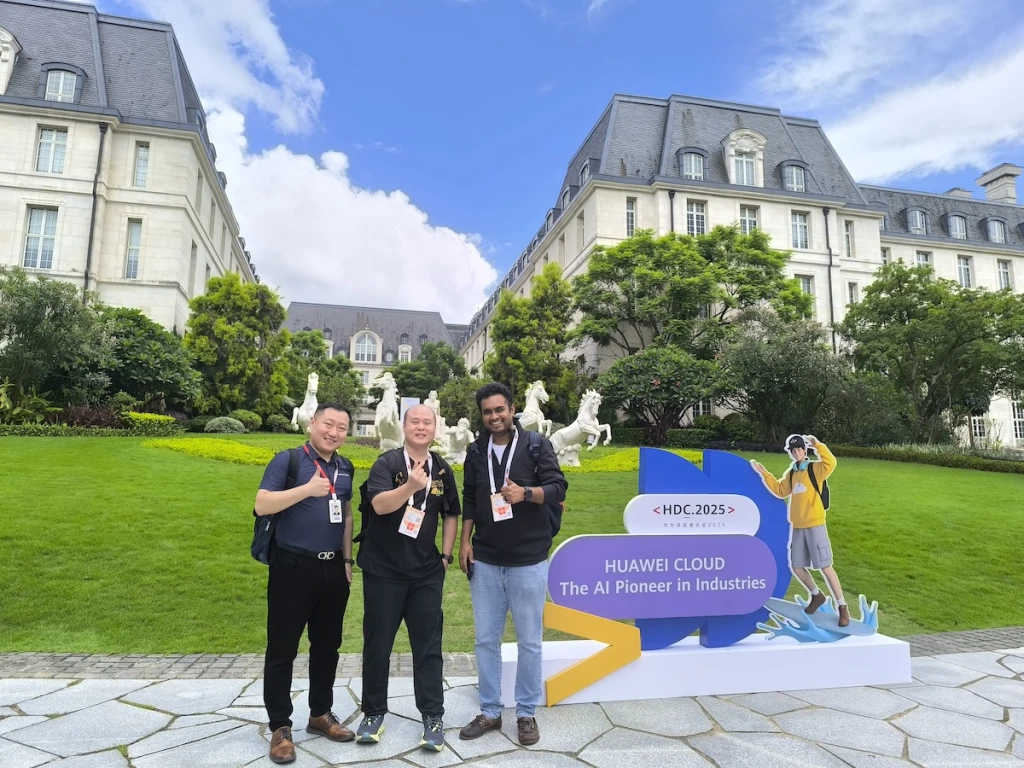
Chong on a visit to Huawei’s campus in Dongguan, China / Photo credit: Huawei
“We went on little projects like this, but we kept the relationship for a few years without doing any ‘real’ business,” Chong says.
It was only when Ninja Van began acquiring other digital companies that the co-founder saw an opportunity for Huawei Cloud to come in at the infrastructural level.
“When you build a tech team and you start to scale, you have certain technical standards that you want to follow,” he says. “Working with the Huawei Cloud team – they already know how we work, how we architect, and they helped us with doing some of this transformation for the acquired companies as well.”
Ninja Van uses CCE Turbo, Huawei Cloud’s container platforms, which enables it to build, scale, and modify its infrastructure without disruption, allowing it to seamlessly bring the tech stacks of the companies it acquired into its system. The company also leveraged Huawei Cloud’s solutions around object storage to manage data effectively.
The partnership with Huawei Cloud has yielded impressive results: Ninja Van has experienced a 60% improvement in resource utilization, 30% reduction in infrastructure costs, and 40% improvement in peak delivery efficiency. It has reduced the time taken for new service launches from several months to just one to two months and has seen a 35% improvement in inventory turnover.
Explore opportunities with Huawei Cloud
“Performance went up because – when we control the cost a little bit more – we also have a little more headroom [in terms of resources] at the same price or at a lower price,” explains Chong. “More headroom means lesser chances of having things go down.”
This translated to Ninja Van having more resilient and adaptable infrastructure, which in turn enabled it to create the best experience possible for its customers.
“What we really care about is going back to where we started: giving our customers the real-time visibility, flexibility, and reliability that they want and need,” Chong says, “They don’t see that there’s anything different during the crazy sale days vs. the regular ones. We can give them a smooth experience during these peaks, instead of degrading it.”
The road ahead
Chong sees a lot of potential for Ninja Van to expand its collaboration with Huawei Cloud, especially as the company expands into the B2B logistics space.
According to Chong, while Ninja Van has had extensive experience in the B2B2C space, B2B presents its own set of challenges.
“The requirements of B2B are completely different. For example, you only pick up a specific brand of shoes or you need to do a stocktake in the loading bay before bringing the items up to the store – things like that,” he shares. “We need to build new features around these specifications.”
AI, too, is another area of opportunity.
“That’s definitely something that we are looking to partner more with Huawei on – to do more, be more efficient, and we can deliver new products faster,” Chong shares. “There’s a lot of opportunity for us to consolidate more and work closer with Huawei in the long run.”
Huawei Cloud translates Huawei’s ICT prowess over three decades into reliable, secure, and sustainable cloud services for customers, partners, and developers.
Learn more about Huawei Cloud and what it can do for your business on its website.
This content was produced by Tech in Asia Studios, which connects brands with Asia’s tech community. Learn more about partnering with Tech in Asia Studios.
Stay updated on the go with our mobile app.
Get latest insights with smoother, more personalized experience through TIA mobile app.
Recommended reads
 Indonesian AI startup goes global
 Forrest Li on scaling Sea, building smarter bots, and founder grit
 An AI assistant that joins sales calls and scores team skills
 SGX’s CEO says it doesn’t need a unicorn to win
 SMEs want AI too, but not the kind Big Tech is selling
 Oatside’s alt-milk rise hits a profitable gear
 Alibaba’s financial health in 12 charts
 Asia’s telcos bundle AI into mobile plans. Will it pay off?
 M-Daq chases bigger clients as revenue falls, losses grow
 VC tracker: Accel raises US$3.5b, including US$550m for India





Editing by Jonathan Chew and Jaclyn Tiu
(And yes, we’re serious about ethics and transparency. More information here.)




