
The phrase “high growth potential” is closely associated with AI startups.
In empowering tech ventures and startups with world-class facilities and incubation programs, the Hong Kong Science and Technology Parks Corporation (HKSTP) aims to help realize this potential.
In 2019, it launched the Elite Programme with the aim of supporting startups poised to make it big. So far, the program has helped 42 of its portfolio companies expand outside Hong Kong.
Three firms from the Elite Programme – IKAS Industries, HRWork, and Leapstack – appeared at HKSTP’s Elite Global Inno Day event, where they showcased their solutions and business strategies to potential partners and investors.
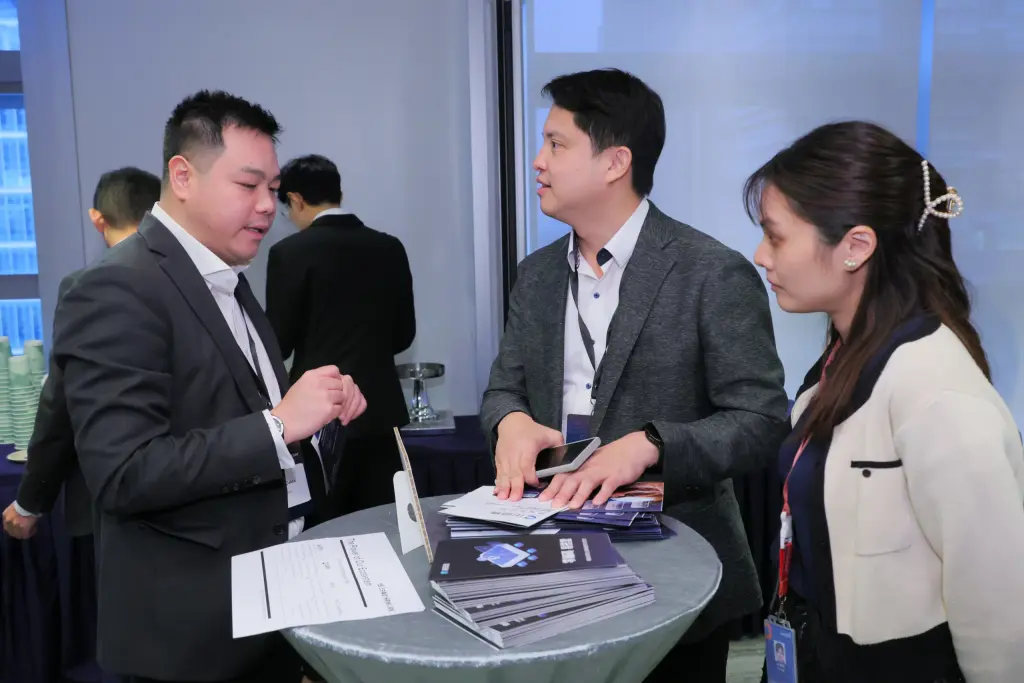
A perfect chance to show off what they’ve got / Photo credit: HKSTP
“There were over 200 organizations at the event – very comprehensive support from HKSTP,” says KC Wai, general manager at HRWork.
Each of these companies has harnessed the power of AI to develop innovative solutions in their own way.
A game of nanometers
When it comes to the semiconductor industry, any inefficiency – no matter how tiny – can have huge repercussions.
“We’re dealing with the most precise manufacturing that’s humanly possible,” says Li Jie, CEO of smart manufacturing solutions provider IKAS Industries.
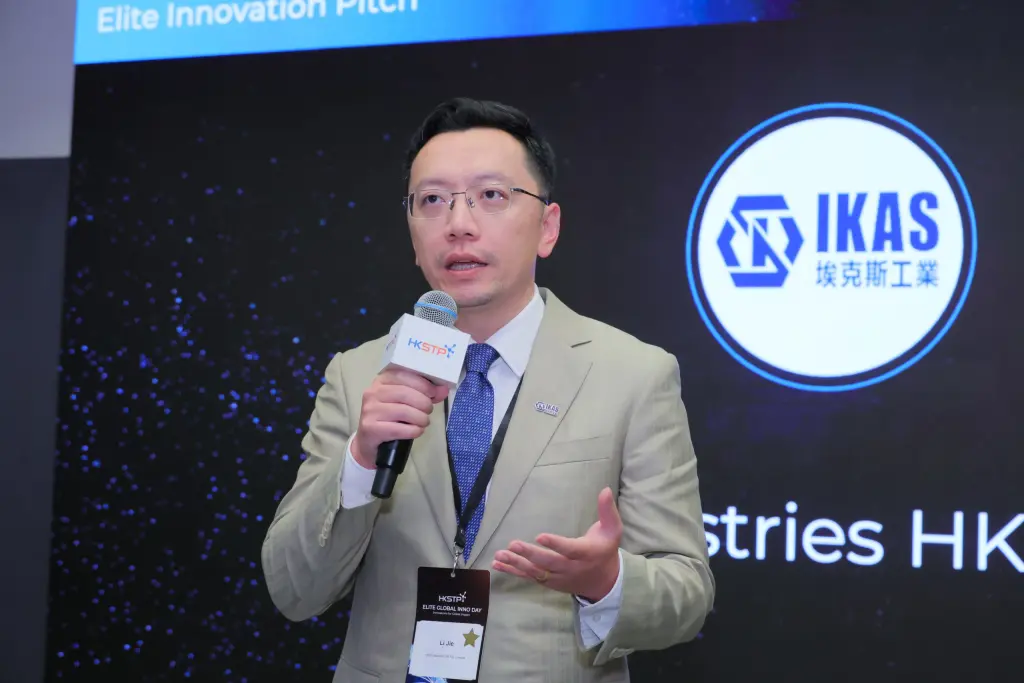
Li Jie, CEO of IKAS Industries / Photo credit: HKSTP
Li, who started as an AI engineer, saw the potential in combining AI-powered hardware and software to create a “total solution” for chip manufacturers. He founded IKAS Industries to do just that.
One of the firm’s products is software that collects information on certain factors in the manufacturing process, such as ingredient quantity, temperature setting, and equipment performance. An AI algorithm then analyzes the data set, identifying the optimal conditions.
This software helps chipmakers improve output efficiency and reduce process errors or inconsistencies.
IKAS also developed a large language model that lets R&D teams use natural language to analyze data or search for information.
“They don’t need to write any code to make queries or analyze a big database,” says Li. “With this, they can gain insights more easily, making R&D down the line a lot easier.”
Getting into such a secretive industry wasn’t easy, but IKAS got a foot in by partnering with manufacturers that used older equipment. These firms weren’t developing cutting-edge chips and were more open to sharing their data. Thanks to collaborations like these, IKAS got the training data it needed for its AI algorithms while demonstrating the effectiveness of its solutions.
Investments from major industry players, including Semiconductor Manufacturing International Corporation in 2019, have helped IKAS improve its tech and land new customers.
Now, it’s looking to expand to the rest of Asia, and possibly Europe.
“We’re solving a pain point faced by manufacturers all over the world,” says Li. “There are big opportunities overseas and we want to serve these customers.”
Cutting to the chase
Recruiters spend a lot of time on repetitive tasks such as scanning resumes for keywords, sorting candidates, and arranging interviews.
Introducing AI can help, which is exactly what HRWork does.
Founded in 2015, the startup developed an AI-powered platform that automates HR processes, saving companies up to 90% in costs and cutting time spent on administrative matters by 80%.
“Let’s say you’re looking for senior software engineers. Our AI will scan CVs for key elements such as how many years of experience [the candidates] have and whether they are proficient with selected programming languages,” explains HRWork’s Wai.
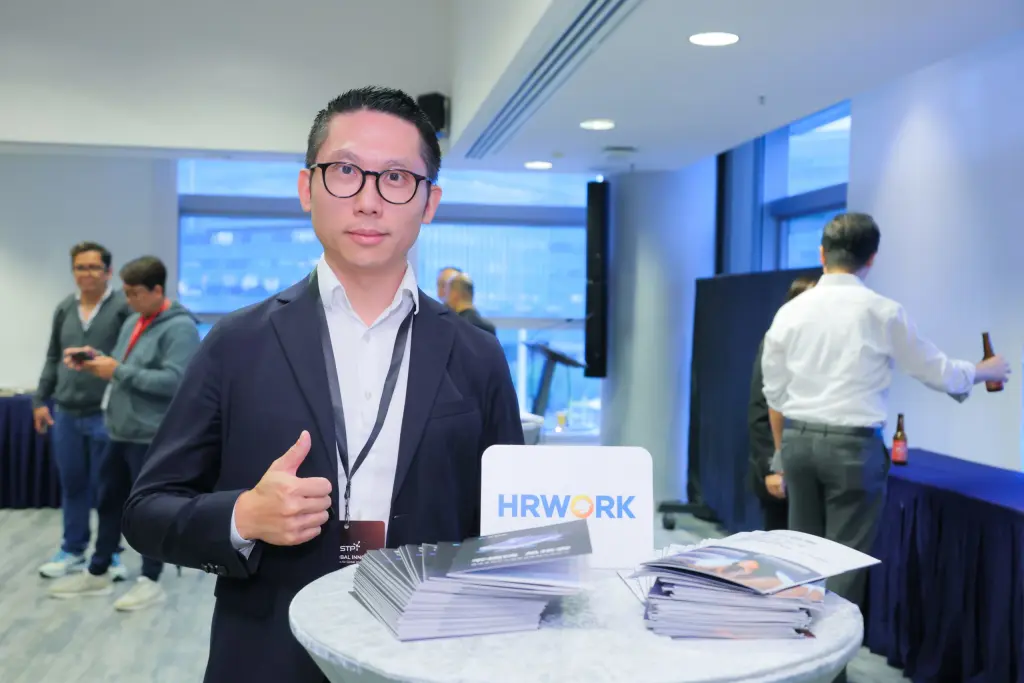
KC Wai, general manager at HRWork / Photo credit: KC Wai
The platform sorts the candidates into buckets, based on their identified characteristics. Recruiters then choose which buckets they want to review manually.
HRWork also offers an advisory service.
“You can use natural language to ask about certain HR details,” Wai shares. “For example, if you’re looking to expand to Albania and hire a general manager, you won’t need to do intense research to find out the accurate salary range. We have all that data consolidated on our platform.”
The company has dedicated teams that constantly look out for updates on HR-related matters across more than 158 countries. This ensures that the algorithm gives users the most relevant information.
However, he clarifies that the platform still requires human supervision in certain areas, including confirmation of legal concerns – such as country regulations – with lawyers, or when dealing with sensitive employee cases.
For 2025, Wai says that the company is looking to expand its client base not only in Hong Kong, but in the Greater Bay Area as well.
Leaps and bounds
Back in 2016, the insurance industries in China and the US were worlds apart.
The US had tons of commercial insurance companies, but China’s corresponding sector was relatively less developed, says Jason Liu, founder of insurtech startup Leapstack.
This gap provided a golden opportunity for new players to come in with new technologies and advanced capabilities – something Liu was set on doing when he founded Leapstack.
“We went to commercial insurers to see how we can help them,” Liu explains. “To our surprise, technology for claim management was basically non-existent.”
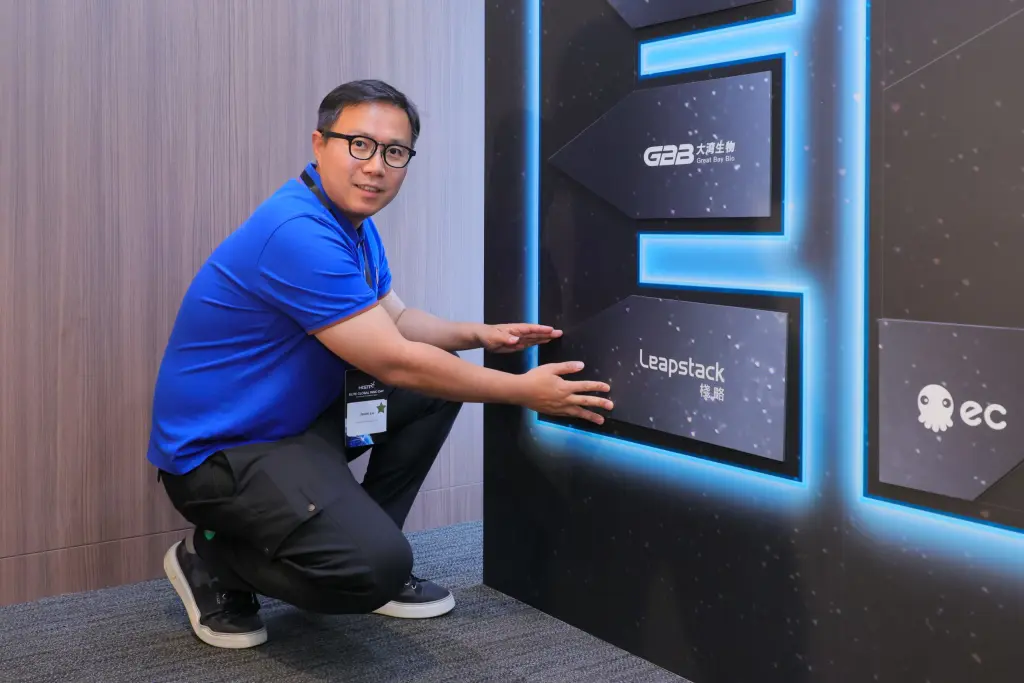
Jason Liu, founder of Leapstack / Photo credit: HKSTP
Leapstack started building a proof-of-concept (POC) for the private sector. Much of this revolved around speeding up and improving accuracy in the claims process by doing things like automatically flagging anomalies for manual review.
“For instance, we could track doctors’ behaviors and see if they’re providing the same treatment inordinately, which potentially means that they’re faking claims,” Liu says.
A few years ago, an investor got Leapstack’s team a meeting with a huge partner: the CEO of one of the largest insurers in China, who agreed to help the startup develop its POC further. This helped Leapstack gain traction with other major players – the rest, as they say, is history.
“We’re now the largest third-party provider for healthcare claim management in China,” Liu says.
Further, the company is looking to use its deep knowledge of healthcare insurance to help stakeholders penetrate underserved segments. For example, while most insurers would prefer customers with little to no preexisting conditions, Liu says there’s a huge market for people with chronic conditions willing to pay extra for coverage.
With all the insurance data Leapstack has collected, it could help providers figure out a sweet spot to offer coverage to this segment while minimizing losses.
Now, the startup is gunning to take its solutions overseas, focusing primarily on Southeast Asia and the Middle East and North Africa regions.
“We’ve already got licenses in those countries, so all that’s left to do is figure out the optimal expansion strategy,” Liu says.
Focusing on what matters
Companies like IKAS, HRWork, and Leapstack spend lots of effort on R&D to ensure that their solutions are always fit for purpose.
Key partnerships that help them focus on improving their tech are also important, and HKSTP’s assistance has proven invaluable.
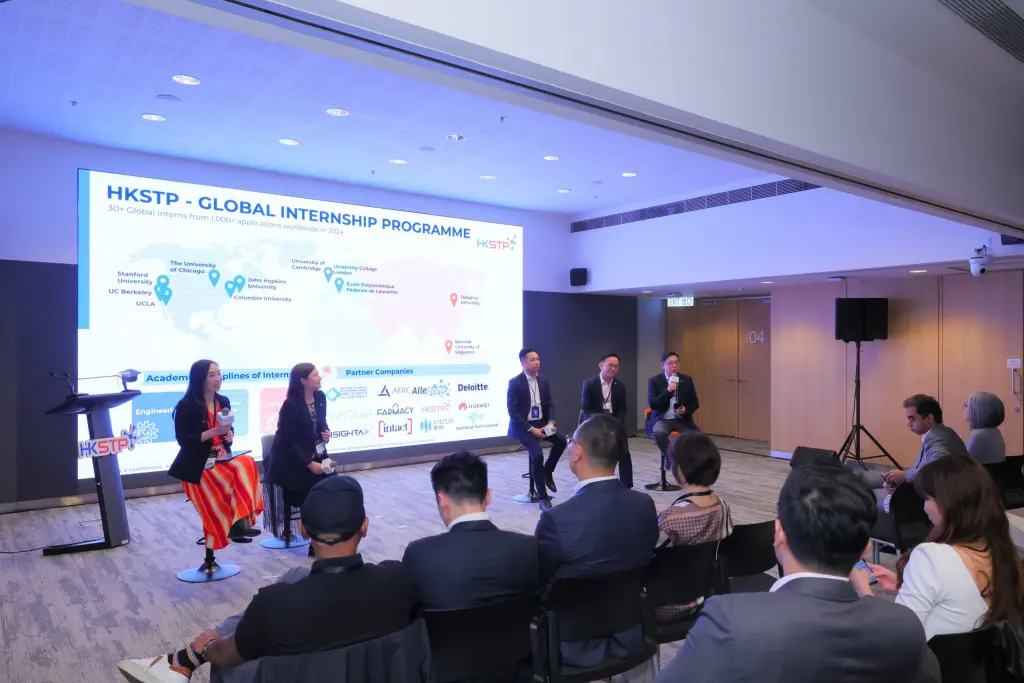
HKSTP’s resources played a crucial role in these firms’ development / Photo credit: HKSTP
“Our point-of-contact was able to help us with so many administrative things, like registering for certain licenses,” explains IKAS’ Li. “This allowed us to focus on our research and ultimately, run the business well.”
“They helped us ensure that everything was so smooth, and we could get so many things resolved all at once.”
As one of the largest innovation and technology ecosystems in Hong Kong, HKSTP is home to over 2,000 technology companies. It aims to develop the city into an international hub for innovation. To connect with HKSTP and its partner companies, get in touch here.
This content was produced by Tech in Asia Studios, which connects brands with Asia’s tech community. Learn more about partnering with Tech in Asia Studios.
Stay updated on the go with our mobile app.
Get latest insights with smoother, more personalized experience through TIA mobile app.
Recommended reads
 Why the smartphone era is holding back consumer AI
 Can remotely operated excavators fix construction’s labor gap?
 IBM on AGI: bad math, wrong science
 When AI meets human nature
 Seedance takes over the internet
 A real-time verification engine that rewards truth-finding
 How AI agents will be the new software buyers
- Mbodi AI wants to help robots adapt as fast as workers
 You can’t spell India without AI
 Meet the YC-backed firm using AI to save nursing homes millions





Editing by Winston Zhang and Mina Deocareza
(And yes, we’re serious about ethics and transparency. More information here.)








Be the first to comment!
Comment now