- Premium Content It takes our newsroom weeks - if not months - to investigate and produce stories for our premium content. You can’t find them anywhere else.
 Scott Shuey · · 6 min read
Investors pour in as quantum threat nears reality
Quantum computing is reaching a tipping point. No one knows for certain exactly how soon – current estimates are at three to seven years – but when it comes, this new technology will be able to shatter today’s encryption.
The “quantum threat,” as it is being called, could expose global financial systems, digital identities, and even military networks to whoever wields this new technology – unless they start preparing now.
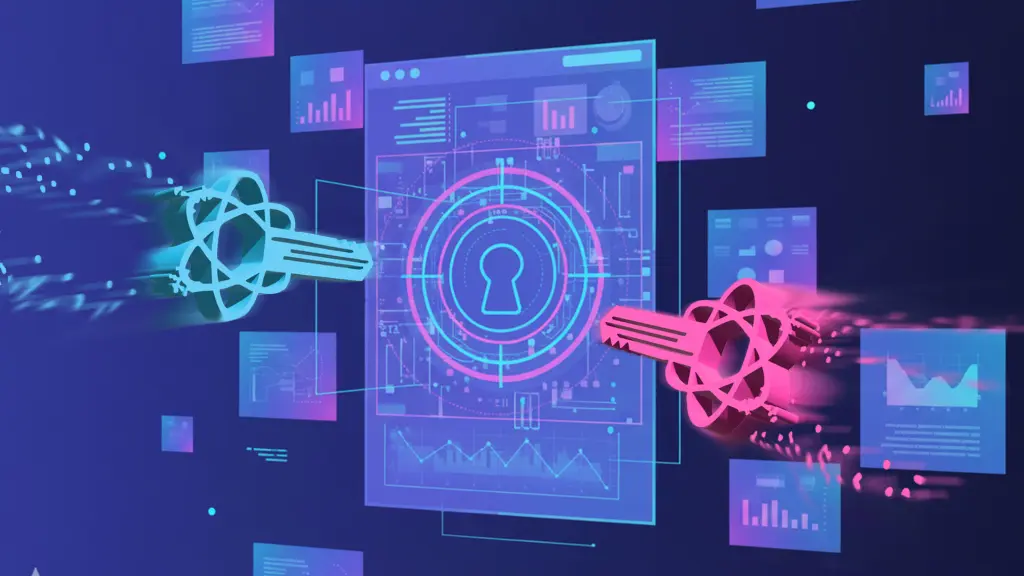
Made by Arsal Ysfin/Tech in Asia with the help of AI
But why now? There are no real quantum computers or quantum chips in mass production yet. At best, today’s top mainframes – large on-premise computer systems – can run quantum simulations at about 1 quadrillionth of the speed expected from real quantum computers.
Quantum computing doesn’t just promise faster processing; it represents a fundamentally different way of computing. Traditional machines use bits – ones and zeros – to calculate problems.
Meanwhile, quantum computers use qubits (quantum bits), which can represent infinite values between 0 and 1 at the same time. Think of it as a spinning coin, which is both “heads” and “tails” at the same time, until someone stops it.
Aside from busting modern cryptography, this advanced computing allows systems to model molecules, simulate chemical reactions, and optimize complex financial portfolios.
Qubits can also interact with each other in a process called entanglement, which exponentially increases their speed. A 100-qubit system isn’t twice as fast as a 50-qubit system – it’s 250 times faster.
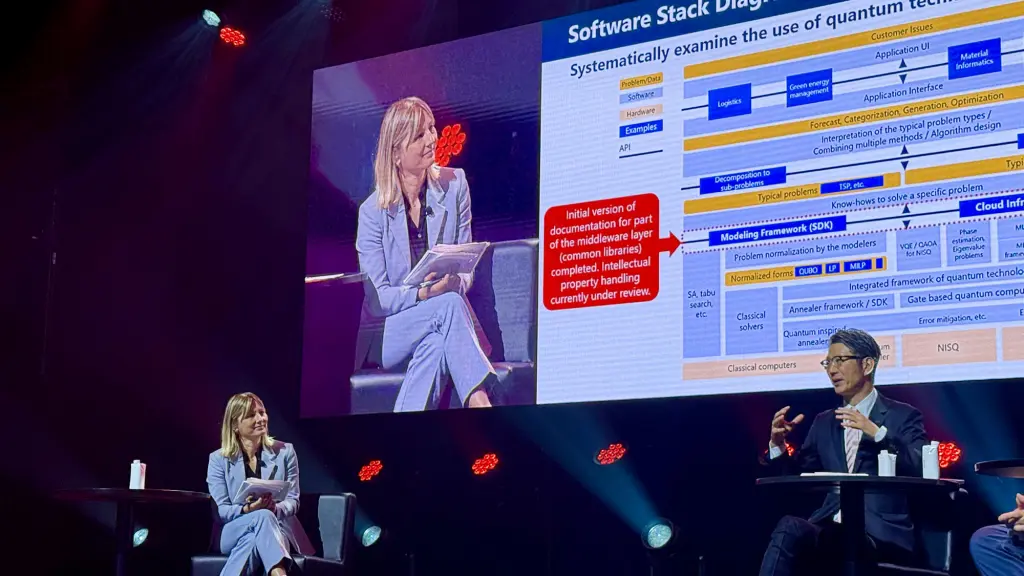
QAI Ventures CEO Alexandra Beckstein at Sushi Tech Tokyo 2025 / Photo credit: QAI Ventures
At 2,000 qubits, modern encryption fails, says Alexandra Beckstein, founder and CEO of Switzerland-based VC firm and accelerator QAI Ventures.
“It will take six or seven years for big companies to migrate to quantum-resistant systems,” Beckstein tells Tech in Asia. “But we’ll reach the decryption threshold in five.”
This isn’t just scaremongering from investment funds – this prediction comes from the US National Institute of Standards and Technology (NIST). By the early 2030s, 112-bit security – the current “safe” level of security according to the NIST – will be obsolete.
Today, it would take a supercomputer roughly 160 trillion years to break 112-bit security.
Enter the VCs
Enter the engineers
Why investors are looking east
Microsoft’s leap forward
Stay ahead in Asia’s tech landscape
This is premium content. Subscribe to read the full story.
Experts say encryption will fail within a decade due to quantum computing, threatening banks, governments, and every digital platform.
We know this is not ideal. ⌛ Sign up in 20 seconds. Cancel anytime.
Our subscriber community includes professionals from these companies:





Stay updated on the go with our mobile app.
Get latest insights with smoother, more personalized experience through TIA mobile app.