Welcome to Tech in Asia’s daily newsletter, your essential dose of Asia’s tech and startup buzz. Not yet a subscriber? Register here. Got a story tip? Send it to editors@techinasia.com.
In focus
- What the Nadiem Makarim trial signals to investors
- EFishery co-founder gets nine years in prison over US$300 million scandal
- The data on how Southeast Asia VCs co-invest
Hello reader,
Prosecutors are seeking a 15-year prison sentence for Ibrahim Arief, a former vice president of engineering at Indonesian ecommerce firm Bukalapak, over a corruption case tied to Chromebook procurement. It has certainly been a hot topic online.
Critics point out that, so far, there is no evidence that Arief enriched himself or gained any personal benefit from the program. Others believe that he may not be entirely innocent.
Another figure from the tech industry implicated in the case is Nadiem Makarim, co-founder of Gojek and Indonesia’s former Minister of Education. Similar to Arief, there is no evidence so far indicating that he gained personally from the procurement.
This incident is not the first of its kind in Indonesia. Previously, former Trade Minister Thomas Lembong was found guilty in a corruption case despite proof that he had not enriched himself. He was sentenced to 4.5 years in prison but was later granted a pardon by President Prabowo Subianto.
Cases like these raise uncomfortable questions about legal certainty in Indonesia, particularly for investors. Today’s top story takes an in-depth look at the Makarim case, including how it may impact the country’s investment climate.
For tech executives and investors involved in government-linked projects, the signal is hard to ignore: even without personal gain, legal exposure remains a real risk.
Meanwhile, in a separate case, Gibran Huzaifah, co-founder of eFishery, was sentenced to nine years in prison after being found guilty of embezzlement and money laundering. The scandal around the agritech startup (once valued at US$1.4 billion) has now entered its final chapter, with the company itself appearing to be no longer active.
The two cases draw a sharp contrast, one centered on alleged policy missteps, the other on outright fraud. But both could end in jail terms and kick the Indonesian startup scene while it’s down.
Jofie Yordan, journalist
Top Story
Gojek founder trial exposes policy risk for Indonesia’s investors
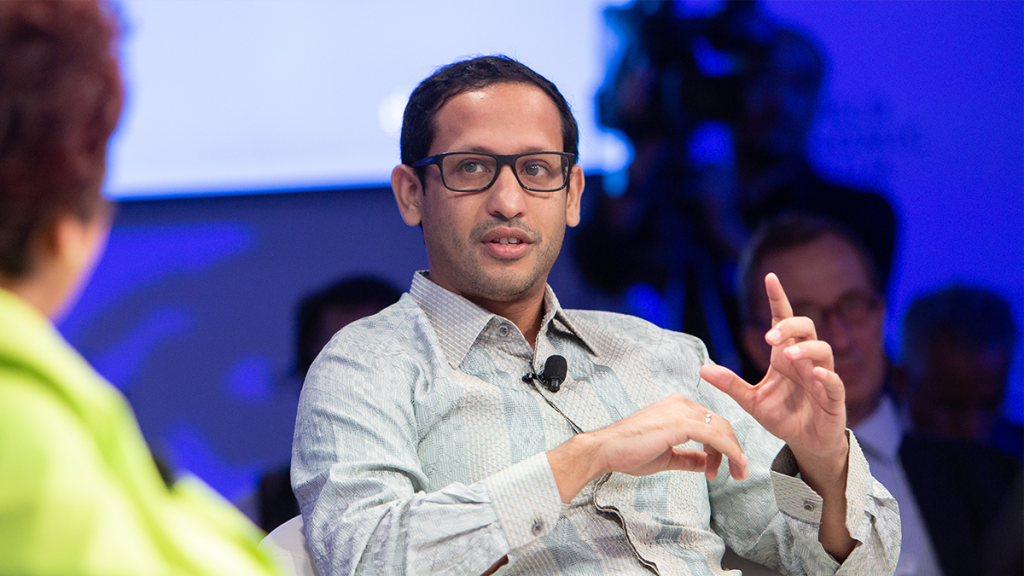
Nadiem Makarim / Photo credit: World Economic Forum / Sikarin Thanachaiary
Spotlight
A visual story you shouldn’t miss
Trending news
Partner with Tech in Asia Conference 2026





Stay updated on the go with our mobile app.
Get latest insights with smoother, more personalized experience through TIA mobile app.