- Premium Content It takes our newsroom weeks - if not months - to investigate and produce stories for our premium content. You can’t find them anywhere else.
 Putra Muskita · · 6 min read
Indonesia’s minimarts: the next frontier for online brands?
In Indonesia, Indomaret and Alfamart are on nearly every corner and are staples of daily life.
These two retailers have used their vast store networks to expand into e-groceries. Now, online-first consumer brands are also turning to these minimarts for a fast track to offline scale.
One such brand is Kopi Kenangan. While best known for its grab-and-go outlets – which are mostly located in Indonesian malls – the F&B unicorn is now selling ready-to-drink bottled coffees in Indomaret and Alfamart stores, which collectively have over 40,000 locations nationwide.
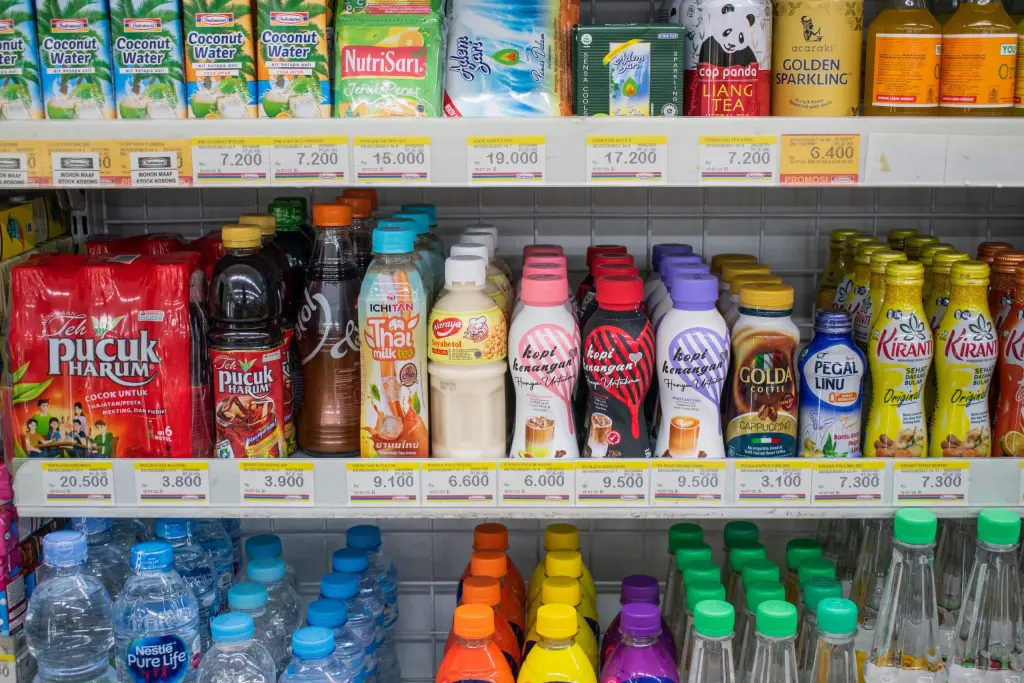
Kopi Kenangan’s products are displayed alongside other brands at an Indomaret in Bandung, Indonesia./ Photo credit: Sitepu.z / Shutterstock
These beverages “can be enjoyed anytime and anywhere, especially for consumers in cities that do not yet have a Kopi Kenangan outlet,” Susan Ernawati, head of marketing for Kopi Kenangan’s ready-to-drink line, tells Tech in Asia. In other words, this opens up a broader market compared to the grab-and-go outlets.
For online consumer brands, minimarts’ hyperlocal reach is a draw, offering access to everyday shoppers who frequent these stores for daily necessities while reducing reliance on ecommerce platforms. But scaling too quickly comes with risks.
Slice of a massive pie
Offline retail still dominates in Indonesia. Per Statista, Indonesia’s ecommerce penetration for 2024 stood at 23.9%.
As the funding winter deepens and online marketplaces push for profitability, rising fees and take rates are squeezing merchants’ margins.
“The question is not if a brand should expand into offline channels, but when,” points out Anthony Adiputra, an investment associate at DSG Consumer Partners.
Online brands can launch their own offline stores – a play Kopi Kenangan has embraced from day one. The chain has 868 branches across Indonesia and has recently shifted its focus to a regional expansion.
See also: Shrinking middle class pushes Indonesian brands to adapt
Entering minimarts would let Kopi Kenangan take the “convenience product” angle – a different customer segment than their grab-and-go outlets, says a senior executive at a global FMCG firm who asked not to be named.
But operating and scaling brick-and-mortar stores is expensive. Plus, while it works for F&B, consumer brands in industries like beauty would see it differently.
This may explain why cosmetics brands Esqa and Rose All Day – while having only two offline stores each – mainly distribute their products through beauty unicorn Sociolla.
Attention, minimart goers
Minimarts or specialized chains?
Stay ahead in Asia’s tech landscape
This is premium content. Subscribe to read the full story.
The likes of Kopi Kenangan are drawn to Indomaret and Alfamart’s mass reach. But it’s not a one-size-fits-all strategy.
We know this is not ideal. ⌛ Sign up in 20 seconds. Cancel anytime.
Our subscriber community includes professionals from these companies:





Stay updated on the go with our mobile app.
Get latest insights with smoother, more personalized experience through TIA mobile app.