
Summary:
- Agentic AI can provide useful benefits to the companies implementing it successfully, with early adopters already seeing an average of 88% positive ROI by deploying agents that handle multi-step workflows.
- Doing this isn’t so simple, however, because of three primary hurdles: a lack of trust and governance, legacy infrastructure, and a workforce skills gap.
- Overcoming these barriers requires a step-by-step approach.
- Learn more about how Google Cloud and Gemini Enterprise can help your firm get started on its agentic AI journey.
Agentic AI may be one of the newer kids on the block when it comes to AI solutions, but it’s already making waves. It’s now transforming enterprise solutions and reinventing traditional industries, including manufacturing and healthcare.
“In the past, we told software exactly how to do a task,” says Sai Kolluri, chief technology officer of Google Cloud Indonesia. “Today, with agentic AI, we simply state a goal, and the agents determine the reasoning path plan to achieve it.”
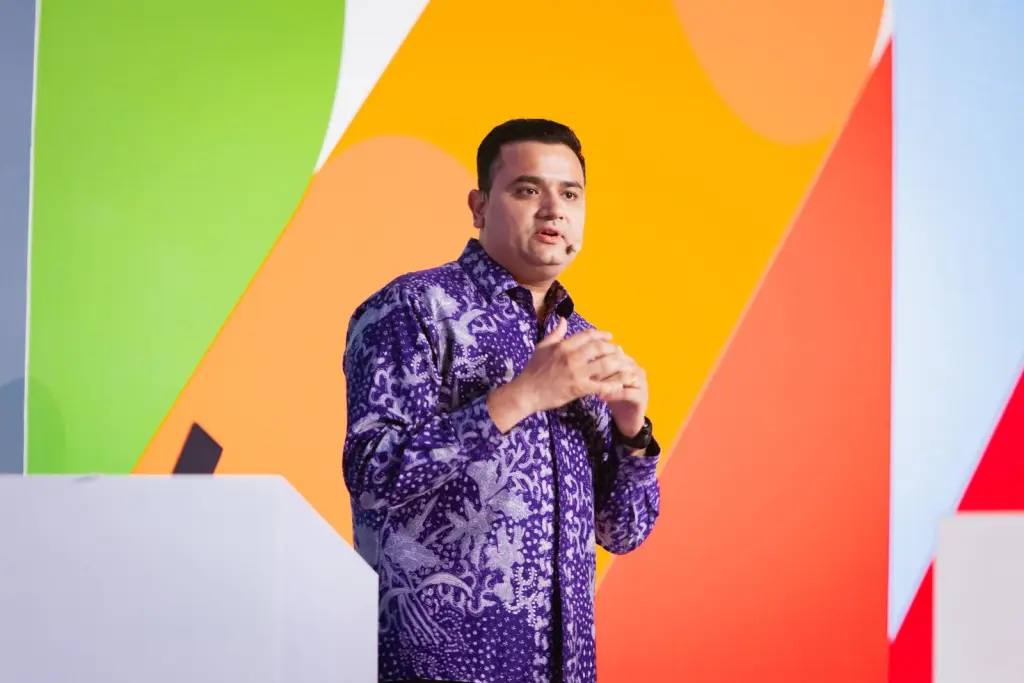
Sai Kolluri, chief technology officer of Google Cloud Indonesia / Photo credit: Google Cloud
He adds that “early adopters are already seeing an average of 88% positive ROI by deploying agents that handle multi-step workflows.” However, successfully implementing the tech isn’t a walk in the park. Companies have to navigate many challenges to make sure they don’t end up with a white elephant.
That’s where Gemini Enterprise, a platform offered by Google Cloud, comes in. It helps firms level up seamlessly, so they can overcome the key barriers to agentic AI integration.
The Big Three Questions
Three main challenges typically stall the implementation of agentic AI, according to Kolluri:
- The trust and governance gap: Companies worry about agents “hallucinating” or taking unauthorized actions within production environments.
- Legacy infrastructure inertia: Agents require a modern, unified data layer to be effective – the existing tech infrastructure might not be properly equipped.
- The workforce skills gap: Moving from “execution” to “agent management” requires a fundamental mindset shift that most workforces are not yet ready for.
Trust issues arise because agentic AI shifts the risk from simply generating erroneous text to autonomously executing incorrect business actions. Meanwhile, infrastructure inertia occurs when agents can’t act effectively across multiple systems to complete workflows because of siloed data and disconnected APIs.
Lastly, there are skills gaps because employees have been trained to execute tasks step-by-step, rather than defining strategic goals, setting guardrails, and auditing AI’s reasoning path.
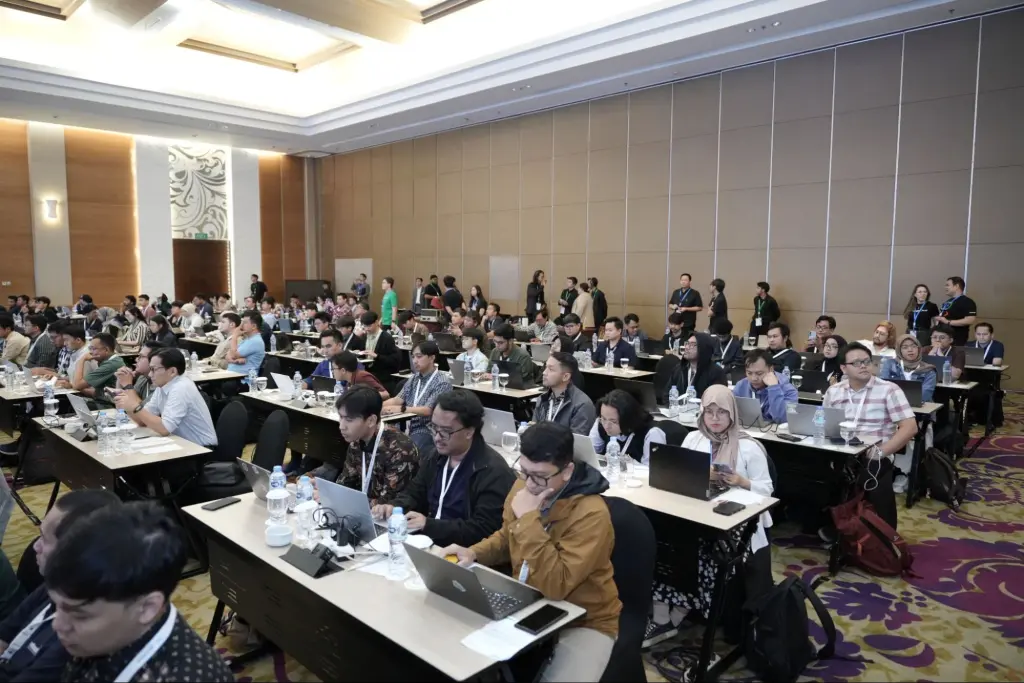
A Google Cloud Labs Jakarta event in session / Photo credit: Google Cloud
These issues are common, given how new AI technologies are. Companies simply haven’t been built to support their usage.
“Traditional IT and corporate structures rely on humans using rigid, rules-based software,” Kolluri explains. “Injecting highly fluid, goal-driven agents into these static environments inevitably causes friction, requiring a complete rewiring of both technology and company culture.”
The Big Three Answers
The solutions to these hurdles all emerge from the same principle: Learn how to walk before thinking about running.
When addressing the trust and governance gap, one can start with a human-in-the-loop approach. This means the AI agent can draft the plan, but a human evaluates it and ultimately decides on how to proceed.
Learn more about Gemini Enterprise
“To build trust, you must ground the agent’s logic in your actual enterprise data, not the open internet,” Kolluri says. “Platforms like Vertex AI provide the guardrails to ensure agents act strictly on verified corporate facts.”
In tackling legacy infrastructure issues, Kolluri recommends taking things one step at a time. This means target one high-friction workflow – customer onboarding, for example – and modernizing the data pipeline for that specific use case first.
Then, instead of forcing disconnected tools to work together, one could use natively multimodal models like Gemini, he suggests.
“This gives agents a unified engine to reason and execute across text, code, and images seamlessly,” Kolluri shares.
As for addressing the skills gap, the process involves opening up the tech to everyone in the firm and organizing initiatives like internal hackathons. This will encourage usage and nurture cultural buy-in.
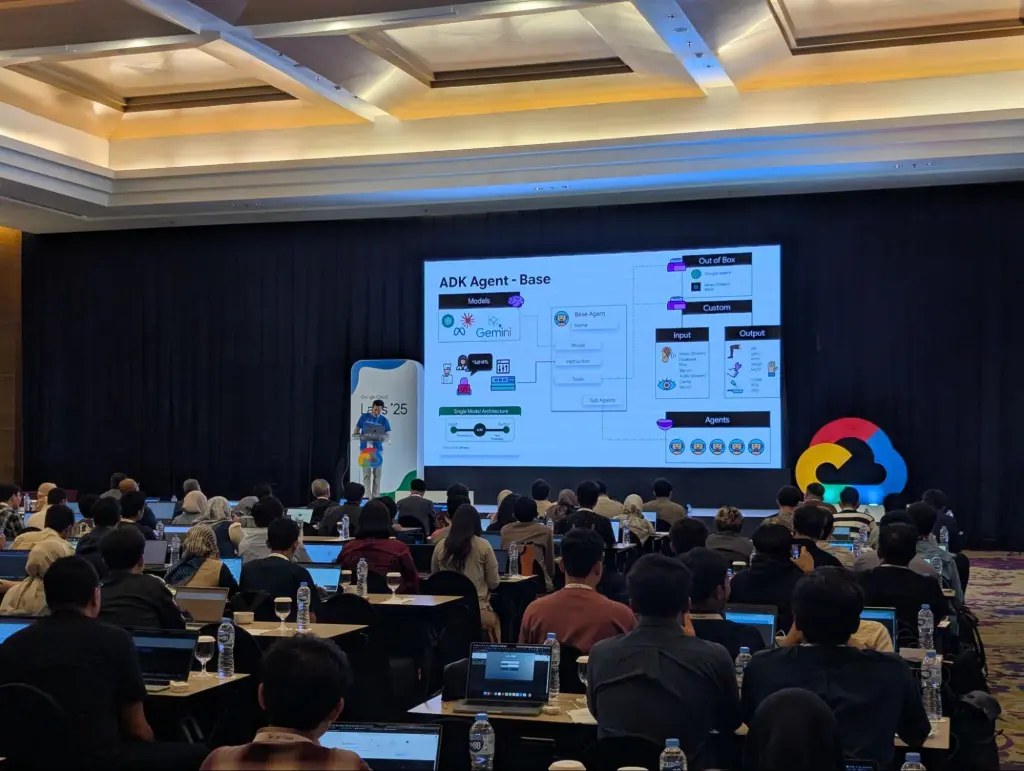
Participants at a Google Cloud Labs Jakarta event learning about building agentic AI systems / Photo credit: Google Cloud
Kolluri says that beyond these common obstacles, companies aiming for long-term, sustainable success with agentic AI need to build with an “agentic architecture” in mind. Basically, they need to make sure that every new project or tool contributes to the big-picture infrastructure.
“If you build a pricing calculator tool today for a sales agent, ensure your customer support agent can call upon that same tool tomorrow,” he explains. “This modularity creates compounding enterprise value over time, rather than just a collection of disconnected AI experiments.”
What’s next?
Kolluri sees the future built on a foundation of “agentic orchestration.” This means a variety of specialist agents working together autonomously: a coder agent “syncing with a designer agent” and a product manager agent building software “with minimal human intervention.”
As you might expect, this portends big changes for organizations. Products and solutions that once took months to build could take mere days.
It’s a lot to take in at once. For now, though, Kolluri gives a few best practices to get started.
“Start now to build the ‘muscle memory’ and governance structures; invest heavily in training your teams to manage AI, not just use it; and make sure you have clean, accessible, and ‘grounded’ data, as it is the fuel which this new machine will run on,” he says.
Gemini Enterprise empowers teams to discover, create, share, and run AI agents all in one secure platform.
Learn more about how it can help your firm get started on its agentic AI journey.
This content was produced by Tech in Asia Studios, which connects brands with Asia’s tech community. Learn more about partnering with Tech in Asia Studios.
Stay updated on the go with our mobile app.
Get latest insights with smoother, more personalized experience through TIA mobile app.
Recommended reads
 Inside Singapore’s government team that kills its own products
 Once an IPO hopeful, SCI Ecommerce nears collapse
 SEA financials tracker: Traveloka profit drops 71% despite gains
 Who’s betting big on ChatGPT ads? Not Asian brands
 VC tracker: Granite Asia launches US$50 million fund
 GCash trims IPO ambitions to meet market realities
 Igloo CEO eyes global M&A: ‘We have an appetite to grow more’
 Why SBI paid a premium for Ajaib amid a tough market
 OpenAI warns building for today will cause technical debt
 Grab insiders buy in as Uber overhang weighs on stock





Editing by Jonathan Chew and Mina Deocareza
(And yes, we’re serious about ethics and transparency. More information here.)






📅 Upcoming Events
22 October 2026
Payoneer x CSPN Summit 2026