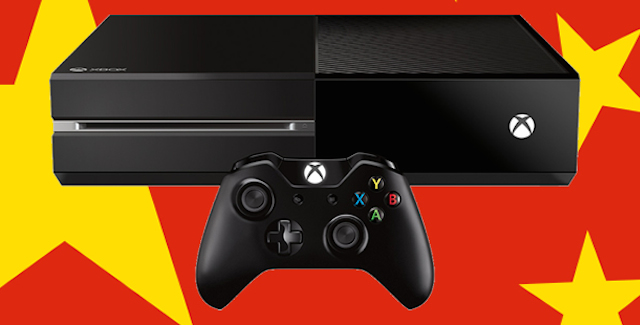
If you’ve opened an eye in the past 48 hours or so, you may have noticed a bunch of headlines blaring that China has legalized game consoles. But wait a minute. Didn’t that happen already?
What actually happened
China legalized game consoles last year. Although there were restrictions – foreign and domestic companies selling them needed to set up HQ and manufacture their devices in Shanghai – and technically it was a trial, game consoles have been legal to sell, purchase, own, and play online in China since early 2014. Microsoft officially launched its Xbox One console in China in September of last year, and Sony’s PS4 came out in China earlier this year. Consoles have been legal and available in China for quite a while now, so saying that China only “legalized” game consoles this past week is definitely misleading.
What actually happened is that China lifted some of those restrictions on how game console companies can operate. They’re no longer limited to working in the Shanghai Free Trade Zone – console makers can now set up shop and manufacturing wherever they want, and they have fewer hoops to jump through. It’s a change that might make entering the Chinese market more attractive to the one major console maker that hasn’t already done so, Nintendo. Other than that, it isn’t likely to change much about China’s console market.
Media hype
Unfortunately, as usually happens when China announces something about consoles, media reports have mostly demonstrated just how little most people understand about China’s gaming market. For example, in The Wall Street Journal, Laurie Burkitt writes:
The move opens the door to a valuable market of videogamers who have turned to computer and mobile videogames because of limited access to consoles like Microsoft’s Xbox, Sony’s PlayStation and Nintendo’s Wii.
With apologies to Ms. Burkitt, this is patently false, and dangerously misleading given that articles like this have got some folks rushing out to buy stock. China’s gamers have not “turned to” PC and mobile games because of restricted access to consoles, and they’re not going to switch over to consoles now. Here’s why:
- Access to consoles was never really restricted, so the idea that this restriction pushed Chinese gamers to other platforms is nonsense. Even during China’s console ban, consoles and games were widely available and openly sold in electronics shops and malls. I personally bought two different game consoles in China while they were “illegal,” without any more effort than walking to the closest electronics shop. Games for many systems were remarkably cheap (because they were pirated), and because they were all imported they were also uncensored, so Chinese gamers actually had a great deal during the ban: they could buy consoles easily, play games cheaply, and enjoy many games China’s Ministry of Culture would never allow to be officially sold domestically.
- China’s hardcore gamers prefer PC because the game genres most popular in China – MMORPG, MOBA, RTS – really require a mouse and keyboard for quick and accurate control. Most of China’s favorite games aren’t available anywhere on consoles because they simply can’t be played with a console controller. The legalization of consoles does nothing to change this. This point may be difficult for non-gamers to understand, but think about it this way: did the rise of smartphones lead academics to abandon laptops and start writing lengthy papers on smartphones? Of course not, because while it’s possible to write things on smartphones, they’re simply not the right tool for that job. Similarly, while you can play games on consoles, they’re just not the right tool for MMORPG, MOBA, and RTS games. And since those are the genres China’s hardcore gamers have preferred for the past decade or so, there’s no reason to expect a change anytime soon.
- China’s casual gamers prefer mobile games because they already own the platform, and the games are free. Although some mobile gamers do end up spending massive sums on in-game items via in-app purchases, apps that have an up-front cost rarely succeed among China’s mobile gaming masses. And consoles have a massive up front cost for the hardware, and then additional up-front costs for every game. Plus, they’re not portable. Again, consoles simply aren’t the right tool for the job for this kind of gamer: casual gamers are looking for quick, low-effort, low cost diversions, not a $400 machine that requires a big TV, a bunch of cables, and a thick wallet to buy games so you can actually play on the thing.
And you don’t have to take my word for any of this! Consoles are already legal in China, and the reaction has been extremely lukewarm. Look at the response to the PS4 launch earlier this year at Sony’s flagship store in Beijing, for example:
Who’s surprised? MT @EdmondLococo: The Sony PS4 China launch attracted 26 customers to Sony flagship store in Beijing pic.twitter.com/YQFTrQDr5B
— Dr. Serkan Toto (@serkantoto) March 20, 2015





Stay updated on the go with our mobile app.
Get latest insights with smoother, more personalized experience through TIA mobile app.