- Premium Content It takes our newsroom weeks - if not months - to investigate and produce stories for our premium content. You can’t find them anywhere else.
 Samreen Ahmad · · 5 min read
The AI reckoning threatening India’s software assembly line
“At a Darshini (South Indian eatery), you don’t order a continental breakfast. You order idli, vada, or dosa.”
This adage – attributed to a former IT executive – means that local companies stick to what they know best rather than stretch themselves by chasing every new trend.
But this idea is now putting India’s tech stocks to the test.
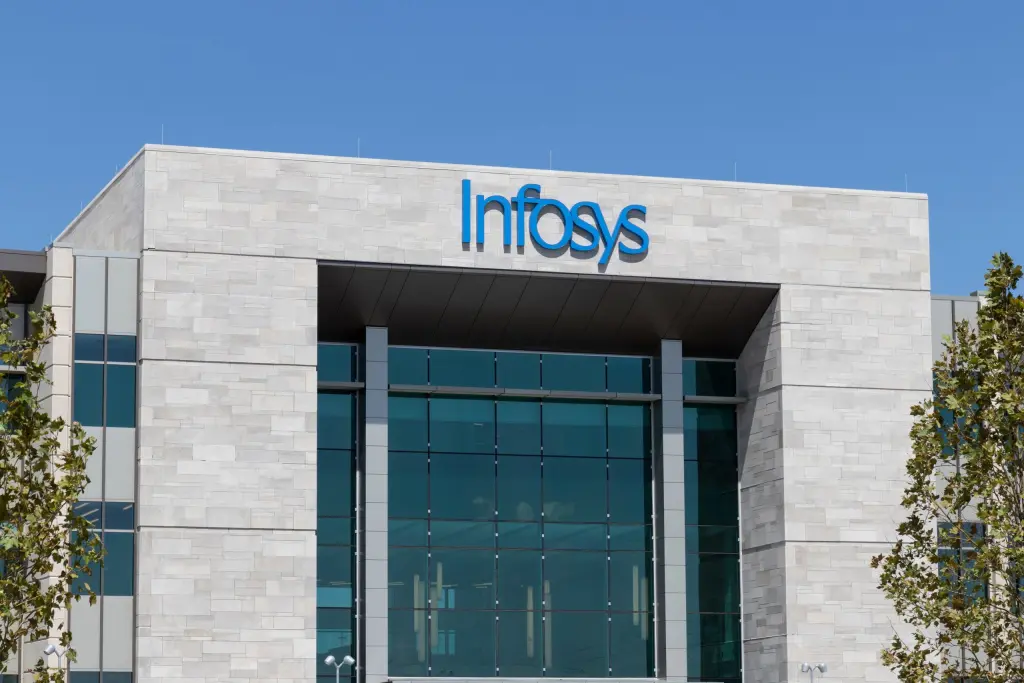
Infosys is one of India’s largest IT services companies./ Photo credit: Shutterstock
On February 4, the Nifty IT index fell nearly 6%, its steepest single-day decline since 2020. Shares of Infosys, Tata Consultancy Services (TCS), Wipro, and Tech Mahindra slid sharply, wiping out billions of dollars in market value within hours. The losses were triggered by a growing concern over AI automation.
This is about “the market recognizing that agentic AI is now capable of doing revenue-generating work,” says Chanakya Bellam, director at Aion-Tech Solutions.
Over the following sessions, stocks clawed back part of those losses, suggesting the initial panic had eased. But on February 12, the stocks of these companies were down again.
The episode left behind an uncomfortable question: Was this just a market overreaction to new tech or the first real reckoning for India’s services-led IT industries?
For decades, Indian IT firms have thrived on a predictable formula: large teams, repeatable processes, and billing models tied closely to human effort. The market’s fear is that this formula may no longer be as durable as it once seemed.
Infosys declined to comment for this story, while Wipro did not respond to Tech in Asia’s queries. TCS and Tech Mahindra could not be immediately reached for comment.
Mohit Saxena, co-founder and group CTO of tech firms InMobi and Glance, says the fear isn’t speculative. “AI will eliminate low-level outsourcing jobs,” he notes. “The pace is fast, and markets are reacting to that structural shift.”
What triggered the sell-off
The match that lit the fuse came days earlier. On January 30, US-based AI company Anthropic released 11 workflow plug-ins for its Claude Cowork suite.
These tools are designed to automate tasks like legal review, sales planning, financial analysis, and software workflows – jobs that are traditionally given to junior consultants, analysts, and support staff.

Why some firms were hit harder than others
What will it take for India to adapt
Stay ahead in Asia’s tech landscape
This is premium content. Subscribe to read the full story.
A sell-off triggered by Anthropic’s AI release has forced investors to rethink how automation could reshape India’s IT giants.
We know this is not ideal. ⌛ Sign up in 20 seconds. Cancel anytime.
Our subscriber community includes professionals from these companies:





Stay updated on the go with our mobile app.
Get latest insights with smoother, more personalized experience through TIA mobile app.