This article summarizes an episode of Vietnam Innovators Digest’s video series featuring Ofir Ejnes, CEO and co-founder of Elfie.

Ofir Ejnes, the CEO and co-founder of Elfie/ Photo credit: Ofir Ejnes
Human psychology is often the biggest obstacle in modern medicine. When faced with the threat of illness, logic usually takes a back seat to fear. Ofir Ejnes, the CEO and co-founder of Elfie, has witnessed this behavior firsthand. He argues that our medical system is flawed because it expects patients to act rationally about terrifying information.
As a result, Ejnes built Elfie, a health app that helps people track long-term illnesses. It also brings together patients, drug companies, and insurance companies.
The cost of ignoring health data
Waiting for a health crisis to act on this fear is dangerous and expensive. Today’s medical system is built entirely around emergencies, so most people do not know about hidden risks like high blood pressure. The solution is to get people to look at their own health numbers long before they need to rush to a hospital.
Ejnes points out a strange difference in how we handle daily upkeep. “If you bought a car, it would not cross your mind not to go to the garage a few times [for maintenance],” he explains. “You’ll only go to the doctor if you feel bad.”
This deeply rooted habit of ignoring scary information negatively affects the entire medical field. “When something scares us, when something bothers us, our natural reaction is just to ignore it,” Ejnes explains.
Rethinking the tracking habit
To overcome this natural urge to ignore health problems, modern tools must completely change how they ask patients to record their data. If people track their health only now and then without a clear schedule, they will inevitably fail.
Furthermore, health apps that turn fitness goals into a game often punish people for reporting bad results. This negative approach quickly kills their desire to continue using the software.
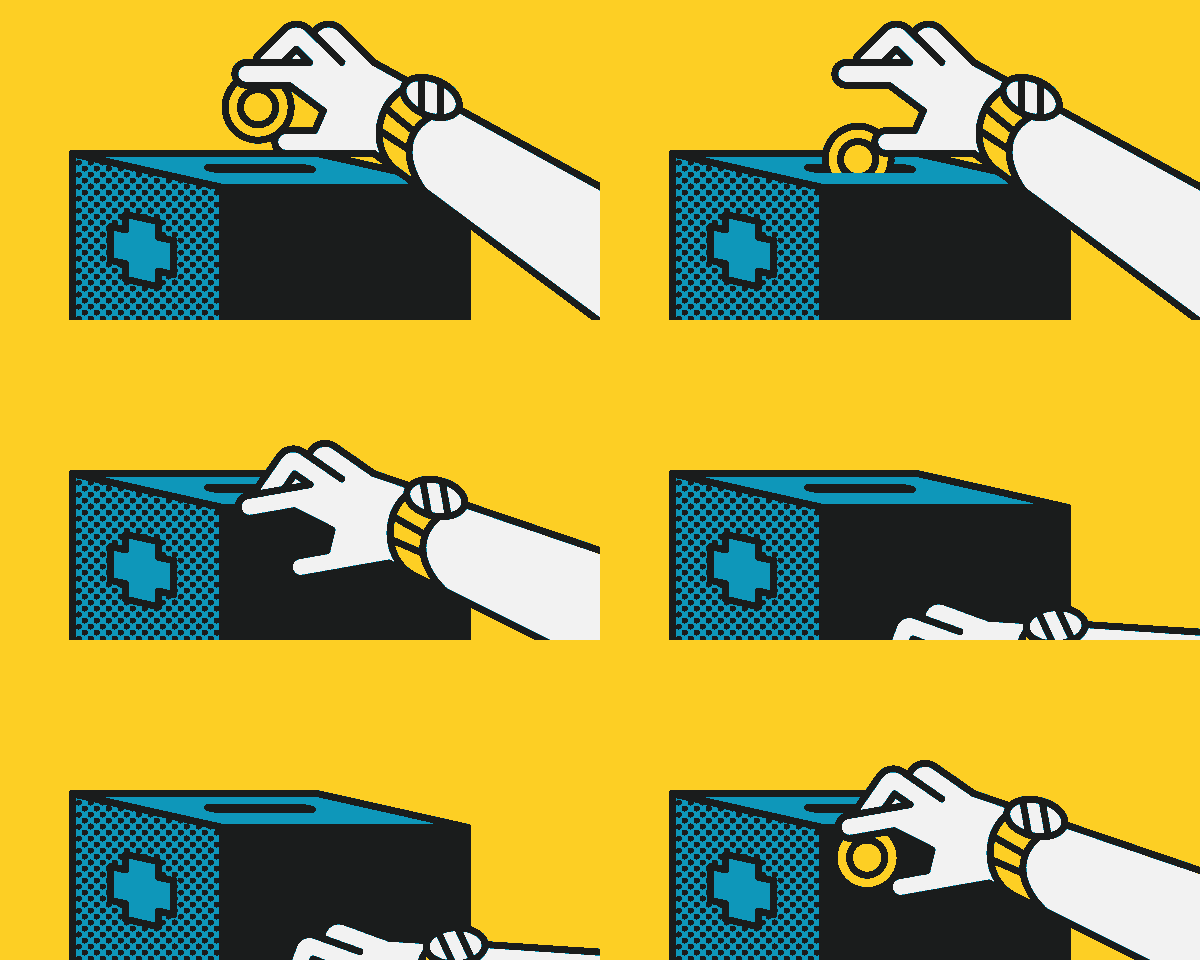
To address this, Elfie solves this problem by rewarding the simple action of checking in, regardless of the actual health result. “We have one job at Elfie, which is to motivate you to self-monitor,” Ejnes says. “We did not gamify health. We gamified self-monitoring.”
For example, the app’s reward system encourages absolute honesty and removes the fear of being judged by a computer program.
Ejnes explains, “When I tell the app I took my supplements and my drug, let’s say I get a thousand coins. Can you guess how many [coins] I give you if you said, ‘I took none’? The same.”
Defining the baseline
By removing the fear of failure, this equal reward system helps build a highly reliable routine. To successfully overcome a patient’s natural avoidance, a tracking plan must establish a solid daily habit.
Ejnes believes three specific elements are important to make this work:
Navigating a fragmented system





Stay updated on the go with our mobile app.
Get latest insights with smoother, more personalized experience through TIA mobile app.